Star Costumes: costume ideas, DIY guides and the stories behind them
Pick a character, build it from what you already own, and find out where the look came from. Made for kids, grown-ups and whole families.
 Drag to turn
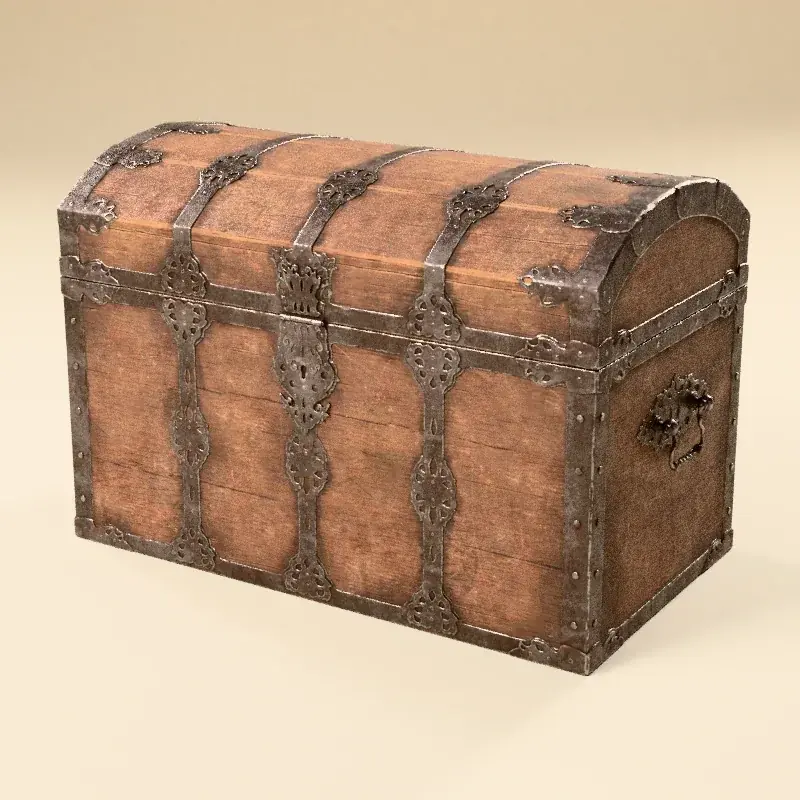
Aged oak, riveted iron bands and a working lock.Pirate costume guide
Pick a theme and flip the card
Each card turns over to show what is inside the guide.
Movie villains and how to dress as them
Six screen villains and the one prop that sells each look.
Flip to look insideInside the guide
What each costume needs, how to build the signature prop safely, and the film history behind it.
Open the guide
How a mascot costume is made and worn
Foam, fleece, vision and ventilation, from the inside out.
Flip to look insideInside the guide
Materials, how a wearer sees and breathes, and the care routine that keeps a head fresh.
Open the guide
Easy kids' costumes, no sewing
Costumes a child can help build in about an hour.
Flip to look insideInside the guide
Materials from around the house, plus safety notes for masks, capes and face paint.
Open the guide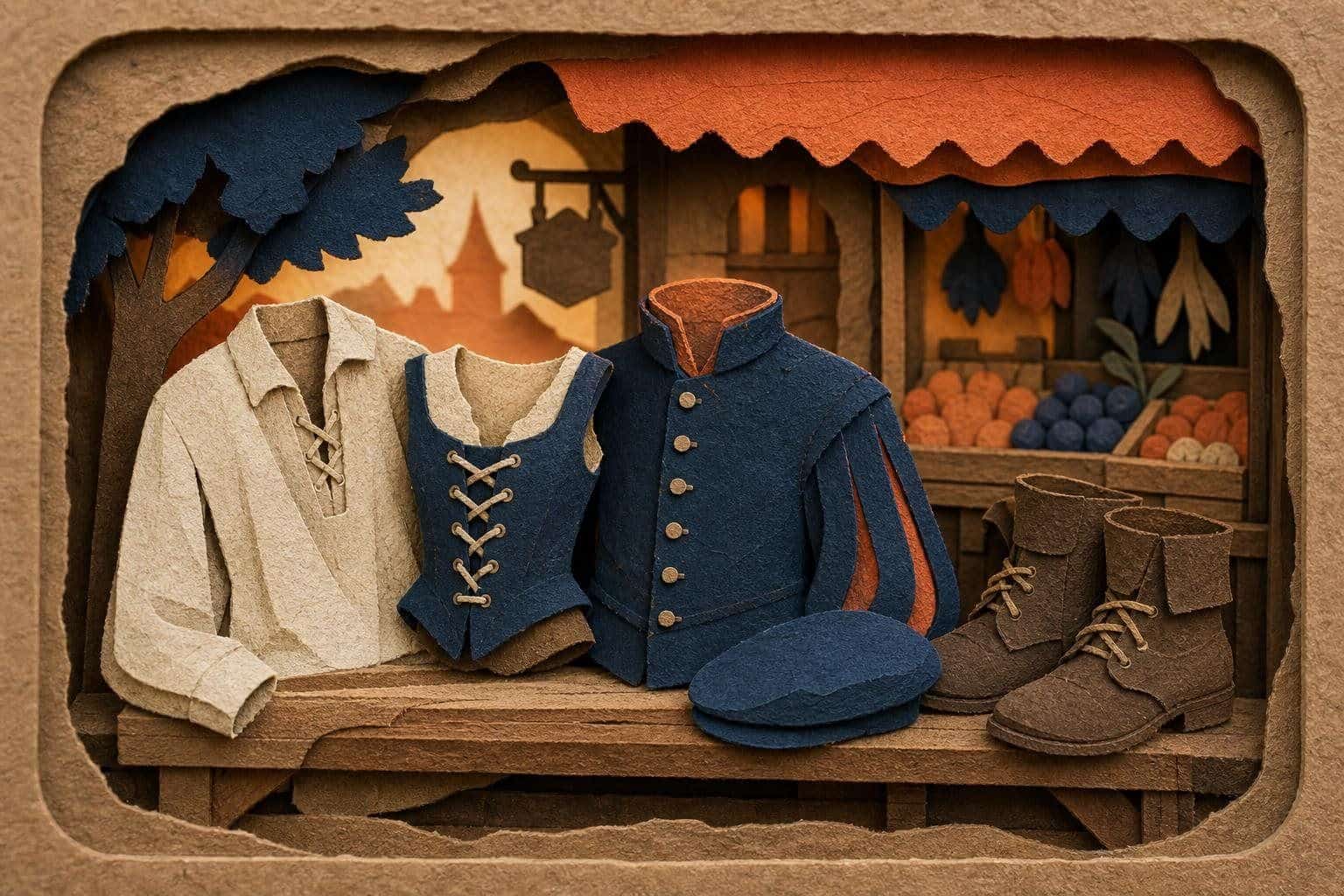
Renaissance faire outfits, layer by layer
What people wore and what a faire expects.
Flip to look insideInside the guide
A first-timer's kit, the order the layers go on, and where to save money.
Open the guide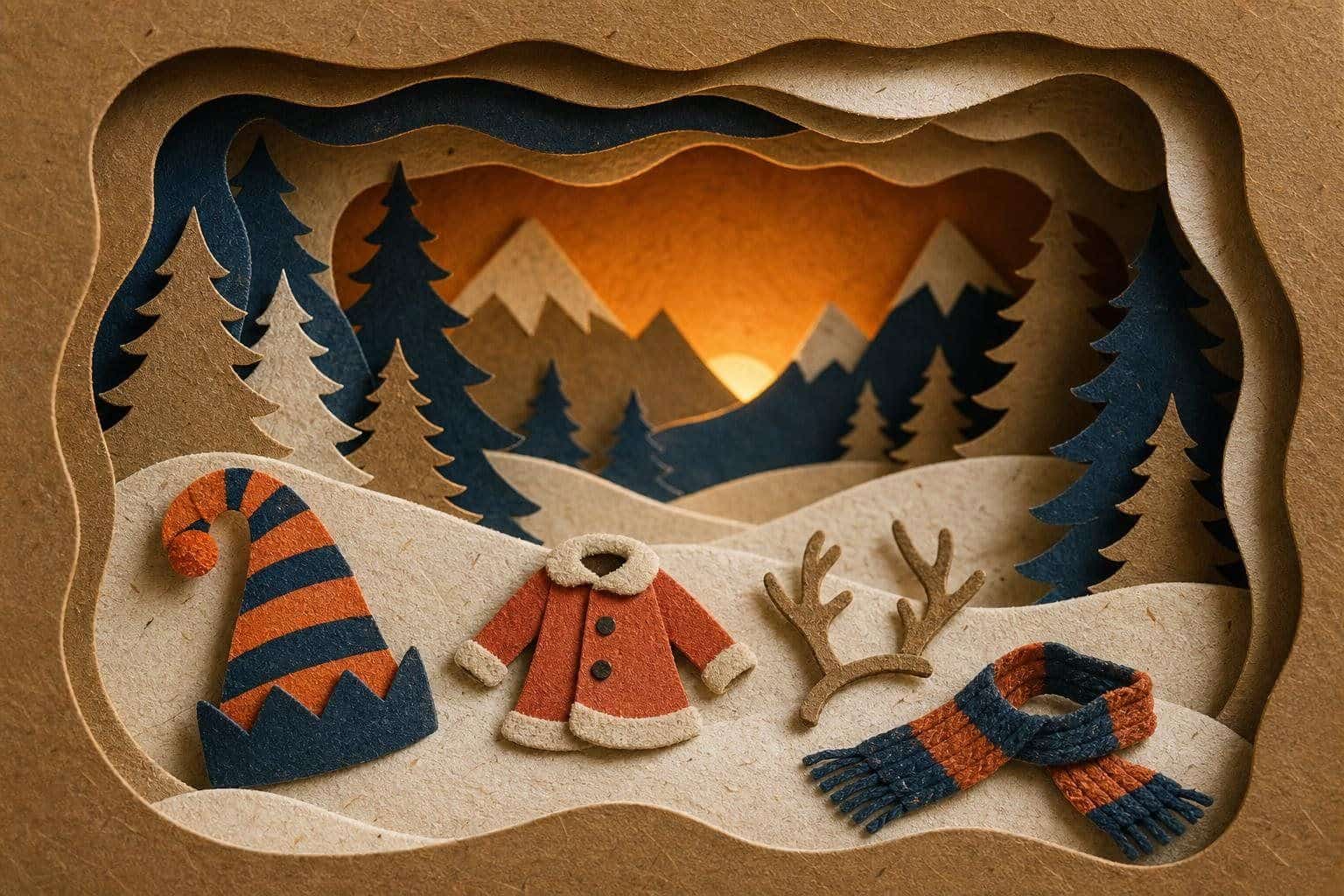
Christmas costume ideas
Elves, helpers and winter characters for parties and plays.
Flip to look insideInside the guide
Ideas for the office, the school hall and the family party, with build times.
Open the guide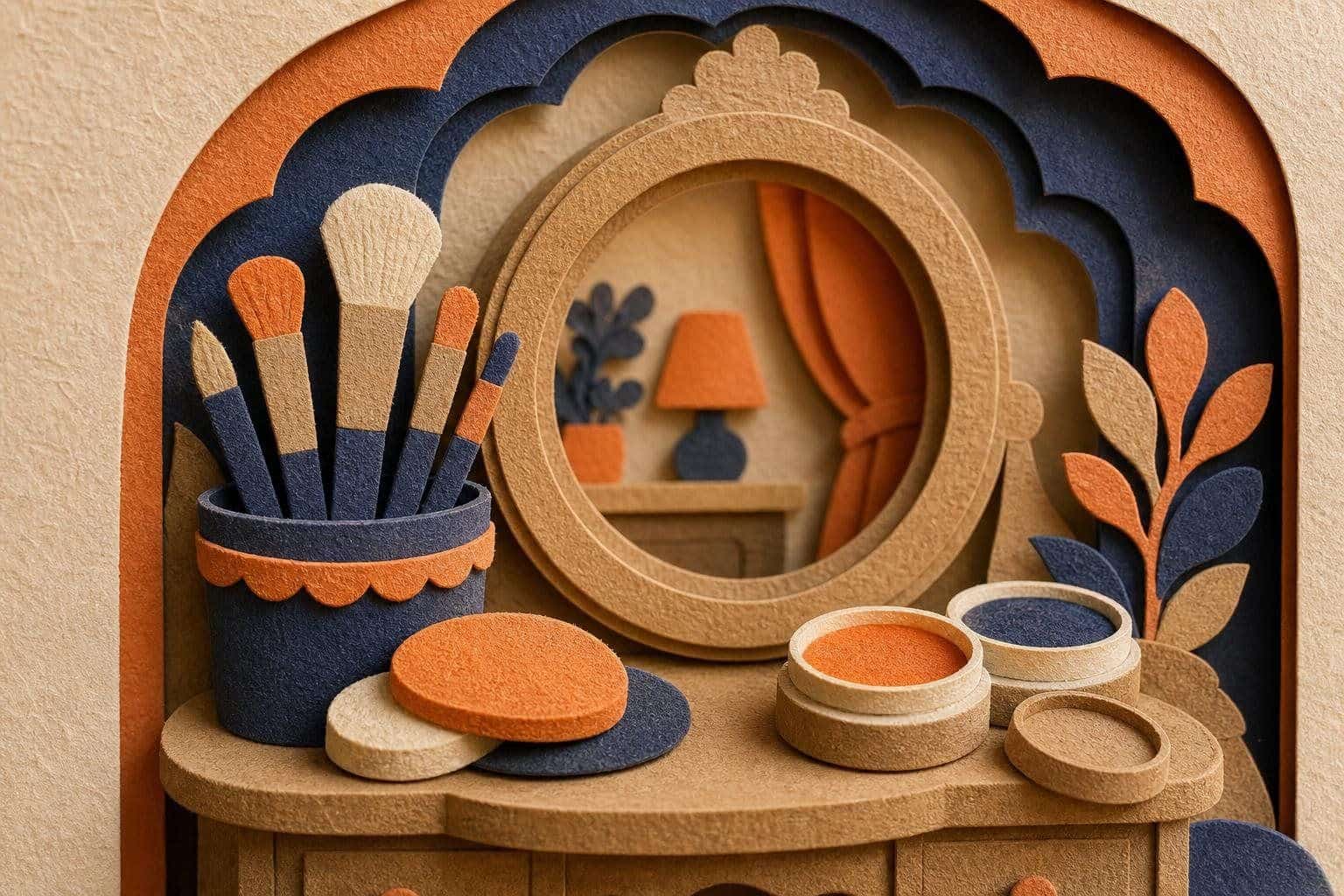
Stage makeup, wigs and simple effects
Looks that work on camera and in a crowd.
Flip to look insideInside the guide
Skin-safe approaches, how to apply them, and how to take it all off again.
Open the guideThe fitting room
Tell it your budget, your time and who is wearing it. It finds a costume to match, with the materials and the steps.
1. Budget
2. Time you have
3. Who is wearing it

Homemade Witch
A black dress, pointed cone hat and a broom.
- Roll black poster board into a cone and tape it, then cut a circular brim.
- Glue the cone to the brim and add a ribbon band.
- Wear a black dress and a cape made from a cut-up sheet.
- Add striped tights and boots.
- Make a broom from a dowel and raffia.
Safety: Keep the dress hem off the floor so it does not trip you on stairs.
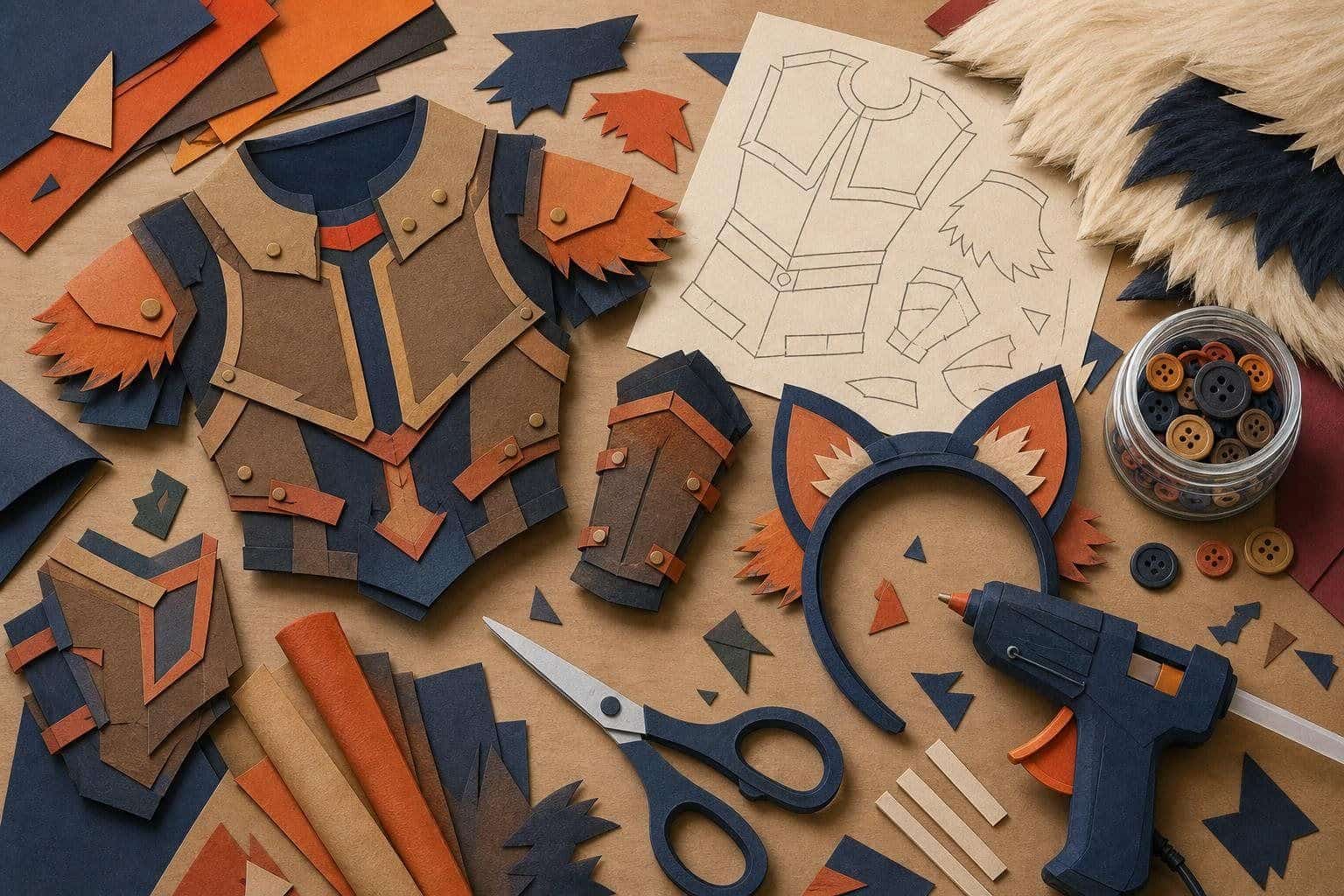
Cardboard knight, in four steps
One big box, a roll of tape and an afternoon. Every guide on the site breaks a build down like this.
Cut the pieces
Chest plate, two shoulder guards and a belt. Trace them from a paper pattern.
Score and shape
Score every fold line, curve the shoulders and test the fit before gluing.
Fix it together
Join with tape on the inside so the outside stays clean.
Paint and finish
Silver first, a dark wash second, then rub the edges for wear.
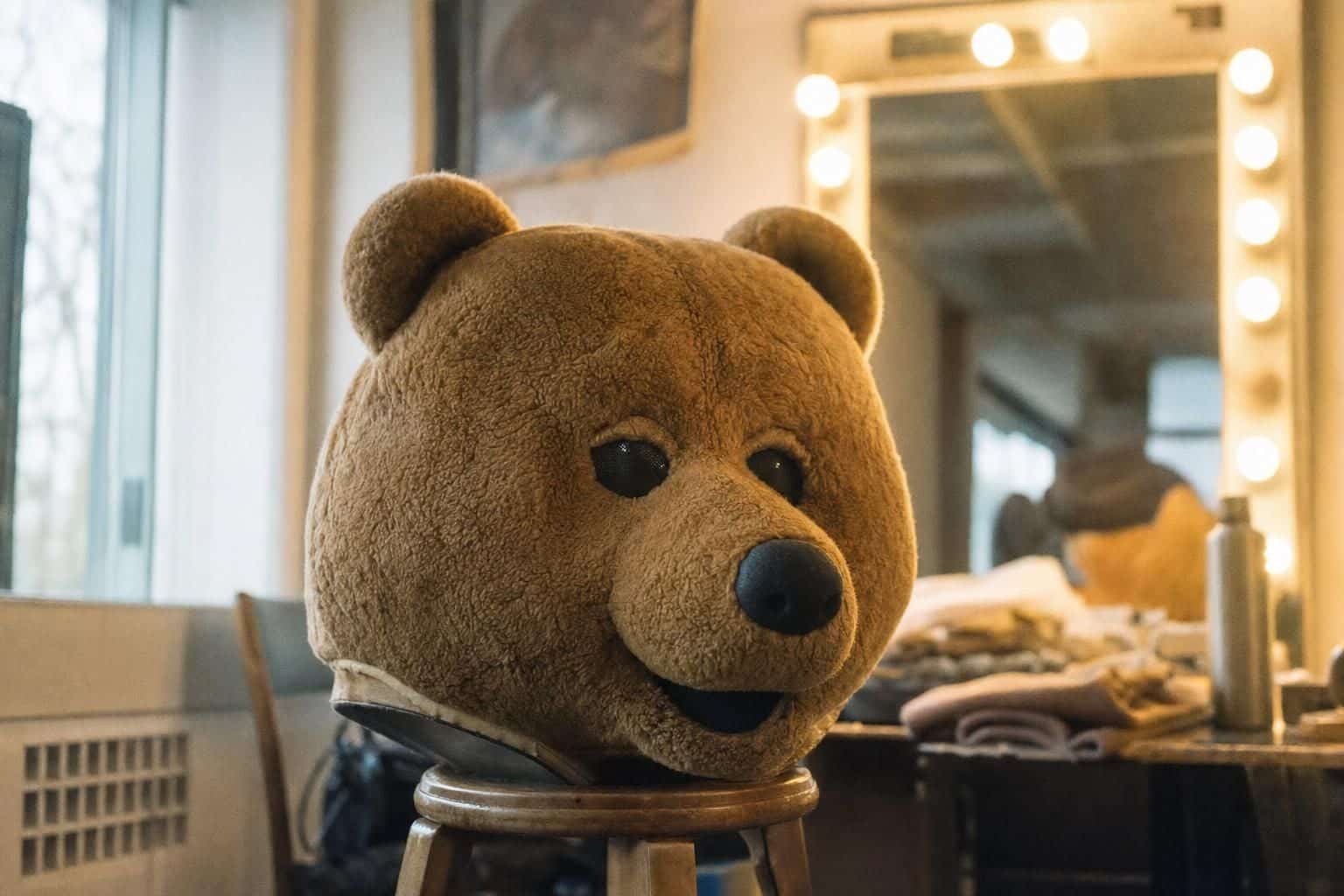
Inside the big head
Mascot costumes are a trade of their own. The guide covers what goes into one, what it is like to wear one for an hour, and how to look after it.
- ShellCarved foam on a light frame, sanded smooth.
- CoverFleece or faux fur, cut in panels and seamed.
- EyesMesh behind the pupils so the wearer can see out.
- AirA small fan or vents, because heat is the real limit.
Fresh from the costume room
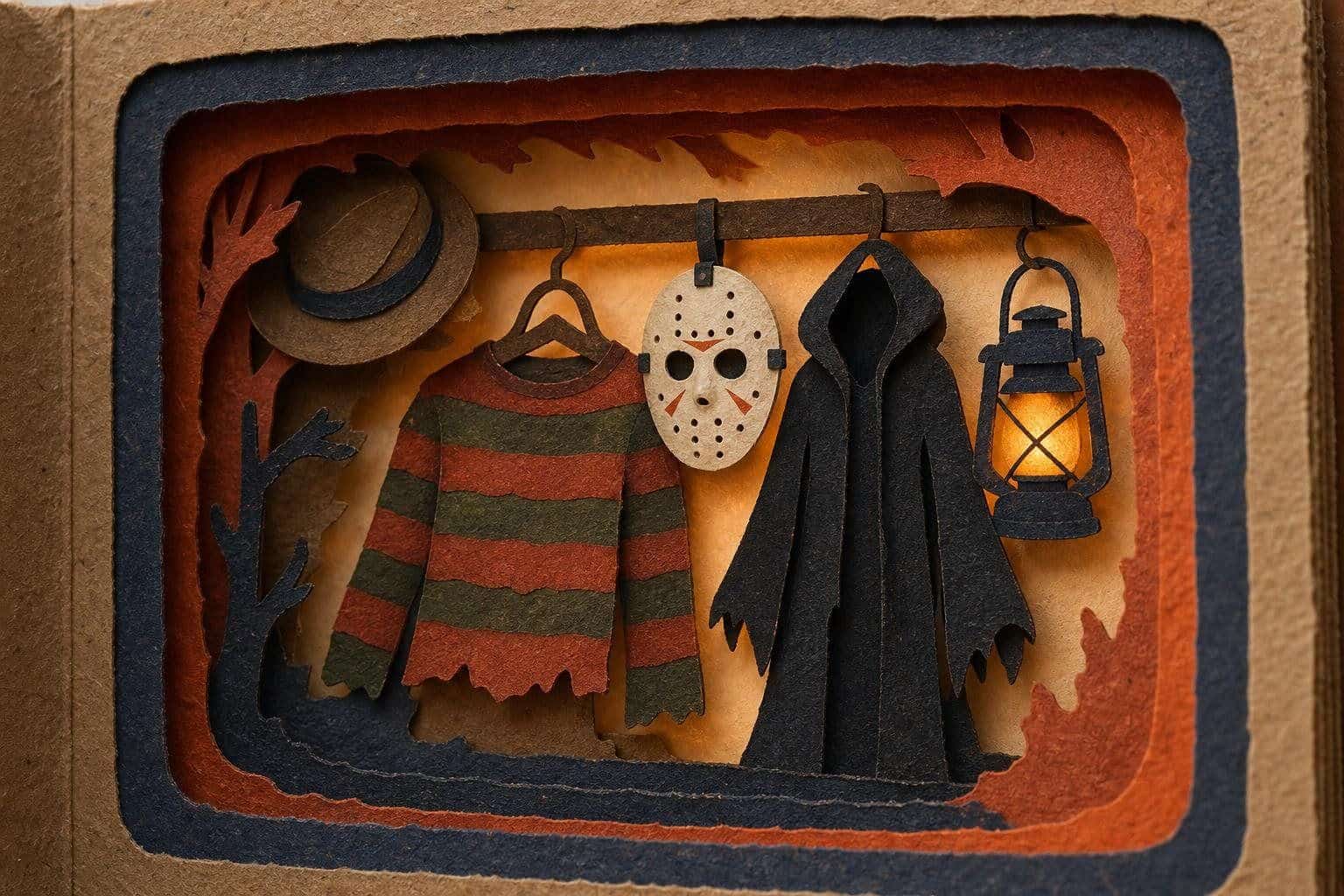
How to dress as a horror movie villain
Horror villain costumes for ten famous screen villains: the elements that make each recognizable and a safe, gore-free way to build it at home.
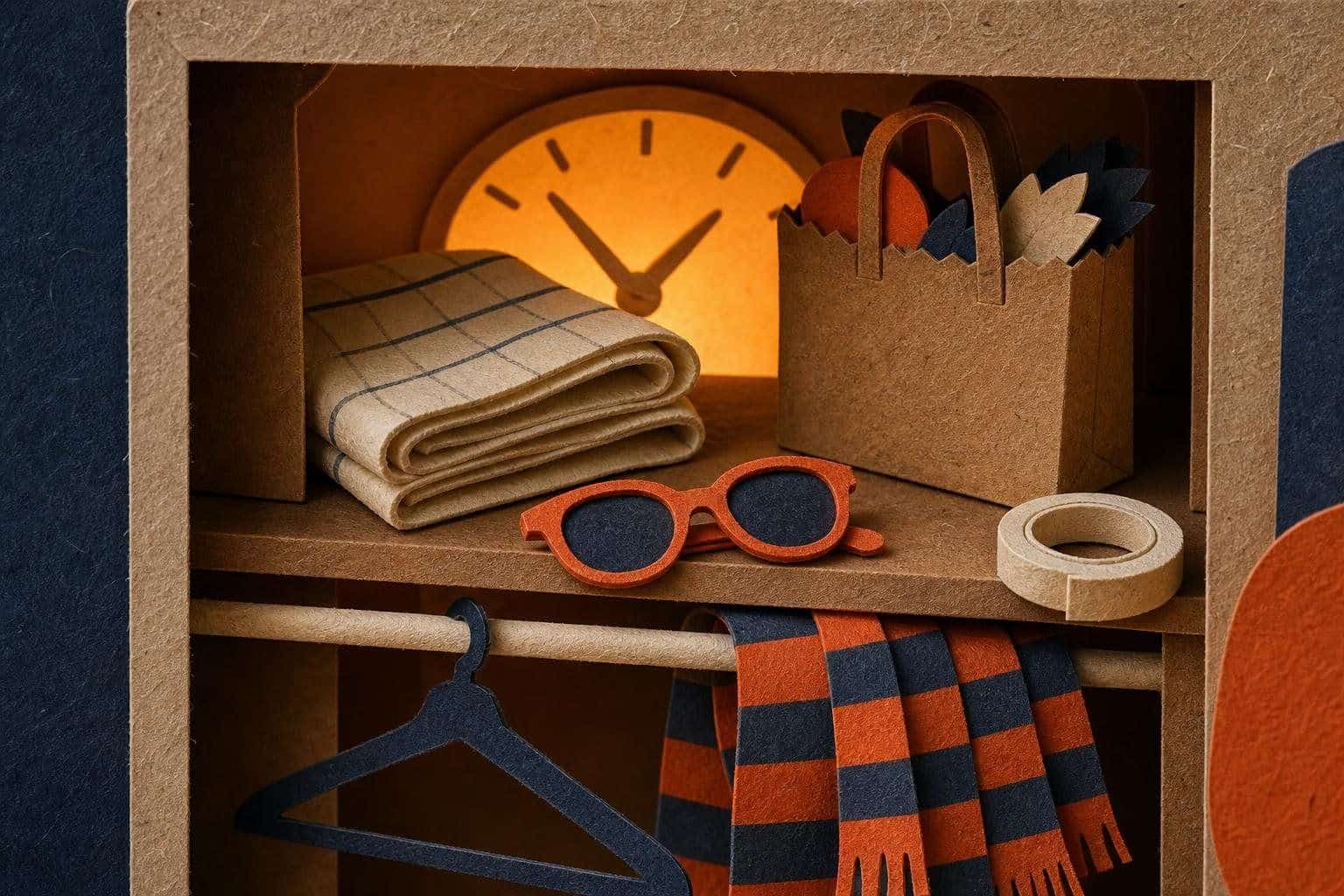
Last-minute Halloween costumes from things you already own
Last minute Halloween costumes built from what is already in your house, sorted by 5, 15, 30 and 60 minutes, with honest notes on how finished each looks.
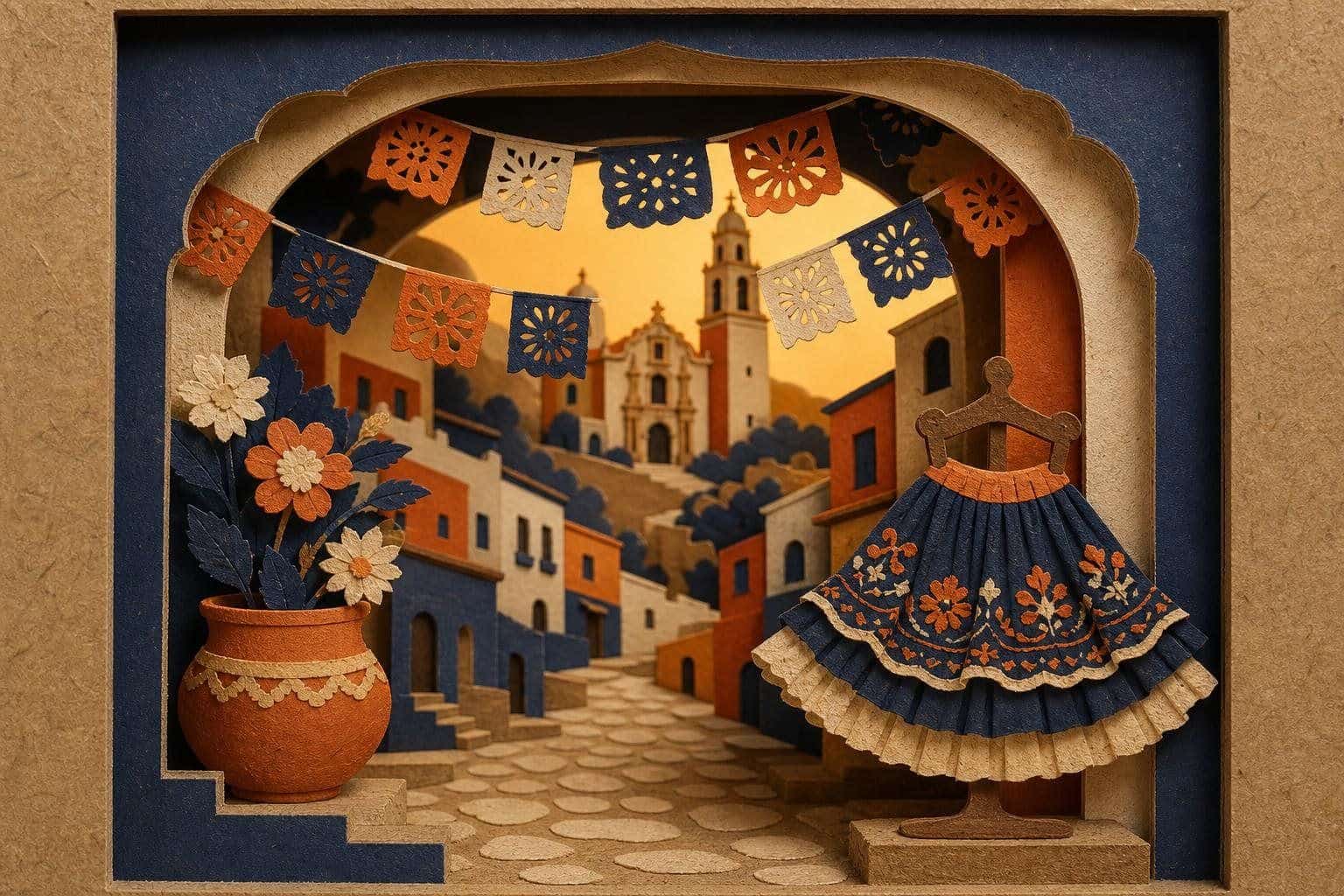
Cinco de Mayo: the outfits and the traditions
Cinco de Mayo outfits and traditions explained: the real story of the Battle of Puebla, how the day is marked in Mexico and the US, and respectful dress.
Costume and cosplay communities worth following
How to find and judge cosplay communities, where beginners can ask questions, and three verified costume, prop and historical dress groups worth knowing.
Star Costumes is an independent guide to dressing up well, with DIY costume guides, ideas and safety advice in one place. The site covers costume ideas for kids, teens and adults, Halloween costume ideas for the busiest night of the year, DIY costume guides with step-by-step builds, mascot costumes, safety, the calendar of occasions that call for a costume and the stories behind the characters people keep re-creating. The aim is simple: help you choose a costume that works, make it yourself if you like, and wear it comfortably.
Use the costume idea finder if you want a shortlist in a minute. Read on if you want to understand how the pieces fit together.
How to choose a costume that works
The best costume is not the most elaborate one. It is the one that suits the person wearing it, the time available and the event. Four factors do most of the deciding.
Budget. A good costume rarely needs much money. Most of the cost is in time and finding things, not in expensive materials. Start from the wardrobe, borrow what you can, and use cardboard, felt and paint for the rest.
Time. Be realistic. A ghost or a scarecrow takes minutes. A cape or a pair of animal ears takes about an hour. Cardboard armor takes a few hours across sessions. Foam armor or a mascot head takes a weekend or longer. Pick an idea that fits the time you really have.
Comfort. Think about how long the costume will be worn, and what the wearer will do in it. Walking, sitting, eating, dancing and climbing stairs all affect the design. Check that the wearer can see, hear and breathe freely, and avoid scratchy fabrics.
Who is wearing it. A toddler needs soft, simple clothing. A child at school needs something that survives a desk and a playground. A teenager wants control. An adult at a party wants something that allows a drink and a dance.
Add one more filter: the one-item test. A good costume has one feature that makes a stranger understand it in three seconds, such as a hat, a cape or a pair of ears. If you cannot name that feature, the idea needs more thought.
The full costume ideas guide sorts looks by category, age, effort, budget and occasion, with links to the theme pages.
Costume ideas by age
Different ages need different things from a costume.
Babies and toddlers do best in soft, simple outfits: a hooded animal, a pumpkin, a bumblebee. Avoid masks, long capes and small parts.
Children aged 4 to 7 love capes, crowns, ears and props. Superheroes, animals, princesses and community helpers are favorites, and most can be built in under an hour.
Children aged 8 to 12 like detail and recognizable characters from books and games. They can do much of the building themselves, which suits armor, creatures and cardboard props.
Teenagers often want something clever or ironic, not cute. Wordplay, pop culture, group themes and detailed cosplay-style builds all work, and the teen should own the design.
Adults tend to enjoy character costumes, decade looks, funny ideas and couple or group themes. The best ones are comfortable to wear for hours and let you eat, sit and talk.
The kids’ costume ideas goes through each age band with build times and no-sew methods, and the adult costume ideas does the same for grown-up looks. Theme pages go deeper on popular families of costume: superheroes, animals, pirates, witches and wizards and many more.
DIY builds and step-by-step guides
Homemade costumes are often better than bought ones, because they fit the person and the occasion. You do not need special skills. A small toolkit of sharp scissors, a craft knife, a glue gun, fabric glue, tape, safety pins and paint handles almost every build.
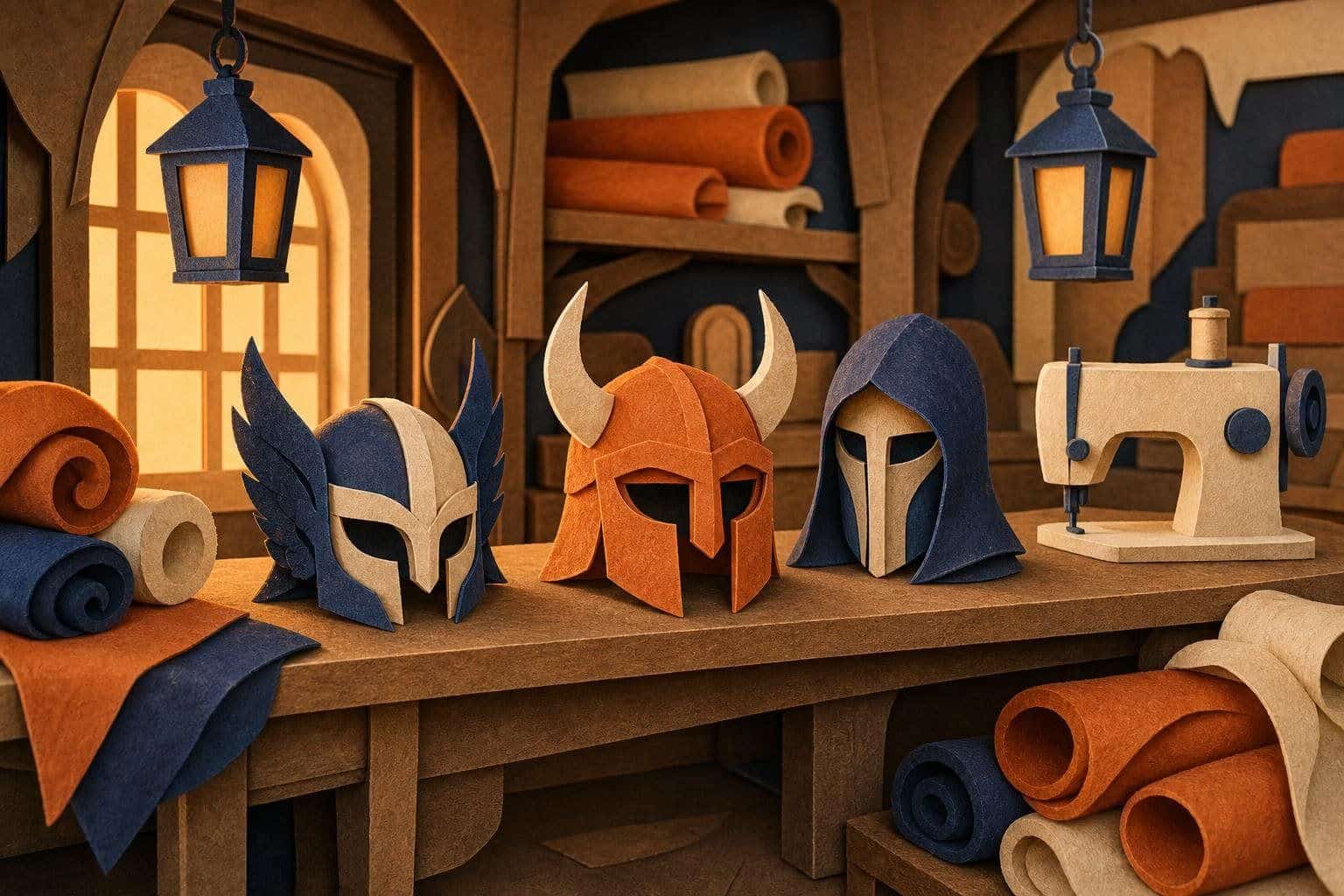
The core techniques are few. Cardboard is scored and folded for armor and hats. Felt, which does not fray, replaces sewing for capes and tabards. Paint and a dark wash turn cardboard into metal or wood. EVA foam, shaped with gentle heat and sealed before painting, builds helmets and bracers. A simple pattern traced from a T-shirt gives you a tunic. Padding and wigs finish characters that need extra shape.
The DIY costumes index explains each technique, organizes builds into difficulty tiers from ten-minute looks to weekend projects, and includes a troubleshooting table. From there, the step-by-step DIY costume guides take specific costumes from start to finish: a no-sew cape, a cardboard knight costume, a DIY Wonder Woman costume and a DIY Poison Ivy costume.
Finishing details matter. The costume accessories guide covers hats, wigs, belts and props, and the costume makeup guide covers face paint, patch testing and skin-safe products.
The stories behind costumes
Costumes are not just clothes. They carry the history of stories, films, festivals and theater. A cloak means something because of the vampire stories that made it famous. A mask means something because of the masquerade, the stage and the monster film.
The horror villains and monsters guide looks at the best-known screen villains and monsters: where they came from, why they lasted and what makes their looks instantly recognizable. Related pages explore horror villains, classic movie monsters, sequels and remakes, B movies and science fiction and scariest scenes.
For the longer history of dressing up, from medieval pageantry and the Renaissance fair to modern conventions, the costume history guide traces how and why people have worn costumes. The Renaissance costumes page covers one of the most popular periods in practical detail.
Knowing the story makes a costume better. It tells you which feature to emphasize and what to leave out, and it often reveals a detail that sets a good costume apart from a generic one.
Costumes through the year
Halloween costume ideas are the obvious starting point, but costumes are not just for one night in October. Through the year, the occasions change: school dress-up days, harvest and Halloween events, winter pageants and parties, spring fairs and plays, summer conventions and parades, and themed celebrations of all kinds.
The costume calendar lists these occasions month by month, so you can plan ahead and avoid the last-minute scramble. It also helps you spread costume projects across the year, because a cape, a pair of ears or a crown can be reused for several events.
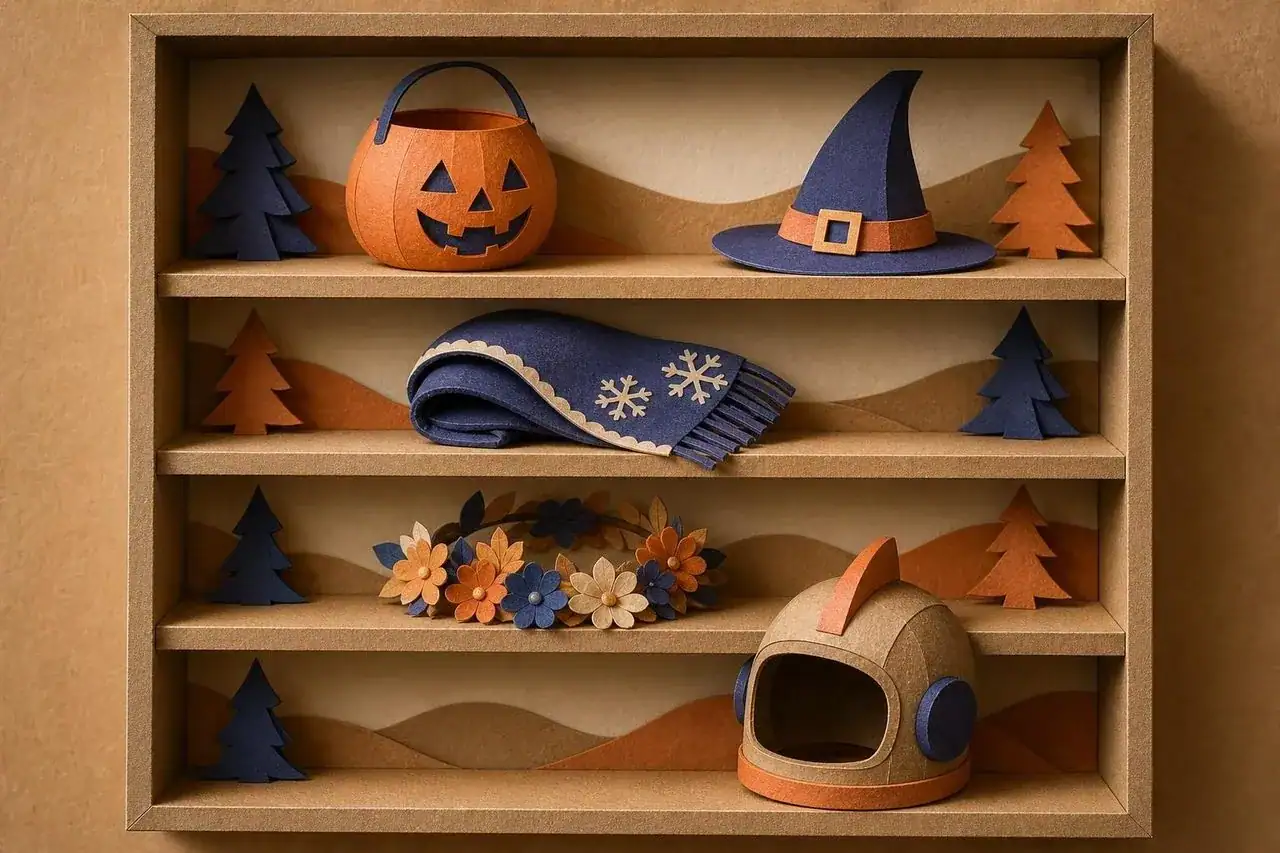
For a seasonal example, see the Christmas costumes page, which covers festive looks for pageants, parties and school plays. The blog collects timely articles on events such as Cinco de Mayo, written to describe the real holiday and traditional dress accurately and respectfully, and on holiday trivia.
Mascots
Mascot costumes are a world of their own. They are large, warm and heavy, with limited vision, and they depend on movement and gesture more than any other costume.
The mascot costumes guide explains how to choose one, how to wear it safely, and how to care for it. Heat is the main risk, so it recommends moisture-wicking layers, regular breaks, plenty of water and a spotter to guide you. The bear mascot guide is a good example of a specific mascot type, with notes on character, movement and comfort.
If you are involved in a school, team or local event, a mascot can be a powerful focus. Plan the role carefully, because it is physically demanding and the person inside needs support.
Safety basics
Most costume problems are small and avoidable. The main ones are visibility, fire, trips, masks, face paint, small parts and tools.
- Be seen. Choose light colors and add reflective tape for evening events. Carry a flashlight or glow stick.
- Keep hems clear. Long capes and skirts cause falls on stairs and in the dark.
- Check masks. Eye and nose holes must be large enough for full vision and easy breathing. Face paint is often a better choice for children.
- Mind the flames. Look for flame-resistant labels, and keep costumes away from candles and lanterns. Avoid baggy sleeves and billowing skirts near flames.
- Test face paint. Use products labeled for skin, patch test the day before, and keep paint away from eyes.
- Watch small parts. Buttons, beads and loose decorations are choking hazards for toddlers.
- Use soft props. Swords and wands should be short, light and blunt.
- Handle tools carefully. Adults should handle hot glue, craft knives and heat guns.
The costume safety guide explains each of these in detail, with practical fixes. Consumer safety agencies publish similar advice every autumn, including the points above on reflective trim, flame-resistant fabrics and masks that allow full vision.
How Star Costumes guides are written
Every Star Costumes guide is written to help a person make or choose a costume this week. That shapes a few habits.
Specific and practical. Guides name the felt, the glue and the minute counts. A build guide lists materials, difficulty, time, steps, mistakes to avoid, safety notes and variations for a child and an adult.
Honest about numbers. Build times and costs are estimates, hedged and based on typical pace. Facts about films, dates and historical dress are researched against published sources, and anything that cannot be confirmed is left out.
Respectful. Costumes that depict real cultures, religions or disabilities are explained factually. Stereotype costumes are not suggested, and holiday pages describe the real celebration accurately.
Inspiration, not licensing. Characters from films, comics and games appear as inspiration for homemade looks, not as official products, and no affiliation is claimed.
Safety first. Advice on masks, face paint, flames, trips and tools is conservative and repeated where it matters.
Reader-first. There are no sales pitches, no store recommendations and no padding. The aim is to be the most complete and useful resource on each topic.
Costume ideas for groups, families and classrooms
Dressing up gets easier and more fun when more than one person does it. A family or friend group needs a theme with natural roles, such as a pirate crew, a farmyard, a circus or a fairy-tale cast, and each person needs one distinctive prop. A classroom or team works best with a simple shared base, such as plain tops in one color, plus one accessory per person. Keep the effort level close to the lowest common denominator, so nobody is left out, and give the most reluctant wearer the simplest part. The same principles carry over to school plays and pageants, and the group-theme section of the main costume ideas guide has examples.
Costumes for grown-ups
Adults have as many reasons to dress up as children do: parties, conventions, fairs, plays, themed runs, work events and family traditions. The challenges are different. A grown-up costume has to be comfortable for hours, allow eating and talking, and survive a crowd. Humor works well, as do recognizable characters, decade looks and costumes that are close to real clothes. The adult costume ideas goes through the options and the practical points, from fit to makeup to props that fit in a bag.
Costume makeup and finishing touches
Makeup and accessories are what make a costume look finished. A painted face, a wig, a hat, a belt and a prop can change a plain outfit completely. They also introduce risks that deserve respect. Skin products need a patch test, paint should stay away from the eyes, and wigs and hats should not slip over the face. Guides on makeup and accessories cover the techniques and the safety checks, and recommend simple methods that work for beginners. A neatly finished simple costume nearly always beats a half-finished complicated one.
Making costumes last
A costume that is made once and discarded is a waste of effort. The habits that extend a costume’s life are simple. Build in layers so that pieces can be removed, make props detachable, store everything flat in a labeled box and repair small damage straight away. Choose sturdy materials such as felt and corrugated cardboard over thin paper. Pass costumes on to siblings, friends and school collections, and treat a cape, a crown or a set of ears as part of a growing dress-up kit instead of a one-night purchase. Over a few seasons, a collection of reusable pieces makes every new costume faster and cheaper to put together.
Common costume mistakes, and how to avoid them
Most costume disappointments come from the same handful of errors. Starting too late leaves no time for a test fit. Choosing an idea with no clear hero item produces a costume nobody can identify. Ignoring comfort means the costume comes off after twenty minutes. Using the wrong glue makes pieces fall apart halfway through the evening. Skipping the patch test on face paint risks a skin reaction. Forgetting the weather leaves a child cold or an adult overheated. Building too big creates trips and doorway problems. Each of these is easy to avoid with an early plan, a short trial wear and a simple backup.
Planning a costume from idea to event
A reliable process saves stress. First, pick the character and the single feature that will carry the look. Second, check the wardrobe and list what is missing. Third, choose the build method: wardrobe only, no-sew craft, cardboard and paint, or foam and fabric. Fourth, set a timeline that includes drying time for glue and paint. Fifth, build the hardest piece first, test the fit halfway, and finish with a complete trial wear. Finally, pack a small repair kit with tape, safety pins, glue and spare elastic for the day. This process works for a ten-minute ghost and a weekend of armor alike.
Costume ideas for last-minute situations
Sooner or later everyone faces a costume emergency: an invitation that arrives the day before, a school note found at breakfast, a costume that does not survive its first outing. The fix is the same each time. Look at what is in the house, choose a character that is mostly clothes, and add one item that carries the look. A ghost needs a sheet. A scarecrow needs plaid and a few straws. A tourist needs a camera and a loud shirt. A cat needs ears and whiskers drawn with skin-safe paint. A hero needs a cape cut from a pillowcase. None of these needs a special trip, and all can be done in under half an hour, which makes them reliable Halloween costume ideas for anyone who leaves it late. Keep a small box of felt, tape, safety pins, elastic and cardboard on a shelf, and most emergencies become a pleasant ten-minute project.
Costume culture beyond the party
Costumes belong to more than a single night. They appear in school plays, historical reenactments, fairs, parades, sports mascots, conventions, family photographs and the dress-up corner of a nursery. Each setting has its own habits and its own standards of craft. A play needs costumes that read from the back of a hall and change quickly. A fair rewards period accuracy. A convention rewards detail. A nursery rewards softness and durability. Seeing costumes as a living tradition, not a one-off purchase, makes better decisions easier: build what suits the setting, and the setting will often reward the effort.
Where to start with Star Costumes
If you have five minutes, use the costume idea finder. If you have an hour, pick a no-sew cape or a pair of animal ears and make it with a child. If you have a weekend, try a cardboard knight or one of the foam builds. If you want more DIY costume guides first, the DIY costumes index lists every build. If you just want to read, start with the stories in the horror villains and monsters guide, and see where it leads.
Questions people ask
What is Star Costumes?
Where should I start if I need a costume quickly?
How do I choose a costume that works for me?
What are good costume ideas for kids?
Can I really make a costume without sewing?
How much does a homemade costume cost?
How early should I start planning a costume?
Are costumes safe for children?
What is the best way to wear a mascot costume?
What costumes work for a school dress-up day?
Where do classic horror costumes come from?
What costumes suit different times of the year?
Can adults wear costumes without looking silly?
How do I make a costume comfortable for a long event?
Do you cover costume makeup and accessories?
Keep going