Costume accessories that finish a look
Costume accessories guide: how hats, wigs, masks and props finish a look, simple ones to make at home and how to wear them safely, glasses and hair included.
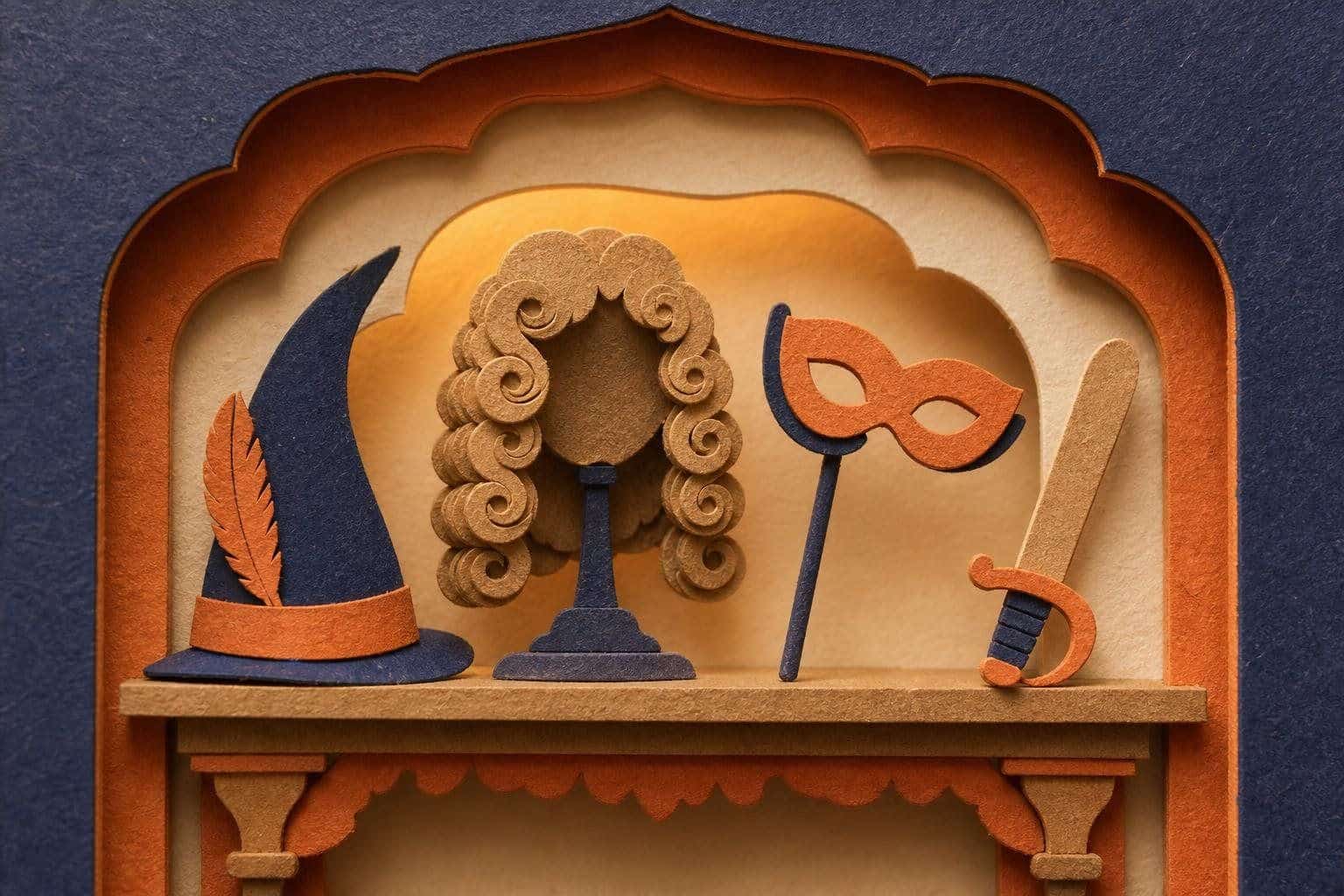
Costume accessories are what turn a good outfit into a finished character. A plain brown coat becomes a pirate with a tricorn hat and a belt, a dress becomes a witch with a pointed hat and a broom and a hoodie becomes a hero with a mask. This guide covers hats, wigs, masks and props: what each one does, which ones are simple to make and how to wear them comfortably and safely.
The rule of thumb is that one strong accessory carries more weight than five weak ones. Pick the piece people will recognize first, and put your time into that.
Hats and headpieces
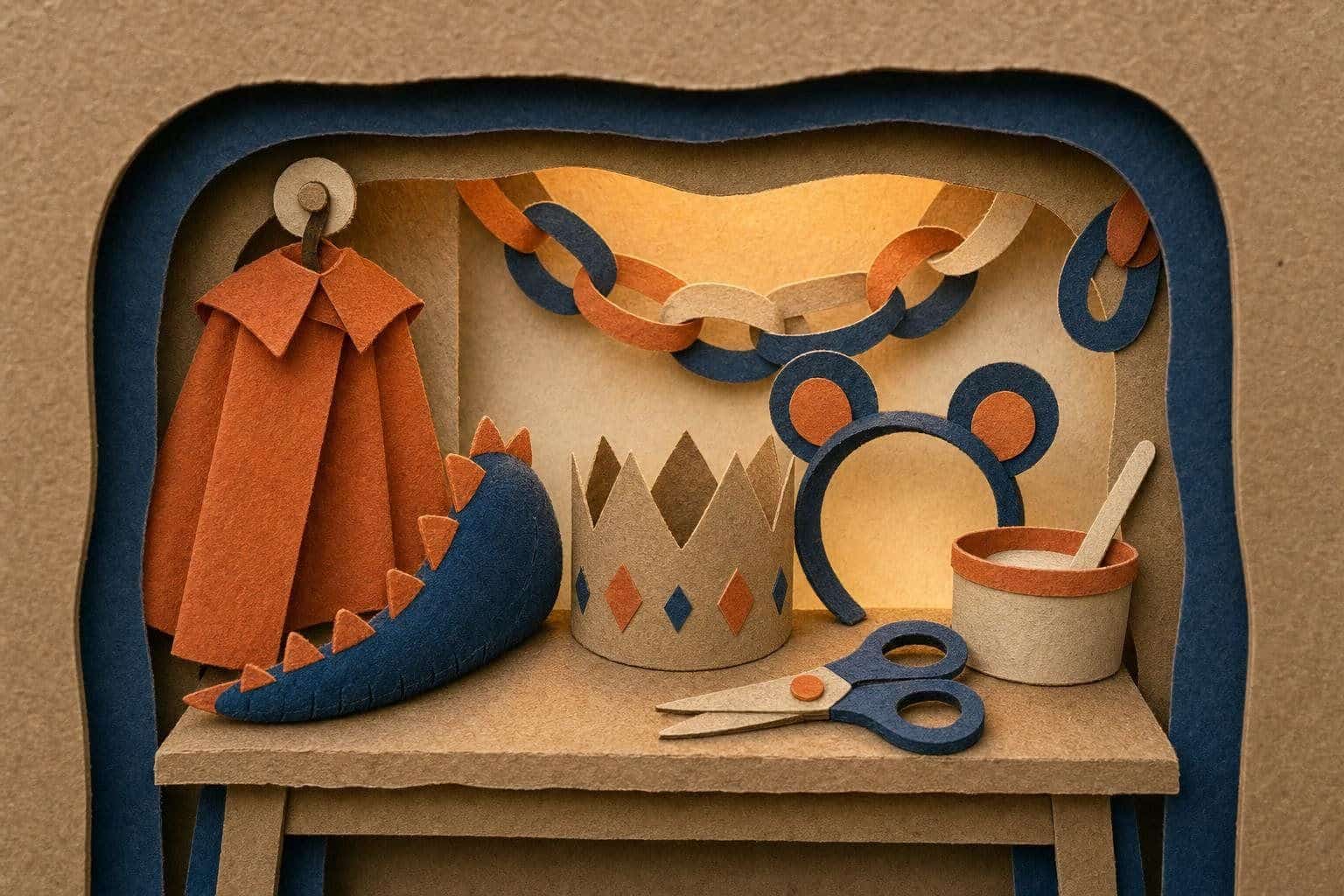
A head accessory sits at eye level, so it tells the story first. Think about the silhouette: a tall cone, a wide brim, a crown, a helmet or ears.
Simple ones to make:
- Cone hat: cut a half circle from card, roll it into a cone, tape inside and add a felt brim.
- Crown: cut a band from craft foam with points along the top, fit to the head and join with hook-and-loop tape.
- Animal ears: glue felt ears onto a plain headband.
- Pirate hat: shape a bicorn from black card or foam, and add a band of felt. See more in the pirate costume ideas.

Wearing safely: make sure the hat does not slip over the eyes, avoid heavy hats on children, and use a thin chin elastic that releases with a pull.
Wigs and hair
A wig changes a face more than anything, but it also adds heat and can limit movement.
- Flatten your own hair first: a low braid or flat pinned sections, then a wig cap.
- Fit the wig at the front, pull it down the back and pin at the temples.
- Comb gently from the ends upward. Do not brush a synthetic wig dry in tight pulls.
- If hair is very long, avoid a high bun, since it makes the wig sit crooked.
For short hair, a wig cap and a few pins are enough. For children, a headband with yarn hair is lighter and easier to wear.
Masks
Masks are the most dramatic accessory and also the one with the most safety limits.
- Visibility: the eye holes must give a wide, clear view to the sides and downward. If you cannot see your feet or a stair edge, it is not safe to walk in.
- Breathing: the mask must allow free air through the nose and mouth. A face covering that is hard to breathe through should come off.
- Comfort: padding at the forehead and cheeks prevents rubbing. Plan breaks.
- Glasses: many full masks do not fit over glasses. A half mask on a stick, or face painting, is a better route. See the makeup guide for painted options.
Children should wear a mask only for short periods and with an adult close by. If a child does not like the feeling of a mask, switch to makeup or a hat.
Props
Props give your hands something to do and add a story: a wand, a sword, a bag, a lantern, a book, a briefcase.
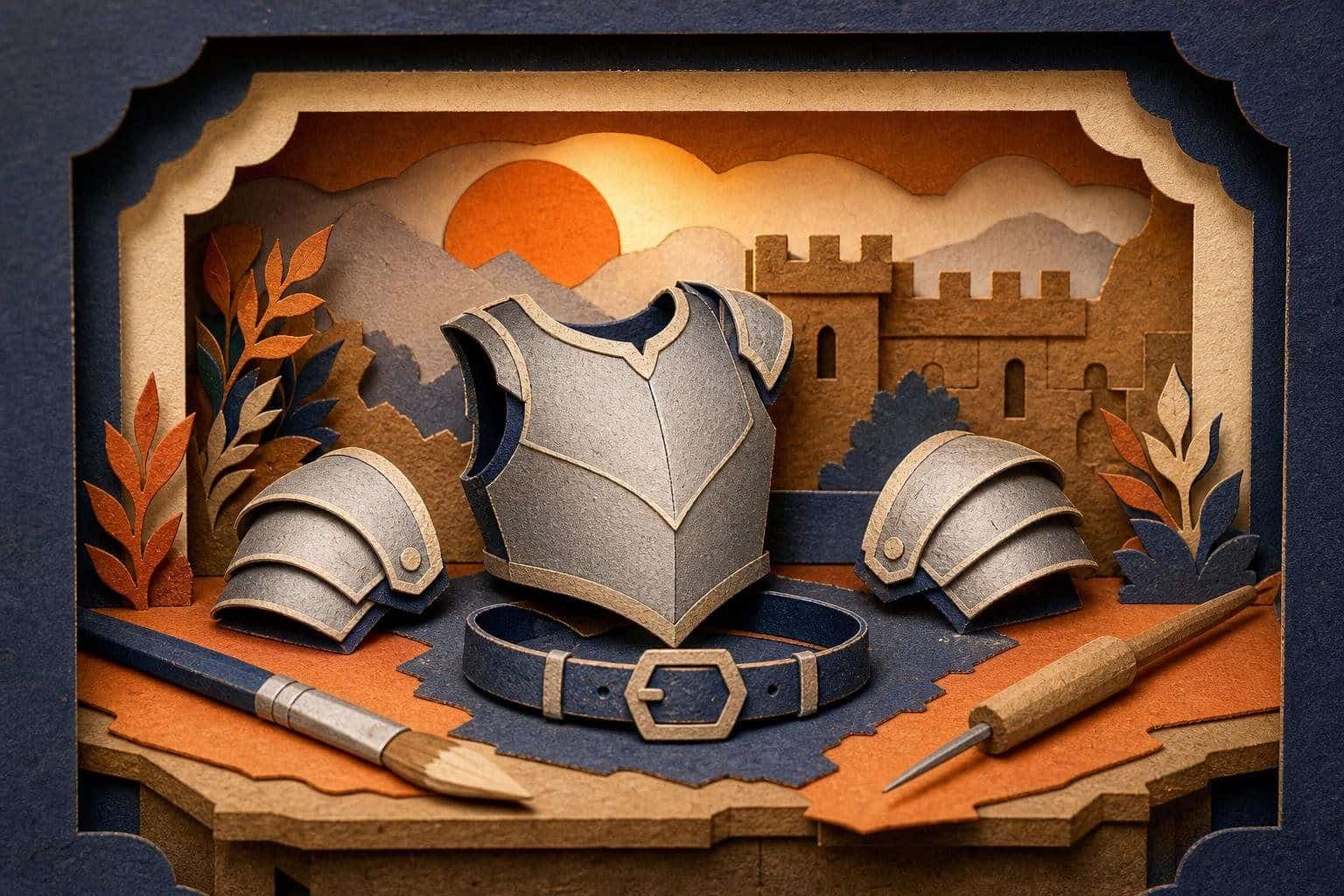
Make them from light materials. Foam, rolled card and fabric are all fine. A silver base coat, a dark wash and dry-brushed edges makes foam look like metal. The cardboard knight guide explains this technique in detail.
Avoid hard or sharp edges. Round every tip. Do not use real weapons, glass or anything with a hard core for children.
Check the rules. Schools, theaters, conventions and many venues limit what you can bring. Some do not allow weapon-like props at all.
Make them wearable. A prop that clips to a belt leaves your hands free.
Capes, belts and wearable extras
A cape adds drama and movement. A no-sew version takes about 40 minutes, and the no-sew cape guide includes a safe breakaway neck closure. Belts, sashes, gloves, boots covers and badges all add to a look. Keep long ends short and avoid trailing items that could catch.
How to choose accessories
- Start with the character’s most iconic object.
- Balance: a large hat suits simple clothes, a quiet hat suits detailed clothes.
- Think about the day: dancing, walking, sitting, eating and photographs.
- Match the weather: heat makes wigs and masks harder to wear.
- Consider who will wear it: children need lighter, softer, shorter pieces.
Safety checklist
- Can you see clearly to the sides and ground?
- Can you breathe, hear and speak?
- Is anything long enough to trip over or snag?
- Is the neck closure breakaway?
- Are there small parts a young child could swallow?
- Is any material near a candle, lantern or flame? Use flame-resistant fabric where possible.
- Does anything press on glasses, ears or the scalp?
The costume safety guide covers these points in more depth, and the kids’ costume ideas shows looks suited to younger wearers.
Storage and care
Store hats upright in a box, wigs on a stand, foam props flat and masks in a bag so they do not crush. Keep everything away from damp and direct sun. A quick check before each use, for loose glue, frayed elastic or sharp edges, saves repairs at the event.
Matching accessories to common looks
A few pairings are reliable. Pirates need a hat, a sash and a belt. Wizards need a pointed hat and a staff or wand. Knights need a shield and a belt. Animals need ears and a tail. Heroes need a mask or a cape and wrist cuffs. Princesses and royals need a crown or tiara. For more detailed lists, see the pirate costume ideas, where the hat, sash and props carry the whole look.
Quick repairs on the day
Pack a small kit: safety pins, a roll of tape, a few hair pins, a tube of fabric glue and a spare elastic band. Elastic snaps and glued edges lift at the worst moment, and a two-minute fix keeps the day going. Check props and hat bands before leaving home, since the same few points fail again and again.
Questions people ask
Which costume accessory makes the biggest difference?
How do I wear a wig if I have long hair?
Can I wear a mask with glasses?
How do I make a simple hat at home?
What props are safe for children?
How can I keep a hat from falling off?
How do I make a prop look metal without using metal?
Are masks safe for long wear?
How do I carry props at a crowded event?
How should I store accessories between wears?
Keep going