Horror villains and where the icons came from
Where classic horror villains came from, what makes each look unforgettable, and how to recreate Michael Myers, Freddy, Ghostface and more safely at home.
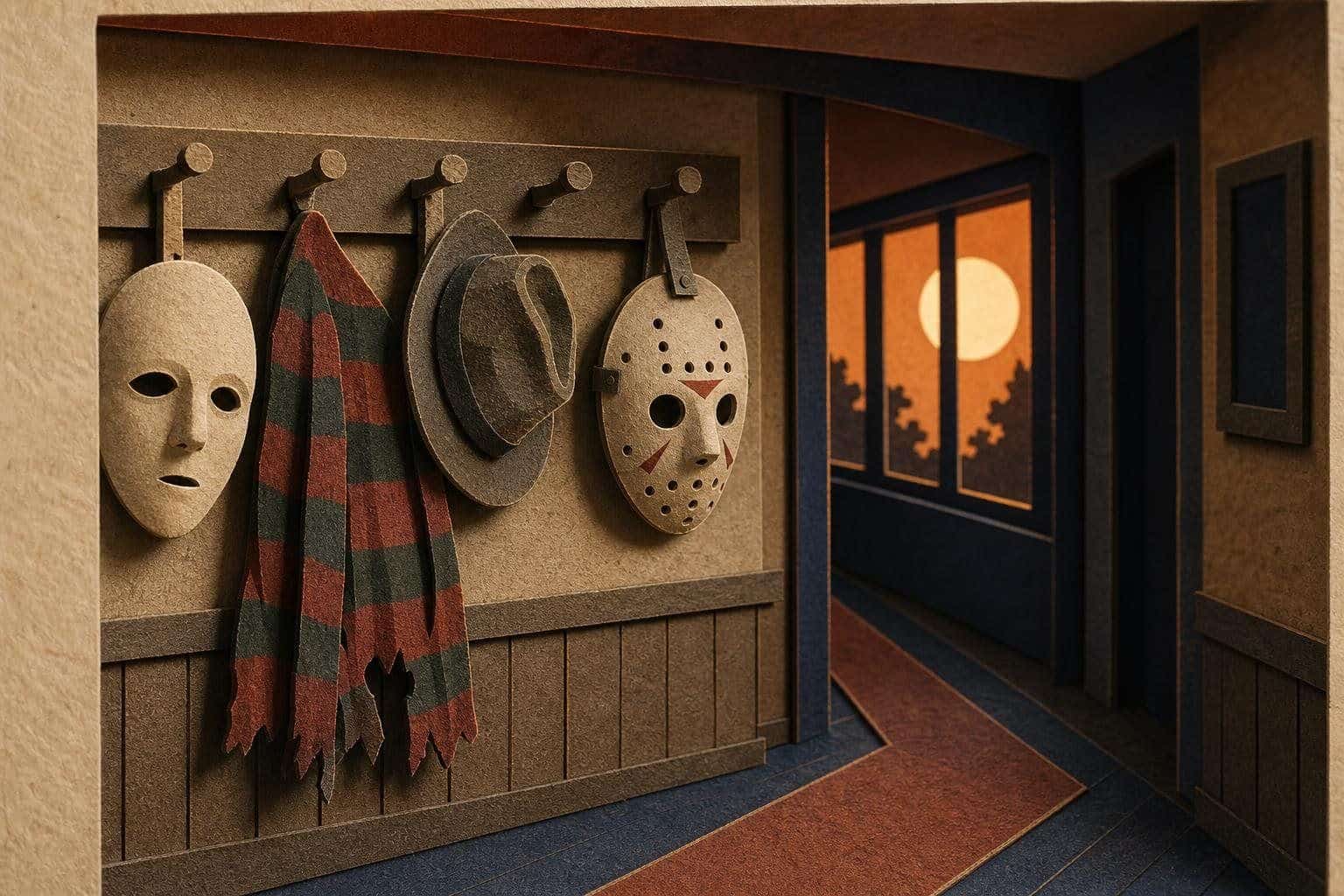
Horror villains are some of the most recognizable costumed figures in popular culture, and most of them started life as cheap, clever solutions to a problem: how do you make someone memorable on a small budget? This guide looks at where the best-known horror villains came from, what the filmmakers actually did to design them, and how to recreate the look at home without anything dangerous or gory.
What makes a horror villain iconic
Among all horror villains, the ones people still dress as share a pattern. Look at the villains people still dress as and a pattern appears. They tend to share four things.
- A silhouette you can draw in five seconds. A hat and a striped sweater. A round pale mask. A hockey mask. A hooded black robe with a stretched white face.
- One signature object. A glove with blades, a kitchen knife, a doll that talks. The object is what a child points to when they say who they are.
- A hidden or altered face. Masks make a character into a type rather than a person, so anyone can step into them.
- A habit or sound. A slow walk, a laugh, a piece of music. These do not matter for a costume, but they are why the look sticks in memory.
For home builders this is good news. The pieces that make a villain famous are usually the cheapest pieces in the outfit.
The classics and what lay behind them
Norman Bates, the quiet neighbor
Psycho (1960), directed by Alfred Hitchcock and starring Anthony Perkins, is based on a 1959 novel by Robert Bloch. Bloch has said that what interested him was not one real case so much as the idea that someone who seemed ordinary could live unnoticed in a small town. The screenwriter, Joseph Stefano, wanted Norman to be likeable, and casting Perkins made that work. The lesson for costume-makers: Norman has no mask. His look is a plain cardigan or shirt, tidy hair and a polite expression, which makes it a very easy, very subtle adult costume.
Michael Myers and a borrowed mask
John Carpenter’s Halloween (1978) had a tiny budget, and the art director, Tommy Lee Wallace, found a mask of the Star Trek character Captain Kirk in Hollywood. He widened the eye holes, removed the sideburns, darkened the hair and painted the face an off-white. Together with a dark mechanic-style coverall, it became one of the best-known looks in horror. A pale, expressionless mask is simple to make from a plain blank face mask, which is why it appears at so many parties.
Mrs. Voorhees, Jason and the hockey mask
The original Friday the 13th (1980) has a twist: the person behind the events is Pamela Voorhees, played by Betsy Palmer, the mother of a boy who died years before. Her son Jason is the central figure in the sequels, and he only gets the hockey mask in Friday the 13th Part III, which reached cinemas in 1982. The mask is a real piece of sports gear, and that practical detail is why it is so easy to copy: a plain white hockey or goalie-style mask, a worn work shirt and dark trousers are enough.
Freddy Krueger and the clashing sweater
A Nightmare on Elm Street (1984), written and directed by Wes Craven, introduced Freddy Krueger, played by Robert Englund. Craven has explained that he chose a red and green striped sweater after reading that the two colors are especially hard for the eye to process together, and that he wanted a recognizable shape that could appear anywhere. The fedora, he has said, came from a man who frightened him as a child. Judy Graham knitted the sweaters used in the films.
Chucky, the toy that turned
Child’s Play (1988) was directed by Tom Holland, and the doll’s voice was performed by Brad Dourif. Chucky is a Good Guys doll possessed by a murderer, and the film leans on dark humor. For a costume, Chucky is mostly about striped shirt, denim dungarees and a red wig, plus a tired, scruffy doll face. Many families find him the least intimidating option because he looks like a toy.
Ghostface and a found mask
Scream (1996), directed by Wes Craven, gave horror a new, instantly copyable villain. The Ghostface mask was an existing novelty design from the company Fun World, spotted during location scouting by producer Marianne Maddalena. Craven liked it, and the producers arranged the rights. A long black hooded robe and a stretched white mask make the costume work for any age or body shape, which is a big part of why it became a Halloween standard.
Mothers, a surprising pattern
Horror has a habit of making mothers the most unsettling figures of all. Mrs. Voorhees is one. Mrs. Bates, whose voice and presence fill Psycho, is another. Margaret White in Carrie (1976), played by Piper Laurie, is a third. What links them is the quiet, domestic setting: a cardigan, a kitchen, a calm voice. Costume-wise, these are subtle looks that rely on posture and one prop, like a brooch, a prayer book or an old cardigan, rather than makeup or masks. They are good options for adults who want a recognizable look that is not scary to small children.
How to recreate the looks at home
The aim is a costume people recognize from ten feet away, built from soft, simple materials.
| Villain | The pieces that sell it | Safe home version |
|---|---|---|
| Michael Myers | Pale mask, dark coverall | Plain blank mask, dark work overalls, a foam or cardboard prop |
| Jason | White hockey-style mask, worn shirt | Costume or sports mask, grubby work shirt, a cardboard prop |
| Freddy | Striped sweater, brown hat, glove | Red and green striped sweater, felt fedora, glove with blunt foam tips |
| Ghostface | Black robe, white mask | Black hooded robe, plain stretched mask or face paint made for skin |
| Chucky | Striped shirt, dungarees, red hair | Child-sized overalls, red wig, light smudged face paint |
| Norman Bates | Cardigan, tidy hair | Everyday clothing, one worn cardigan, a polite smile |
A few hands-on tips:
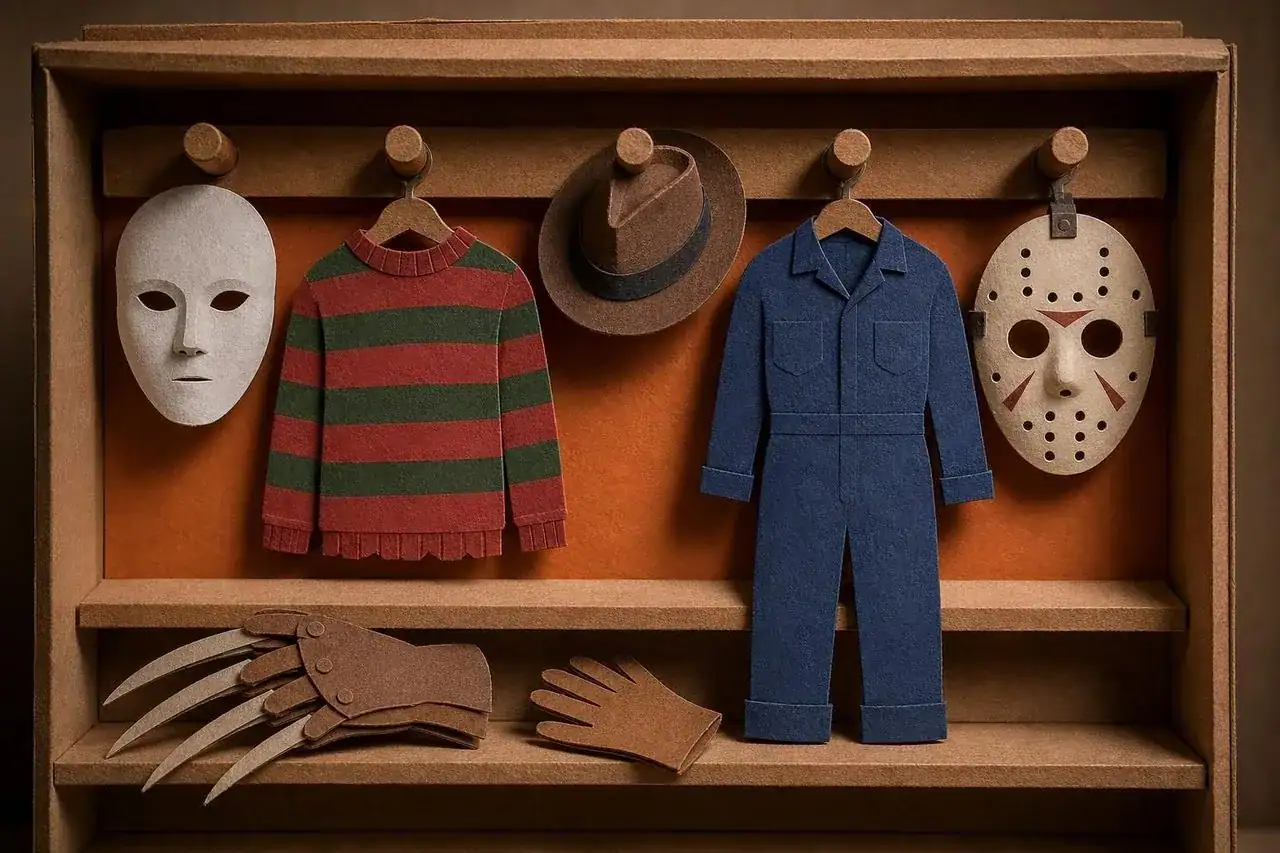
- Age the clothing, do not damage it. Rub a damp tea bag or a little diluted brown acrylic paint onto a thrifted shirt for a worn look. Test on a hidden seam first, and only use fabric you do not mind keeping.
- Make props from foam. Craft foam sheet, cardboard and a hot glue gun make a knife, a claw glove or a doll prop in under an hour. Round every edge, and glue on a hand-guard so a child cannot accidentally hurt anyone.
- Test the mask. Wear it for ten minutes at home, check peripheral vision and breathing, and carve out the eye holes slightly if stairs are hard to see.
- Use skin-safe face paint. If you need a pale face, use products labeled for skin, patch-test on the inside of the arm the day before and keep paint away from the eyes. The costume makeup guide covers products and removal.
What filmmakers learned from these figures
The villains above came from very different budgets, but they share a few lessons that home costumers can borrow.
Restraint beats detail. Carpenter’s mask worked partly because it showed nothing. Craven’s Ghostface was a ready-made face. In both cases the audience supplied the emotion. At home, a blank or simple face often looks better than an elaborate one, and it is a lot cheaper to make.
One color story is enough. Freddy’s red and green clash, Ghostface’s black and white, Michael’s dark blue-gray and pale face. Pick a limited palette and stay inside it, and even a thrifted outfit looks planned.
The prop is the punchline. A character with a hat but no glove is just a man in a sweater. Put your time and best materials into the one object people will point to.
Costumes for couples and groups
Villains are surprisingly good for groups, as long as the tone is playful. A family could go as the cast of a single film, or as a set of mismatched icons at a party: one striped sweater, one pale mask, one hockey mask, one black robe. Matching accessories, such as the same foam prop in different paint, tie the group together. For couples, a Norman Bates cardigan paired with a quietly threatening mother is a low-effort, high-recognition option.
Adapting a look for kids and adults
For children, soften the tone with color. Make the sweater brighter, give the mask a funny nametag, and keep props small and soft. For teens, accuracy matters more, so spend the time on weathering and silhouette. For adults, subtle versions work well for work parties: a single prop and a well-chosen sweater or cardigan, no mask required.
Choosing a villain for the person wearing it
For young children, aim for a goofy or cartoonish take: Chucky’s overalls, a sheet-ghost, or a themed villain with an obviously silly prop. For teens, Ghostface and the Voorhees look are popular because they hide the face and travel well. Adults can lean into period details such as the Psycho cardigan or Freddy’s knit.
Check venue rules before you commit. Schools, theaters and many events do not allow face coverings, toy weapons or gore effects, and a quick email saves a bad surprise on the night. For general guidance on fabrics, masks and visibility, read the costume safety guide.
Where to go next
The best horror villains are worth studying as design problems, and this guide only covers a handful. If you want to see where villains sit in the wider tradition, the horror villains and monsters guide links every culture and history page. The older creature features behind many modern looks are covered in classic movie monsters, and the way later films reinvented these figures is in horror sequels and remakes. For the craft behind how these figures are shown on screen, see the scariest scenes in horror.
Questions people ask
What makes a horror villain iconic?
Who was the first famous horror movie villain on screen?
Is Michael Myers' mask really based on a Star Trek mask?
Why does Freddy Krueger wear a red and green sweater?
When did Jason Voorhees first wear the hockey mask?
What is a safe way to make Freddy's glove for a child?
Can younger children dress as horror villains?
How do I wear a mask and still see properly?
Are there good horror villain costumes for women and girls?
How can I make a villain costume without looking too scary for a school event?
Keep going