Horror sequels and remakes
Horror movie remakes and sequels compared: which ones reinvented the original, which just copied it, and how their costumes changed from film to film.
Almost every successful horror film gets a second life as a sequel, a remake or both. Horror movie remakes are the more argued-over category: when do they add something, and when do they only repeat? This guide walks through the examples that actually taught the genre something, explains the terms people use, and looks at what the costumes did as the films changed.
Sequel, remake, reboot: the terms
- Sequel: continues the story. Bride of Frankenstein (1935) follows Frankenstein (1931).
- Remake: retells the same story with a new cast and crew. The Fly (1986) retells The Fly (1958).
- Reboot: restarts a franchise and ignores earlier entries.
- Requel or legacy sequel: a sequel that comes decades later, often with returning cast, and sometimes pretends the in-between films never happened.
The categories overlap. Evil Dead II (1987), directed by Sam Raimi and starring Bruce Campbell, is described as both a sequel and a remake of The Evil Dead (1981), because it replays part of the first film’s setup with a bigger budget and a lot more humor. Evil Dead (2013), directed by Fede Álvarez, is a re-imagining of the story of the first two films.
What worked
The sequel that deepened the monster
Bride of Frankenstein (1935), again directed by James Whale, took the creature from the 1931 film and gave him something new to want: a companion. Elsa Lanchester’s Bride, with her tall streaked hairstyle and bandage-like gown, is one of the most recognizable looks in the genre. Many viewers regard the film as superior to its predecessor. The lesson is that a sequel works best when it asks a new question rather than answering the old one with more of the same.
The remake that changed the approach
John Carpenter’s The Thing (1982) retells the story that first reached cinemas as The Thing from Another World in 1951, and both films descend from a short story, “Who Goes There?”, published in 1938. Carpenter’s version took the paranoia at the center of the story and made it the point. The film’s isolated outpost, heavy winter coats and thermal gear are a good starting point if you want a low-key costume with a lot of atmosphere.
David Cronenberg’s The Fly (1986) was a remake of the 1958 film. Cronenberg rewrote much of the script, removed some of the camp tone, and kept one line from the original: “Please help me”. The film won the Academy Award for Best Makeup.
Philip Kaufman’s Invasion of the Body Snatchers (1978) updated Don Siegel’s 1956 original, itself an adaptation of Jack Finney’s novel. It moved the story to San Francisco and recast the fear for a new decade.
The remake that served the original’s author
George A. Romero’s Night of the Living Dead (1968) was made independently on a very small budget, and when a major distributor wanted a gentler ending Romero refused and released it independently. When Tom Savini directed a 1990 remake, the reason was partly protective: Romero was worried that someone else might make an unauthorized remake. The new version was made on a larger budget, with Tony Todd and Patricia Tallman in the cast, and it reworked a few key story beats.
The remake that crossed an ocean
Hideo Nakata’s Ringu (1998) became the highest-grossing horror film in Japan at that time, and Gore Verbinski’s The Ring (2002) became one of the surprise successes of its year. Both are based on a novel by Koji Suzuki. Hollywood followed with remakes of other Japanese horror, including The Grudge. The practical lesson for costume-makers is that long dark hair and a plain white dress, the central image in both films, is one of the cheapest and most recognizable horror looks.
What did not work as well
The exact copy
Gus Van Sant’s Psycho (1998) followed the original film’s script and shots very closely. Many critics felt that matching a classic frame by frame showed how much of its power came from the people and the moment, not the plan. The lesson is that fidelity is not the same as understanding.
The series that kept escalating
By the time of Friday the 13th Part VIII: Jason Takes Manhattan (1989), the series had left its summer camp, and with Jason X (2001) it left Earth. Fans often cite this stretch as an example of how a series can lose its tension when each sequel competes to be bigger. Scream 2 (1997) was smart about this, since Randy’s rules for sequels, that the body count is always bigger and the set pieces more elaborate, were a joke the film itself played with.
The sequel that changed the rules
Halloween III: Season of the Witch (1982) dropped Michael Myers entirely and told a separate story. Audiences were disappointed at the time, but the film has since built a cult reputation. It is a reminder that a failed experiment is not always a bad film.
The legacy sequel and the clean slate
Halloween (2018) ignored every sequel after the original 1978 film and played as a direct follow-up to John Carpenter’s first movie. The approach lets a series return to what first worked.
Why remakes keep coming
Horror movie remakes are often judged against the original before the lights go down. Studios return to horror titles for practical reasons. A known title is easier to promote, a proven premise lowers the risk, and a new generation of viewers has often never seen the original. Horror is also relatively inexpensive to produce, so a remake is a smaller risk than a remake of a large action film. For filmmakers, an older story is a chance to fix something they felt the first version could not do, whether that is a visual effect, a pacing problem or a modern setting.
For viewers, the useful question is not whether the remake is faithful but what it chose to change. Cronenberg dropped the camp of the 1958 Fly. Kaufman moved Body Snatchers to a new city. Carpenter treated The Thing as a story about trust. Those choices are what people still talk about.
How costumes travel between versions
A character’s look usually survives a remake in outline and changes in texture. Some examples worth knowing when you plan a build:
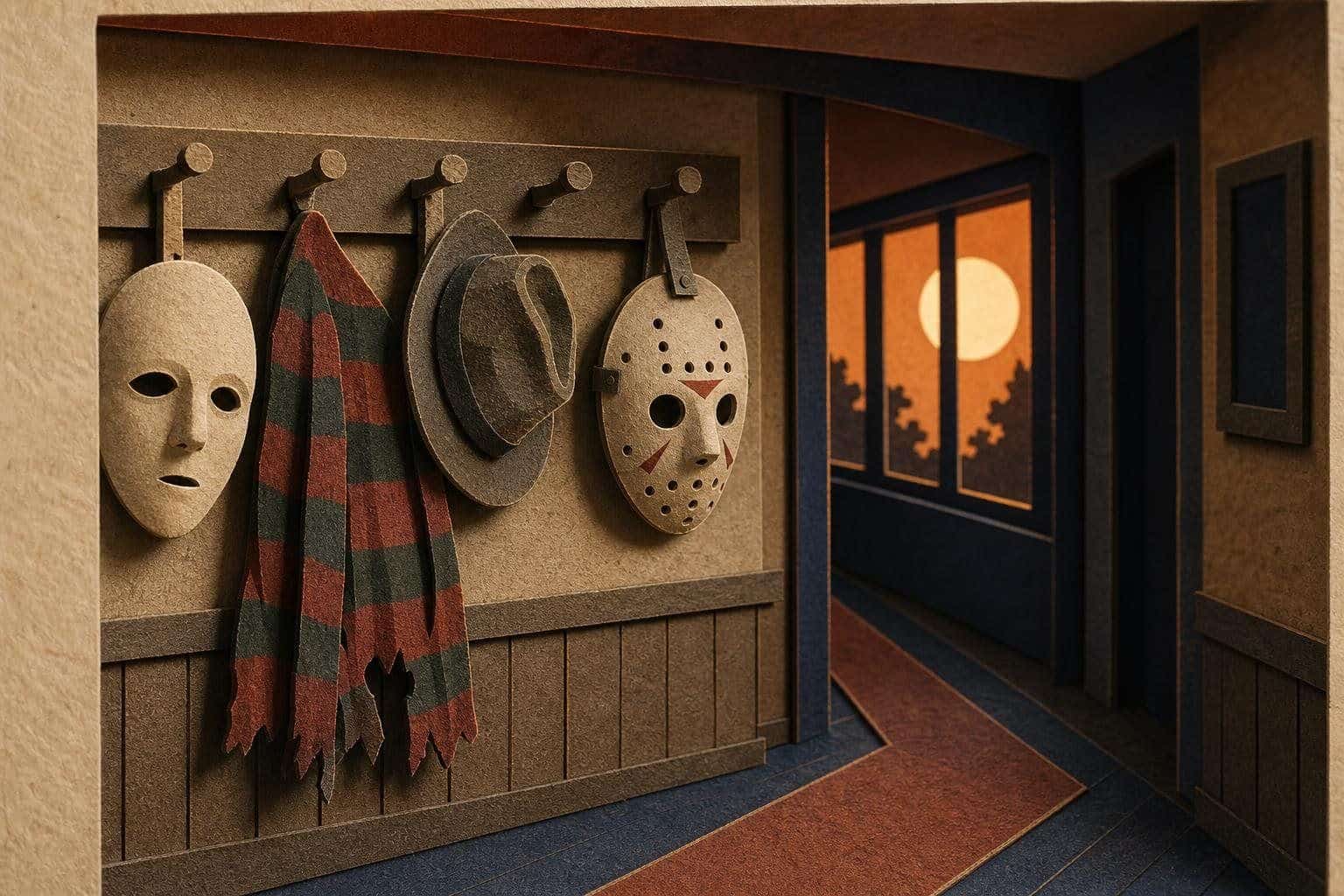
- Jason’s mask is a hockey mask with changing markings and wear across the films, which means a clean white mask with a few painted marks is accurate to some entry in the series.
- Ghostface keeps the same black robe and white mask through the Scream sequels, which makes it one of the most consistent looks in the genre.
- The Bride has a tall hairstyle with pale streaks and a white gown, and it is the sequel’s look, not the first film’s, that people recognize.
- The Ring’s central figure relies on long dark hair and a pale dress, both of which are cheap to source and easy to scale down for a gentler version.
If you are unsure which version to copy, pick the one you can describe in a sentence. Costumes that rely on one clear idea read better in a crowded room than faithful copies of a complicated film design.
Making a weathered look safely
Sequels and remakes usually show characters after more time and wear. To suggest that at home:
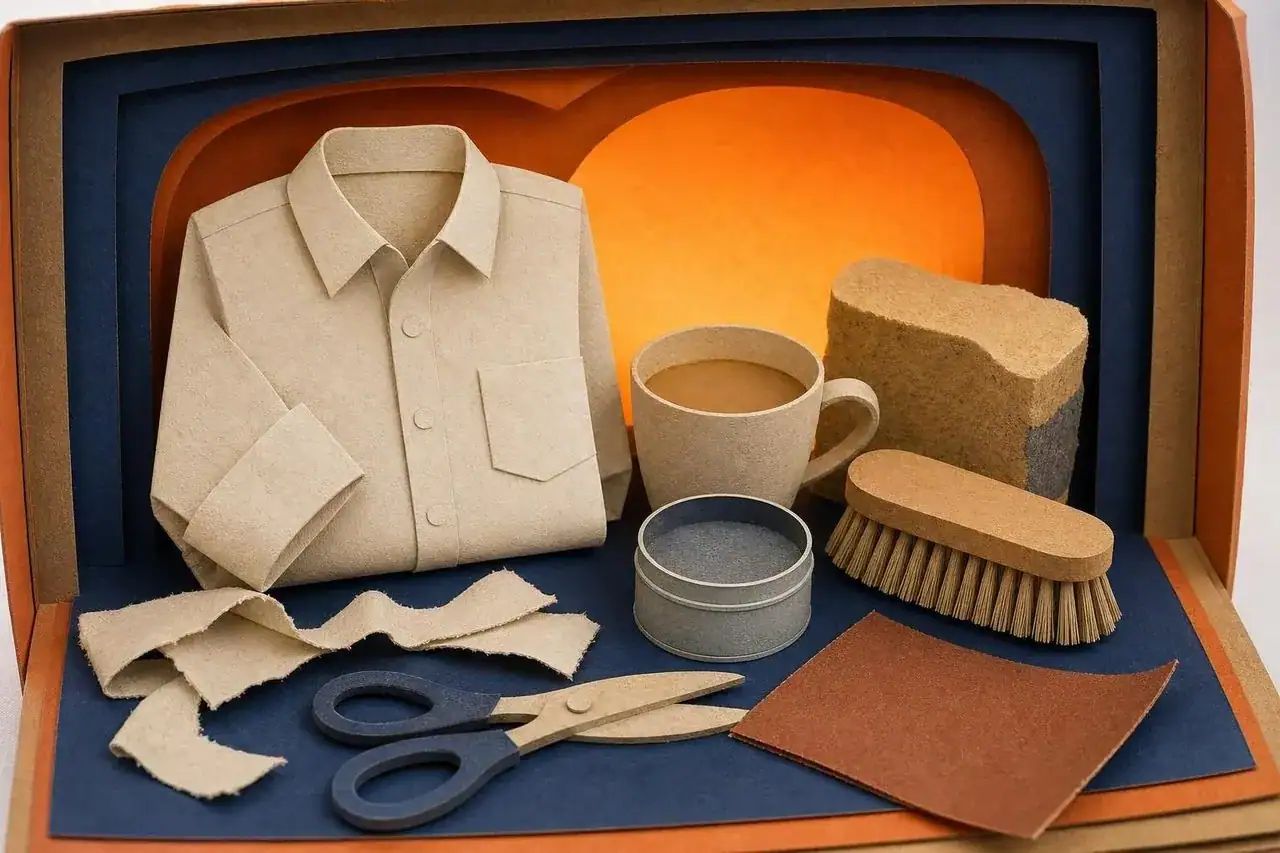
- Start with a pre-owned plain shirt or coverall in a washable fabric.
- Fray hems with scissors and a rough sponge instead of cutting large holes.
- Brush a little diluted brown or gray acrylic paint across knees, cuffs and collars, then blot with a paper towel. Test on a hidden seam first.
- Let it dry completely before wearing, and keep it away from open flame and candles.
- For masks, rub a little gray eyeshadow into the creases rather than painting over the whole surface.
This takes about an hour and produces a convincing used look with no cutting or glue near the skin.
What the genre learned
After decades of horror movie remakes and sequels, a few patterns are clear.
- Change the question, not the scenery. The best remakes ask a new question of an old story.
- Keep the central image. The Ring, The Thing and Bride of Frankenstein all keep one look people can draw from memory.
- A limit can be a gift. Smaller budgets and fewer effects often produced the most memorable results.
- Do not apologize for the original. Fans can tell when a remake is embarrassed by its source.
Costume angle: choose your era
Because villains and monsters change from film to film, you can choose an era.
- Original-era look: simpler, cleaner, usually easiest to make. A plain pale mask, a basic boiler suit.
- Sequel-era look: weathered, often with scuffs, damage and age. Use diluted paint on fabric and test on a hidden seam first.
- Remake look: often more textured, with more layers. Spend your time on weathering and a more detailed prop.
When working with face paint or special effects makeup, use products labeled for skin, patch-test first, and keep everything away from eyes unless the product says otherwise. The costume makeup guide explains products, application and removal.
Where to go next
Start with the horror villains and monsters guide for the full set of culture pages. Horror villains and where they came from looks at the figures behind many sequels, classic movie monsters covers the earlier creatures, and B-horror and 1970s sci-fi explores the low-budget films that often inspired remakes. For simple builds, browse DIY costumes.
Questions people ask
What is the difference between a remake, a reboot and a sequel?
Which horror remakes are considered better than the original?
Why are horror films remade so often?
What was Halloween III: Season of the Witch about?
What does it mean that Halloween (2018) ignores the sequels?
Who made the American version of Ringu?
Did the Psycho remake copy the original exactly?
How do costumes change between sequels?
Which classic horror sequel is most often praised?
Is it better to dress as the original character or a remake version?
Keep going