Vampires, werewolves and the myths behind them
Classic movie monsters compared with the folklore behind them: vampires, werewolves and Frankenstein's creature, plus safe home builds of the looks.
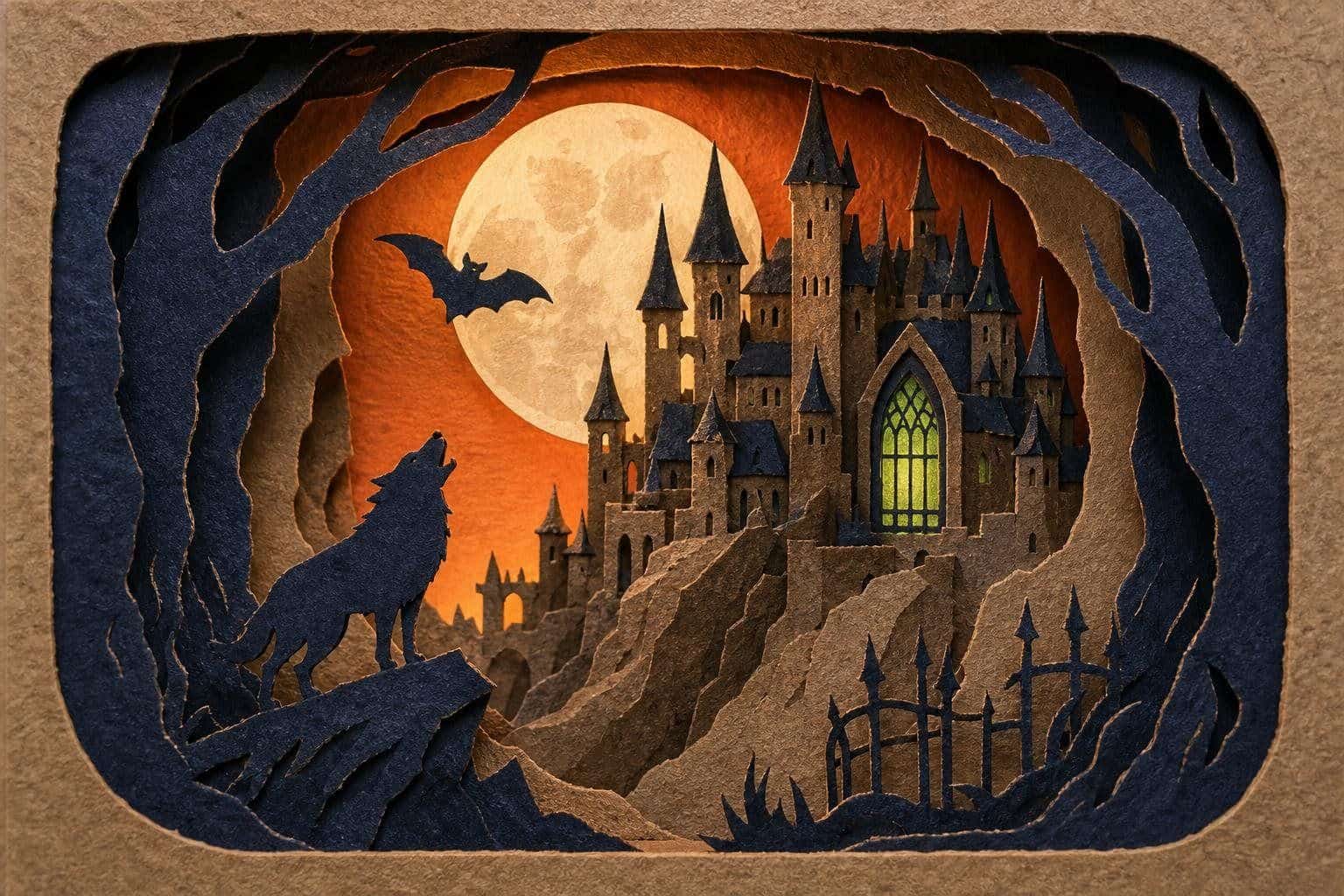
The classic movie monsters people dress up as every year are younger than most people assume, and the folklore they were built on is older and stranger than the films. This guide compares what the old stories said with what the cinema made of vampires, werewolves, Frankenstein’s creature and a few more, and then shows how to recreate each look at home with materials that are safe on skin and easy on the eyes.
Folklore first, film second
The classic movie monsters that Universal Pictures popularized in the 1930s and 1940s are only part of the story. Every monster in this guide has two histories. The folk history is a patchwork of regional beliefs, often contradictory. The film history is a set of design decisions made by writers, makeup artists and studios, usually in a hurry. The costumes people wear almost always come from the second history. It helps to know where the join is, because it tells you which details are essential to the look and which can be skipped.
Vampires
What the stories said
The word vampire entered English in the early eighteenth century, after reports from the Balkans about beliefs concerning the dead returning. The word itself comes from the Serbian vampir. In folk belief, such figures were not charming noblemen. They were local revenants, part of explanations people used for illness and death.
How literature turned them into aristocrats
John Polidori’s short story The Vampyre (1819) is usually considered the first fully developed vampire tale in English, and its Lord Ruthven is a pale, charming nobleman. Sheridan Le Fanu’s novella Carmilla, serialized in 1871 and 1872, added a female vampire to the tradition. Then came Bram Stoker’s Dracula, published in London on May 26, 1897.
Stoker never visited Eastern Europe, but his notes show careful reading about Transylvania. Historians who have examined those notes find no sign that he knew of Vlad III, the fifteenth-century prince often called Vlad the Impaler. A note he made says a Wallachian word for Dracula can mean devil, which seems to be the real source of the name.
From the page to the screen
F. W. Murnau’s Nosferatu (1922) was an unauthorized adaptation of the novel. The film changed the names and moved the setting, and Max Schreck played Count Orlok as a rat-like figure with long fingers. In 1925 a German court ruled that it breached the novel’s copyright and ordered copies destroyed, though some survived. The version most people picture came later. Tod Browning’s Dracula (1931), starring Bela Lugosi, was based on the 1924 stage play by Hamilton Deane and John Balderston.
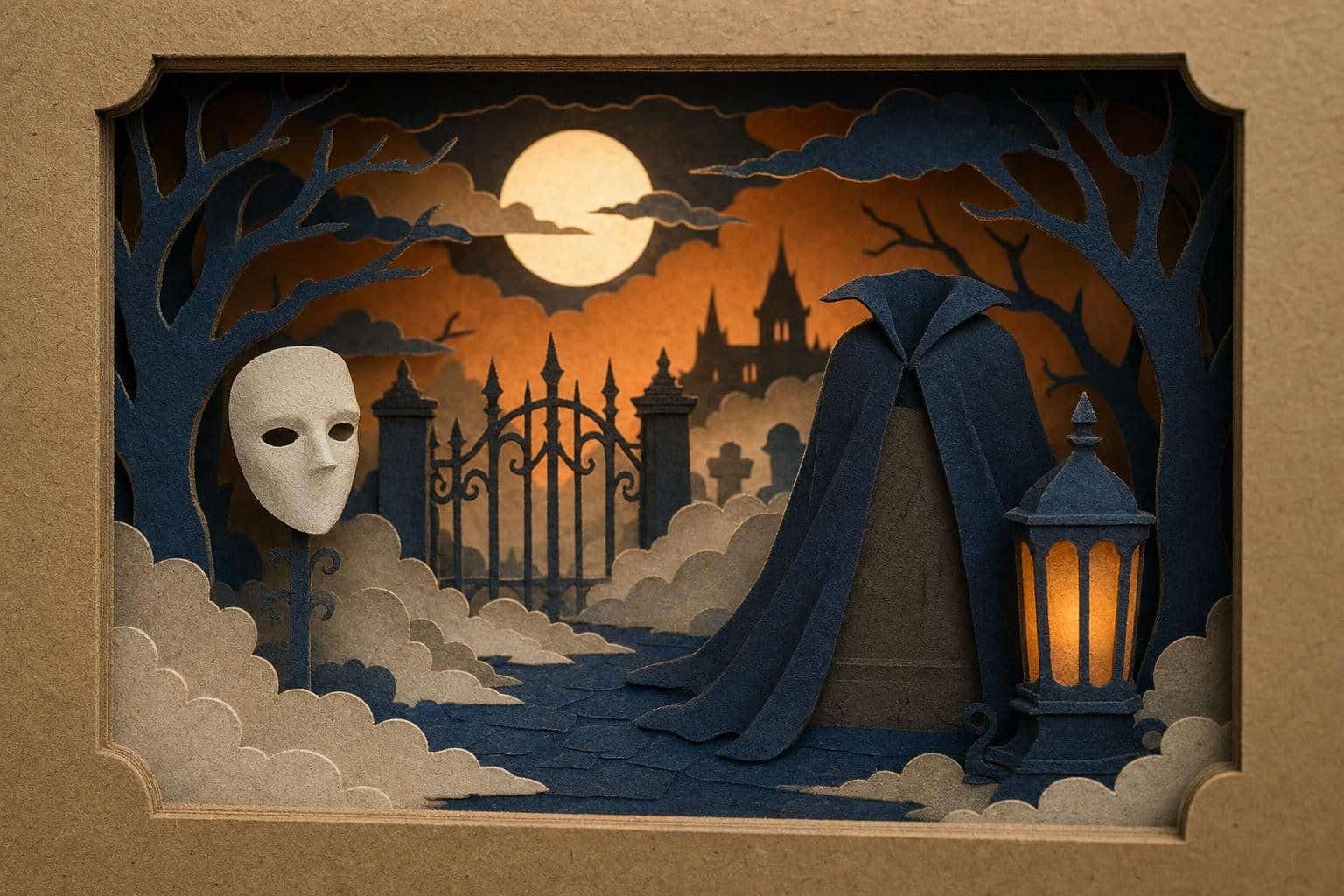
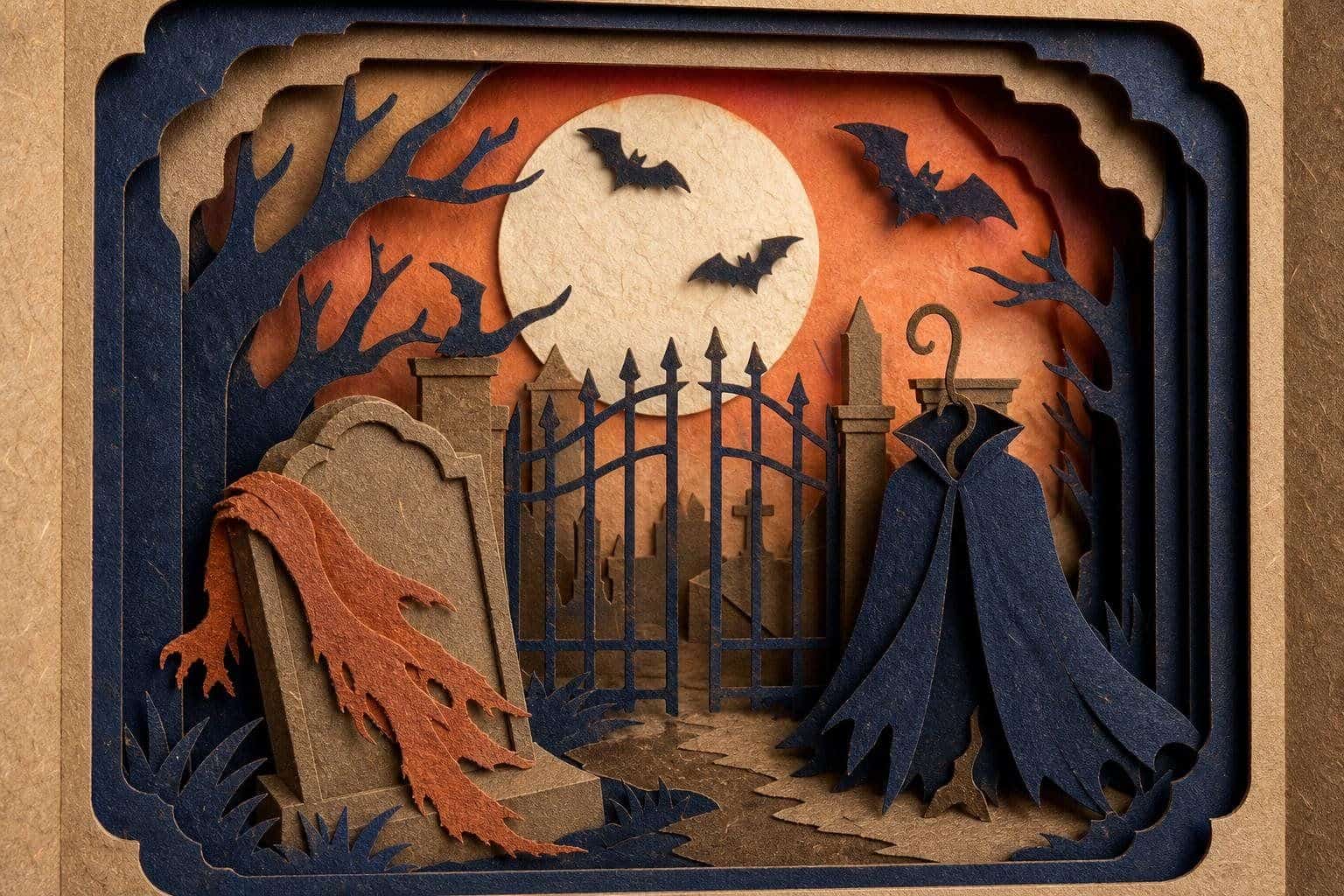
The stage play is where the evening clothes, stand-up collar and flowing cape come from. In Stoker’s novel there is no cape in that sense, only a cloak. The collar and cape made it easy for the actor to vanish through a trapdoor, and the look has survived a century.
How to dress as a vampire
- Classic Count: black cape, white shirt, dark waistcoat, a tall collar made from stiff card. Slick back the hair and add a small widow’s peak with eyebrow pencil.
- Orlok-style: a bald cap, pointed ears and long fingernails made from card. This is a much more unusual choice and makes a strong adult look.
- Gentler version for children: a cape, a pair of plastic fangs made for costume use, and a dusting of pale face paint labeled for skin.
The no-sew cape guide shows how to make a full-length cape from a single piece of fabric. For more looks and makeup ideas, see zombie and vampire costumes.
Werewolves
What the stories said
Stories of people turning into wolves are old and widespread in Europe, and the details differ a great deal from place to place. The silver bullet, which most people think of as ancient, is a late addition. The earliest specific instance found of silver killing a werewolf is in an 1883 story, and writing about the famous Beast of Gévaudan, the wolf-like creature said to have terrorized part of France between 1764 and 1767, does not mention silver at all. Historians such as Jay M. Smith have argued that the Beast was probably several large wolves, magnified by newspapers and public fear.
The screen werewolf
Werewolf of London (1935) is considered the first mainstream horror film built around a werewolf, with Henry Hull in the title role. The Wolf Man (1941), starring Lon Chaney Jr., became the template. Makeup artist Jack Pierce worked on the design for months, building the features from materials including cotton, putty and liquid plastic and gluing on yak hair. Applying and removing it took hours, which is one reason later productions simplified it.
In the film, a character kills the werewolf with a silver-headed cane, and the rhyme about a man “pure in heart” became part of popular culture. Most of what people now call werewolf rules owe more to cinema than to folklore.
How to dress as a werewolf
A hooded brown or gray fleece, a pair of fabric ears and gloves with felt claws make a cozy version. For the face, use skin-safe face paint to add a darker nose and brow, and avoid stiff glued-on pieces near the eyes. A tattered shirt is easy to make with a few snips and a bit of fraying.
Frankenstein’s creature
Mary Shelley’s novel Frankenstein, published in 1818, never gives the creature a name. Frankenstein is the surname of the scientist, Victor. The confusion began early, and the 1931 film, directed by James Whale and starring Boris Karloff, cemented it.
The look that most people picture was designed by Jack Pierce. He gave the monster a flat-topped head, to suggest a surgeon’s work, and bolts at the neck, to suggest electricity. Pierce used a rubber skullpiece, cotton and spirit gum to build the high forehead, and then gray-green greasepaint. The sequel, Bride of Frankenstein (1935), added Elsa Lanchester as the Bride and is widely considered one of the finest sequels in the genre.
To recreate the look: a boxy dark jacket with sleeves slightly too short, chunky boots, green-gray face paint labeled for skin, and a flat-topped hat made from craft foam rather than a tight wig. Keep neck bolts to foam and elastic, never anything that tightens around the neck.
Mummies, sea creatures and other classics
The Mummy (1932) starred Boris Karloff as Imhotep, a high priest brought back after thousands of years, with makeup by Jack Pierce. Creature from the Black Lagoon (1954) blended the Universal monster tradition with 1950s science fiction and gave the world a swamp-green amphibian. Both are easy to build: strips of cream cotton gauze for a mummy, and a green hooded shirt with fins cut from craft foam for the creature.
If you dress as a mummy, wrap loosely, leave the face uncovered or use a loose face piece, and avoid wrapping tightly around the neck, wrists or legs.
Why these monsters lasted
Universal Pictures released Dracula and Frankenstein in 1931, The Mummy in 1932 and The Wolf Man in 1941, and the creatures kept returning in sequels, comedies and later remakes. Part of the staying power is design. Each monster has one clear emotional hook: the charming predator, the misunderstood creation, the man who cannot control himself. Those hooks translate into costume personality as well as costume parts. A person in a vampire cape who stands still and speaks slowly is more convincing than one with perfect fangs and no attitude.
Another reason is flexibility. A vampire can be elegant, funny or tragic. A werewolf can be a tattered hiker or a full-furred beast. Kids and adults can pick the same character and arrive with completely different looks.
Build times at a glance
| Look | Materials | Approximate time | Difficulty |
|---|---|---|---|
| Vampire cape and collar | Black fabric, stiff card, safety pin or snap | 30 to 60 minutes | Easy |
| Werewolf hoodie | Fleece hoodie, felt ears and claws | About an hour | Easy |
| Frankenstein creature | Jacket, face paint, craft foam brow | One to two hours | Medium |
| Mummy | Cotton gauze or cut-up old sheet, tea for staining | About an hour | Easy |
These are rough estimates for a first attempt. A second build is usually quicker.
A monster family for groups
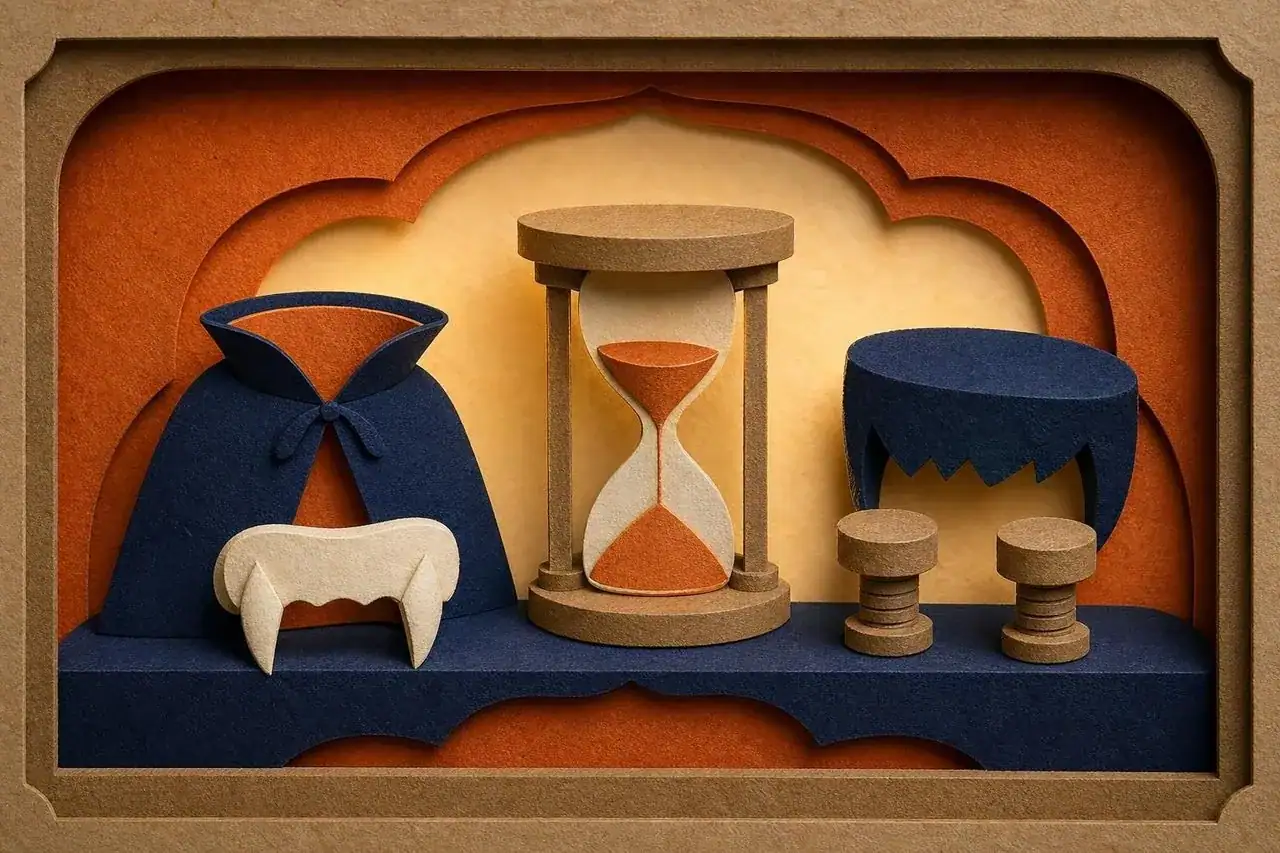
Because the classic monsters come from the same era of film, they look good side by side. A family can go as a vampire, a Bride, a creature and a werewolf, and it is easy to coordinate by palette: black and white for the vampire, gray-green for the creature, warm brown for the werewolf. A matching palette makes the group read as a set even when each member builds their own piece.
How to compare the stories
| Monster | What the folklore says | What the film added |
|---|---|---|
| Vampire | Local revenants from Eastern European beliefs | Evening wear, cape, charm |
| Werewolf | Many local wolf-person tales | The Wolf Man look, silver bullet fame |
| Frankenstein’s creature | A literary creation, unnamed | Flat head, neck bolts, green-gray skin |
| Mummy | Ancient Egypt as a setting | Bandages and a revived priest |
Safe and practical tips
Pale and green face paint should be made for skin and patch-tested the day before. Capes and long coats are tripping hazards on stairs, so shorten the hem to ankle length. Fangs and prosthetics should never restrict breathing. For a wider look at products and safe removal, see costume makeup and the costume accessories guide.
Where to go next
These classic movie monsters are also the best starting point for beginners, because their looks are built from simple shapes. The horror villains and monsters guide links every culture page, and horror villains and where they came from looks at the masked figures who followed these monsters.
Questions people ask
Did Bram Stoker base Dracula on Vlad the Impaler?
Where does the vampire cape come from?
Is Frankenstein the monster or the doctor?
Do silver bullets really kill werewolves in folklore?
What was the first werewolf movie from a major studio?
Is the word vampire from a real language?
How do I make fangs that are safe for children?
What is the simplest classic monster costume for a beginner?
Is the Frankenstein monster makeup safe to copy?
Are classic monster movies suitable for children?
Keep going