Pirate costume ideas, from coat to cutlass
Pirate costumes for kids and adults: 16 looks from deckhand to captain, what real pirate-era dress was like, and how to make safe cutlasses and chests.
 Drag to turn
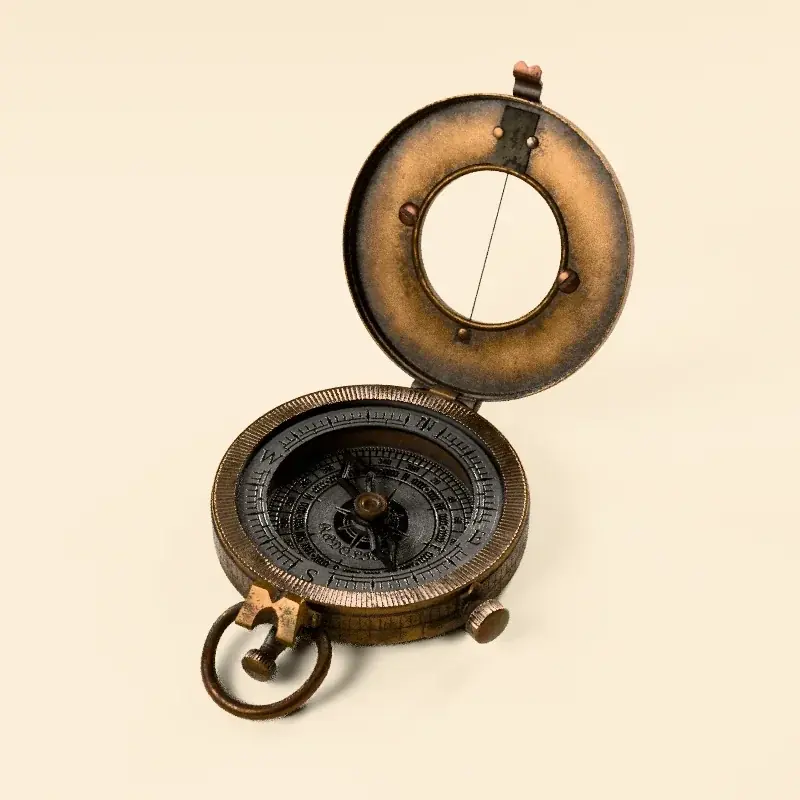
A brass compass, open, with its original patina.Pirate costume guide
Pirate costumes are some of the easiest to put together at home, because the look is loose, layered and forgiving of mistakes. This page gives you sixteen distinct pirate looks, a short factual look at what pirates really wore, a section on real props such as sabers, compasses and cannons, and notes on making safe versions of all of them.
What pirates really wore, and what is later fiction
Pirate dress from the Golden Age of Piracy, roughly the late 1600s into the 1720s, was less glamorous than the movies suggest. Most pirates were former sailors, and they dressed like sailors: short jackets of heavy blue or gray cloth, loose trousers that could be rolled up for deck work, and a scarf or cloth tied over the head to keep sweat out of the eyes. Wet-weather clothing was often shared ship’s stock, handed out to whoever was on watch. Captured cargo added better coats, shirts and hats when the chance came.
The famous picture of a tricorn hat, a single eyepatch and a gold hoop earring is mostly later fiction and illustration. Captains are not known to have worn tricorns, and neither eyepatches nor earrings were common among sailors. None of that makes them wrong for a costume. It just helps to know which parts are history and which are theater, so you can choose on purpose. A head scarf is the more accurate choice, and a tricorn is the more recognizable one.
Deckhand and crew looks

1. The deckhand. A striped or plain loose shirt, dark trousers rolled to the calf and a bandana. The selling detail is bare ankles or plain flat shoes. Everything comes from a regular closet, so it takes ten minutes.

2. The cabin boy or girl. A baggy shirt, a short waistcoat and a rope belt. The one element that sells it is a coil of rope on the shoulder, made from twisted cord from any craft drawer. Good for small children because nothing is heavy.

3. The ship’s cook. A stained-looking apron over a work shirt, a ladle and a battered pot. Splatter the apron with watered-down brown paint on a test patch first. It is a good funny alternative for kids who do not want a sword.

4. The lookout. A knitted cap or head scarf, a scarf at the neck and a spyglass made from a cardboard tube wrapped in dark paper, with a card ring at each end. The tube also gives a hand something to hold.

5. The gunner. A short vest over a plain shirt, a rag around the forehead and a card powder keg. Gray face smudges from a skin-safe stick suggest powder smoke. Pair it with a cardboard cannon for a duo.
Captain and officer looks

6. The captain. A long dark coat with wide turned-back cuffs, a waistcoat and a collared shirt. The cuffs sell it: cut them from felt and glue them on in a contrasting color. A felt hat with the brim pinned up on three sides gives the tricorn shape.

7. The first mate. A shorter coat, a sash and a compass on a cord. A mate reads as practical, so skip the feathers and add a notebook or a rolled map.

8. The navigator. A waistcoat, a rolled paper chart and a brass-colored compass. Stain the paper with cooled tea so it looks old, and let it dry flat.

9. The quartermaster. A plain coat, a set of keys on a belt hook and a ledger. The quartermaster handled shares and discipline on many pirate ships, so keys and a book are a clever, less common choice.
Swashbuckler and storybook looks

10. The swashbuckler. A white shirt with open lacing at the neck, a bold sash and tall boots or boot covers. The lacing is the signature: punch holes in the shirt placket and thread cord through. Boot covers can be folded from black craft foam.

11. The pirate queen. A long coat over a skirt or trousers, a feathered hat and a heavy belt. Historical women pirates such as Anne Bonny and Mary Read are real, so the idea has solid ground.

12. The ghost pirate. Take any look above and age it: gray and white face paint, ragged cut edges on sleeves and a torn sash. Use makeup labeled for skin and keep it away from eyes.

13. The parrot companion. A bright felt parrot sewn or pinned to the shoulder is one of the fiction touches that stuck, popularized by Robert Louis Stevenson’s novel Treasure Island, published in book form in 1883. A stuffed toy works, but pin it so the weight does not pull the collar.
Group and quick looks

14. The treasure hunter. A map, a shovel made of cardboard, a satchel and a cap. The idea comes from fiction, since buried treasure is largely a literary idea. It is a gentle choice for toddlers who just want to carry a map.

15. The pirate pair or crew. A captain with a navigator and a cook makes a recognizable family set without anyone repeating a costume.

16. The five-minute pirate. Striped shirt, belt used as a sash, a dark scarf for the head and a single eyeliner scar from skin-safe makeup. This is the emergency version for school dress-up days.
Real pirate-era props, and how to make safe versions
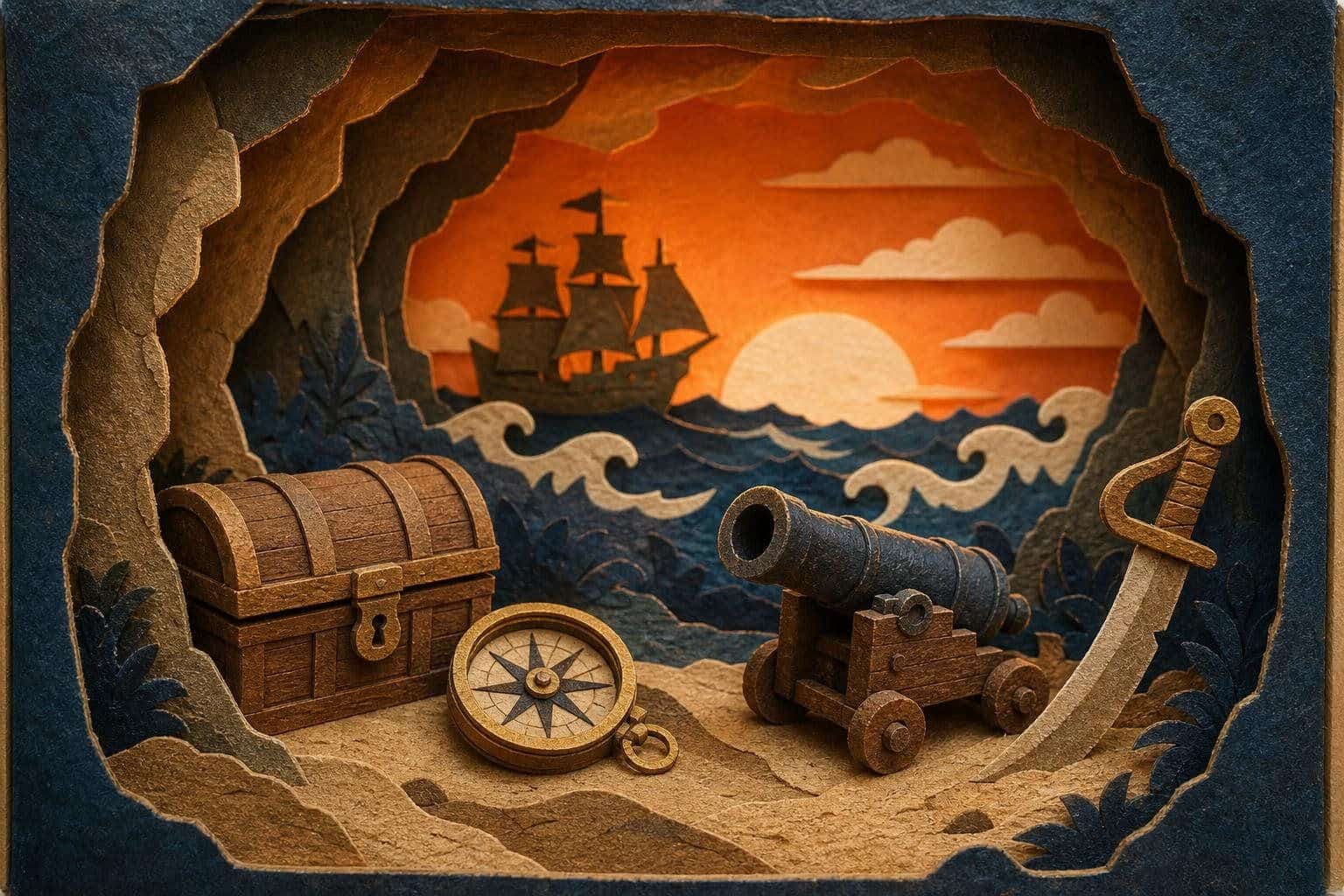
The props are what turn a vaguely nautical outfit into a clear pirate. Four of them appear in the 3D prop viewer on this page, each built from a scan of a real object: a treasure chest, a compass, a cannon and a saber. Turning them around on screen is a good way to see the details a cardboard copy should include.
The saber or cutlass. The cutlass was a short, heavy, slightly curved, single-edged blade, a practical sailor’s weapon for tight spaces and for cutting rope as well as for fighting. A longer, lighter saber is more of a cavalry and officer weapon. For a costume, a short curved blade says “sailor” and a longer, straighter one says “officer”. Cut the blade from two layers of corrugated cardboard glued with the corrugation in opposite directions, round every edge, paint it silver and add a cardboard hand guard. Craft foam is softer and safer for young children. Never use a real or metal blade, and keep any prop shorter than the child’s arm.
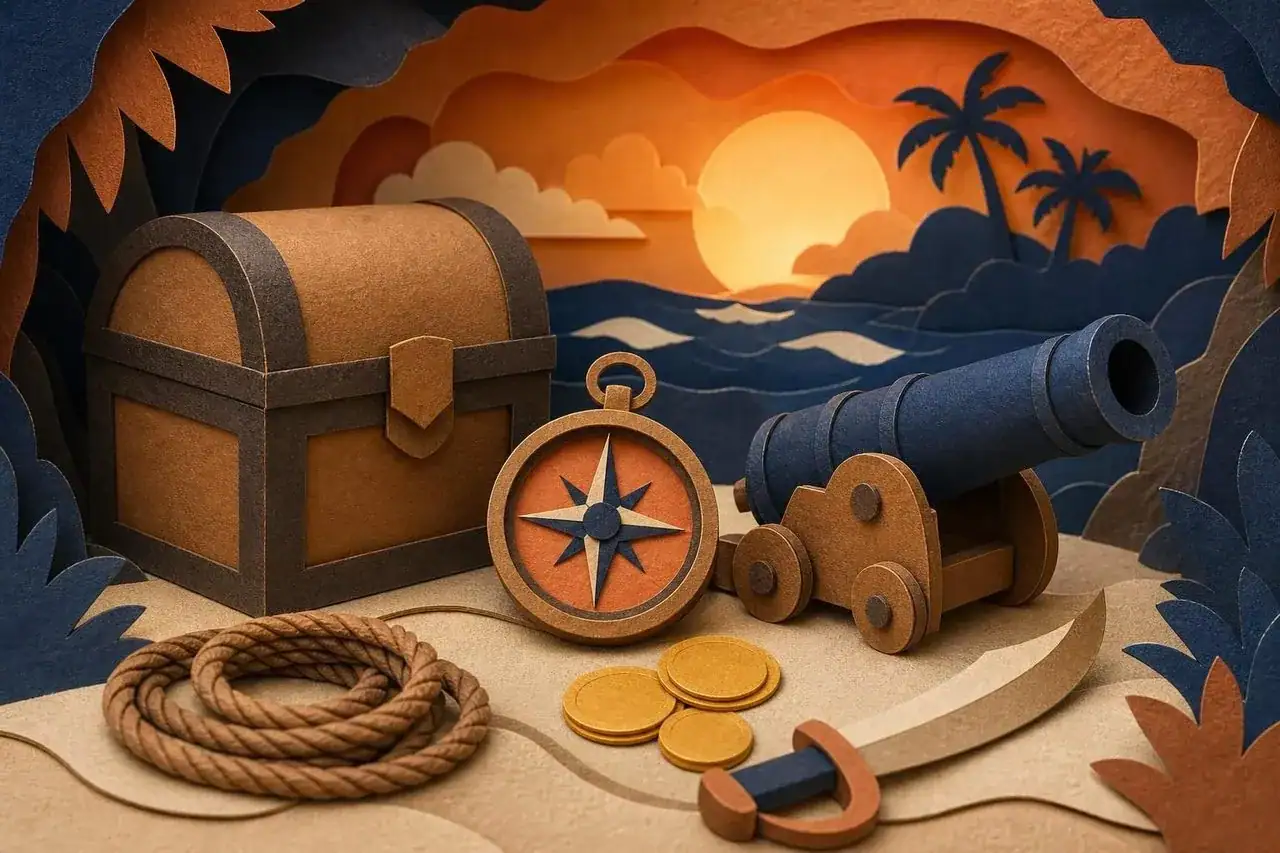
The treasure chest. Sailors kept their belongings in a sea chest, so the chest is genuinely period, even if the overflowing gold is storytelling. It adds a collecting role: a trick-or-treat bucket in disguise. Cover a small cardboard box with brown paper, add black paper bands for the metal straps and a gold brad as a lock. A curved lid is cut from a folded strip of card.
The compass. A magnetic compass was a basic ship’s instrument, which is why it suits navigators and captains. It adds a sense of purpose and is lightweight. A real hiking compass on a cord works, but a round card face with a printed rose and a plastic cover works too, and it will not break.
The cannon. Ships carried cannon on wheeled carriages along the deck. A cannon makes a good group prop or a photo backdrop rather than something carried. Wrap a cardboard tube or a mailing tube in dark gray paper, add cardboard wheels on dowel axles and fix the barrel to a box base. Keep the whole thing stationary.
How to choose a pirate look
Match the look to who will wear it, how long and where. A toddler needs a head scarf and a vest with nothing to trip on. A school-age child may want a captain’s coat and a sword, in which case a short foam blade is better than a long cardboard one. Teens and adults can add period detail: lacing, a waistcoat and a long coat. For a party, one strong silhouette such as the coat and hat is more important than many small accessories. If the costume must also work for cold weather, layer a sweater under the coat instead of using a thin shirt alone.
Ask three questions. Will it need to be worn for hours? Will the wearer walk, climb or dance? Can they see and hear well? The answers will tell you to drop the eyepatch, shorten the sword or hem the trousers.
Comfort and safety notes
- Keep hems, sashes and coat tails off the floor, and avoid long dragging fabric on stairs.
- Hats and scarves must never cover the eyes. Test vision before leaving the house.
- Make every prop soft or blunt, with rounded edges, and agree on where it is not to be swung.
- Do not give small children props with detachable small parts such as beads or buttons that can be swallowed.
- Hot glue burns. Let adults do it, or use cool-melt glue.
- Use skin-safe makeup, patch test first and keep it clear of the eyes.
- A cardboard prop near a candle or a jack-o’-lantern is a fire risk, so keep flames away.
More builds and sibling pages
If the coat and hat appeal, the cardboard armor methods in the cardboard knight guide transfer directly to a cardboard cannon or sword. For the wider picture, browse the full range on the costume ideas guide, look at how other eras dressed in historical costumes, or see how hats, belts and props are made in costume accessories. Before the big night, check the costume safety guide for makeup and mask rules.
Questions people ask
What do you need for a basic pirate costume?
Did real pirates wear tricorn hats and eyepatches?
How do I make a safe pirate sword for a child?
What can a pirate wear on the head besides a hat?
How can I make an eyepatch that is comfortable?
What makes a pirate captain look different from a crew member?
How do I make a pirate costume without sewing?
Can a girl or woman dress as a pirate?
How do I keep a pirate costume safe for trick-or-treating?
What is a good group or family pirate theme?
Keep going