Witch and wizard costume ideas
Witch costumes and wizard looks for kids and adults: 15 ideas, how to draft a pointed hat from a flat pattern, plus robes, wands, brooms and safety notes.
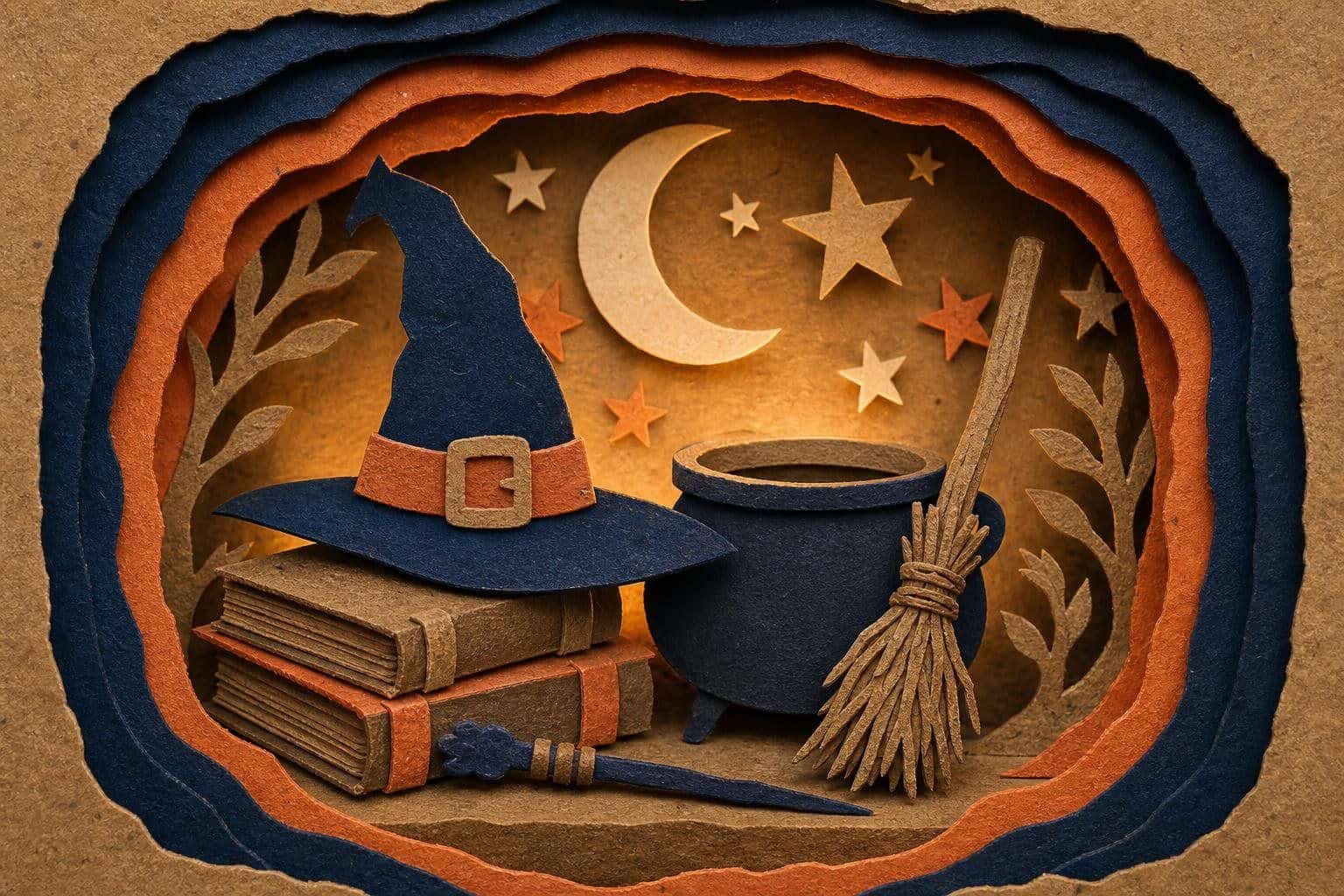
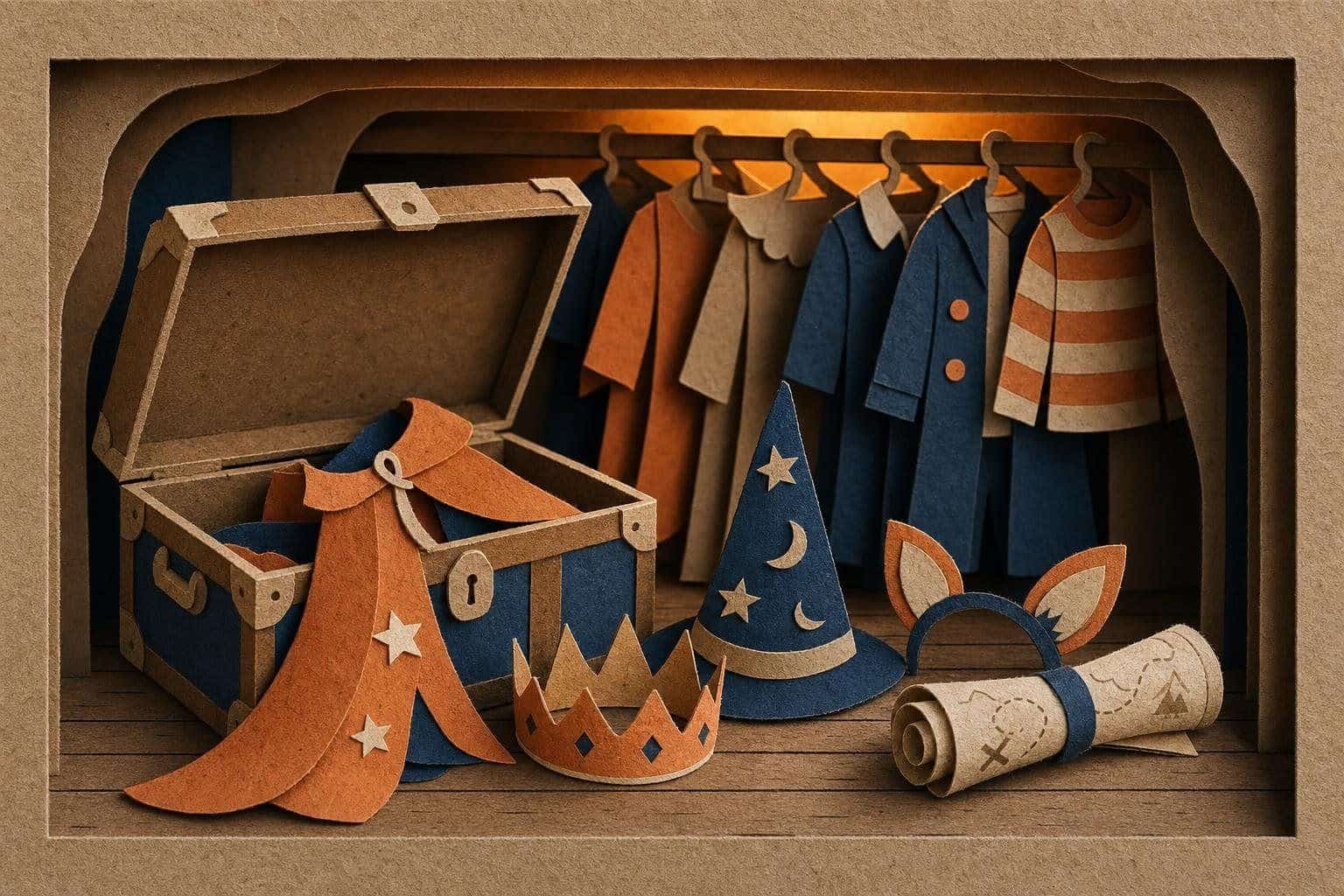
Witch costumes and wizard costumes share the same four building blocks: a hat, a robe or long dress, something to hold and a few details that suggest magic. That means the family can start from the same pattern and end up with very different characters. Below are fifteen ideas, a pattern for drafting the pointed hat from a flat sheet, and notes on wands, brooms and comfort.
How a pointed hat is built from a flat pattern
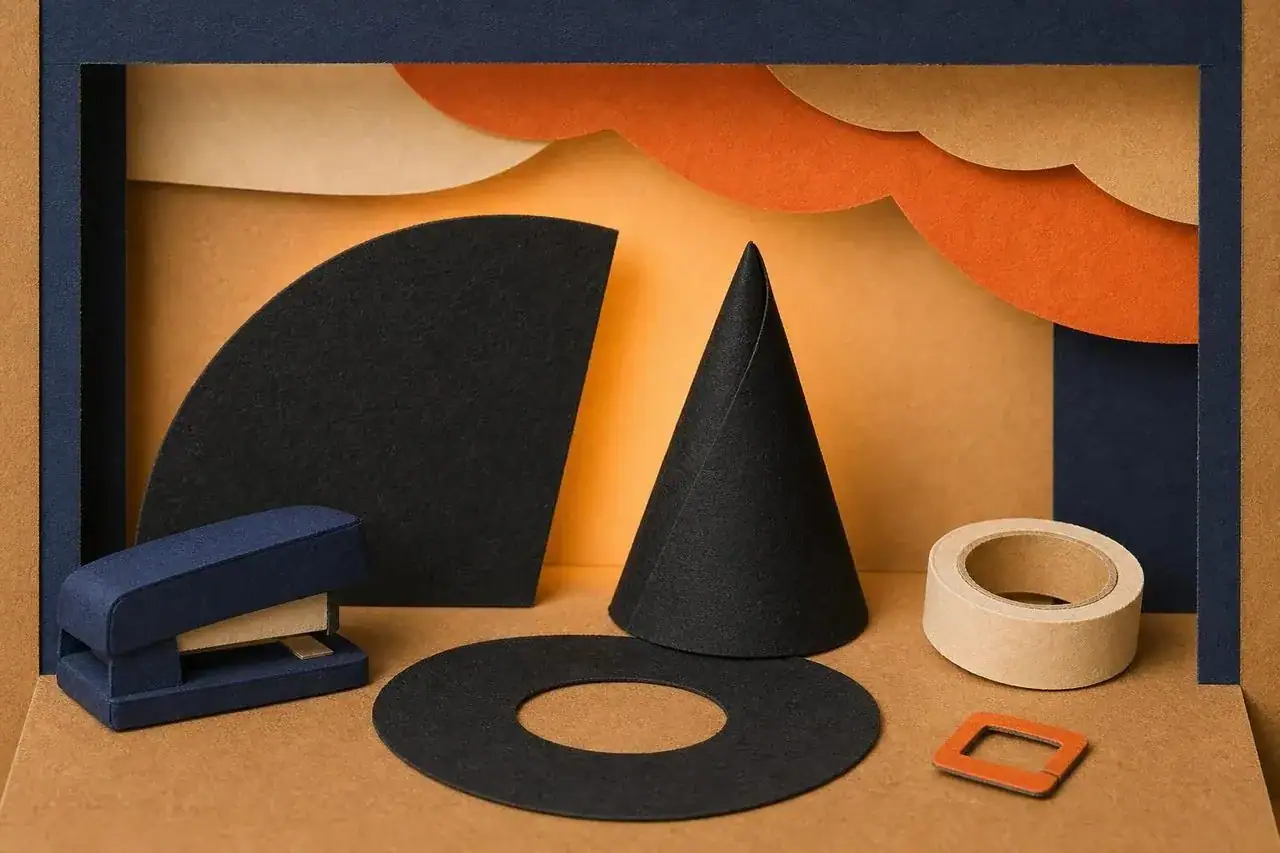
A cone is a flat shape bent round, and the shape you start with is a sector of a circle, like a slice of pie with a very wide wedge. The straight edges of the wedge meet to form the seam, and the curved edge becomes the opening you wear on your head. The longer the curved edge, the wider the opening; the longer the straight sides, the taller the hat.
- Measure the head around where the hat will sit. This is the circumference the curved edge must reach, with a little extra for the overlap.
- Pick a height for the cone. Tie a string to a pencil, pin the other end to a card corner and swing an arc whose radius is the straight side length. A longer radius gives a taller hat.
- Mark the arc length on the arc, roughly the head measurement plus a finger-width, and draw straight lines back to the pin. Cut it out.
- Curl it into a cone, overlap the edge by about 2 cm and tape it or glue it, then check that it sits on the head. Trim the opening if needed.
- Trace the base of the cone on another sheet, then draw a ring around it for the brim. A brim width of a hand or so looks classic. Cut the ring and snip small tabs inside the hole.
- Fold the tabs up and glue them inside the cone. Bend the brim a little for character.
Use black or dark craft card for a light hat, or stiffened felt for a reusable one. A cone wire or a bent wire around the base gives extra structure. Floppy tips can be given a bend on purpose, which many witch hats have anyway.
Witch looks

1. The classic witch. A black dress or long skirt, a pointed hat and striped tights. The signature is the hat plus a trailing hem torn to ragged points with scissors.

2. The green kitchen witch. A green apron over a patchwork dress, a wooden spoon for a wand and herb bundles pinned on. It reads as friendly and takes minutes.

3. The forest witch. Earth tones, leaf shapes cut from felt and a bag of twigs. The selling detail is a collar of leaves. Fast and gentle for small children.

4. The star-gazer. A deep blue robe with felt stars, a crescent moon brooch and a paper telescope. Metallic paint pens show up well after dark.

5. The sea witch. Teal and gray layers, a net as a shawl with shells and a trident-style staff. Skip real hooks and keep trims light.

6. The good witch. A pale dress, a crown and a simple star wand. A calm contrast to the classic black.

7. The lantern witch. A dark coat with a battery tea light lantern on a hook. Use only battery-powered light, never a real flame.
Wizard looks

8. The elder wizard. A long gray or white robe, a long beard of wool or cotton batting and a staff. The beard sells it. Fix it with soft elastic over the ears and test that it does not cover the nose or mouth.

9. The apprentice. A school-style robe, a scarf, round glasses and a wand. Keep it modest: a short robe and a satchel with a notebook.

10. The star wizard. A midnight blue robe printed with felt stars and a tall pointed hat with a wide brim. A real wizard-hat variation just needs a taller cone and a floppier tip.

11. The alchemist. A leather-look apron, goggles pushed up on the forehead and glass-looking jars made from clean plastic bottles with painted labels. Fill them with colored water only if sealed.

12. The forest druid. A hooded green cloak, a walking staff with a vine wound round it and a wreath of fake leaves.
Mix and group ideas

13. The family coven. Several witches and wizards in different colors, linked by one repeated detail like a gold ribbon. It is easy to scale across ages.

14. The pointed-hat classroom. A teacher in a tall hat and a row of students with small hats makes a good school group. A simple hat template works for all of them.

15. The potion seller. A table-top character: a hat, a shawl and a tray of labeled bottles. It works for school events where children walk less.
Wands, brooms and robes
A wand needs only a stick, so the building is mostly decoration: wrap a dowel with twine, add a hot-glue spiral that you paint, or push a bead on the tip. Keep the tip rounded and the length to about a forearm. A broom is a carried prop: a dowel with twig or raffia bristles bound with strong cord. Make it shoulder height at most. A robe is the easiest sewing project there is. A rectangle folded in half with a head hole, a sash at the waist and wide sleeves made from fabric tubes is enough. The no-sew cape guide shows cutting and fastening methods that carry straight over to robes.
How to choose
Pick the character first, then the amount of layering. Younger children do better in a short robe or dress, a lightweight hat and a wand than in a floor-length gown. Teens and adults can handle structured hats, heavier robes and props such as staffs. Indoors, warmth is a bonus; outdoors on a cool night, put thermal layers under the dress. For a character who will move, such as a dancer, stage-test the hat and sleeves before the day.
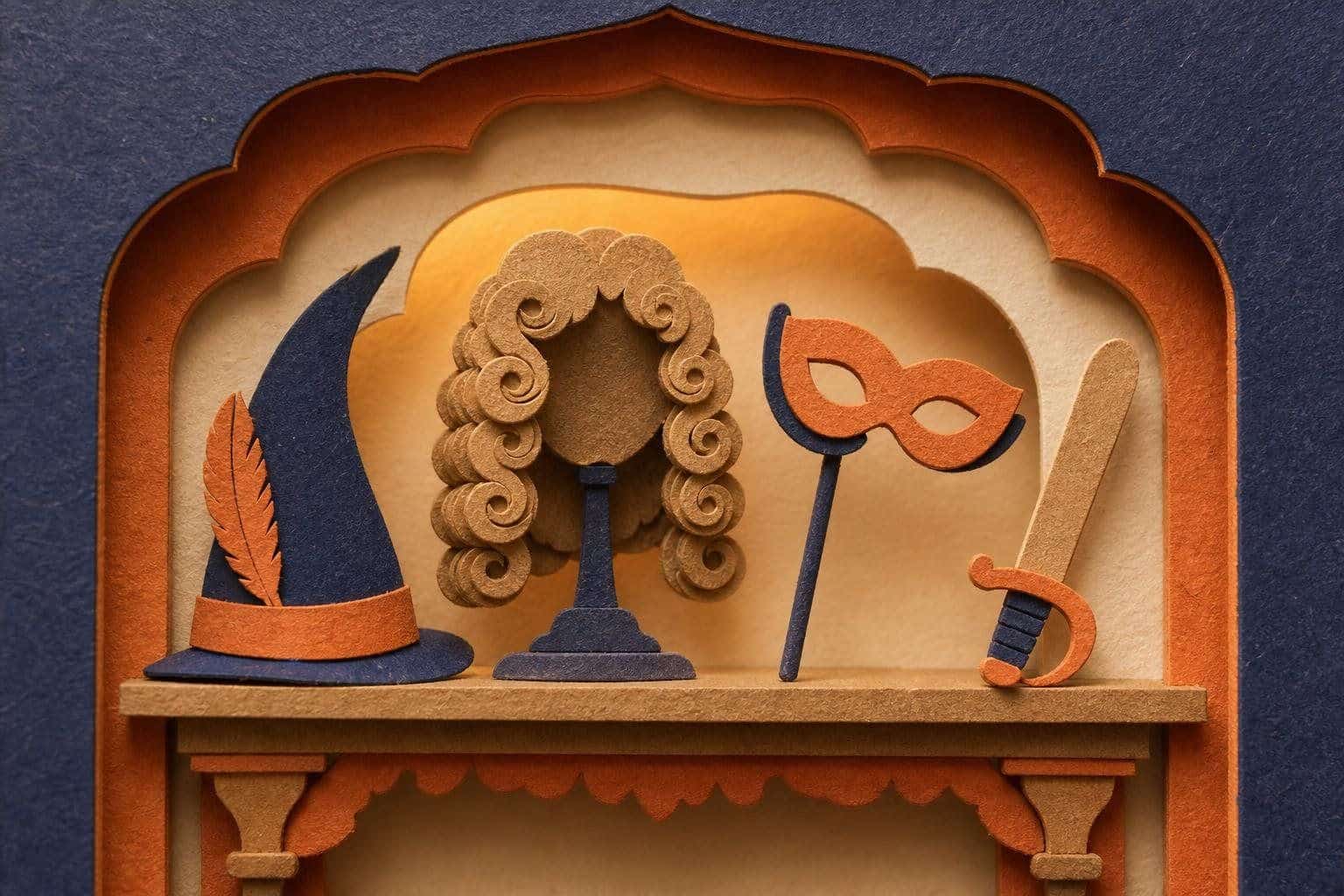
If you want something magical but less tied to witches, see the fantasy and elf costume ideas, and for hats, wigs and props see costume accessories. Makeup for green skin or aged faces is covered in the costume makeup guide.
Comfort and safety notes
- Hems should clear the ankles on stairs. Capes and robes should open on a loose tie, not a tight knot at the throat.
- Beards, hoods and hat brims must leave the eyes, nose and mouth free.
- Wands, staffs and brooms are for holding, not swinging. Round the ends and keep them lightweight.
- Use only battery-powered lights. Fabric, paper and cotton batting burn easily, so keep clear of candles.
- Check green or colored face makeup on a small patch of skin a day ahead, and use products labeled for skin.
- A hat should be secure but never tight under the chin.
Return to the full collection of costume ideas for other themes, and read the costume safety guide before using makeup or props. The costume ideas guide lists every theme.
Questions people ask
What do you need for a simple witch costume?
How do you make a witch hat from paper or card?
How do I make a wizard robe without sewing?
How long does a DIY wizard costume take?
What is a safe wand for a child?
Can a broom be part of a costume?
What colors can a witch costume be besides black?
How do I keep a pointed hat on a small head?
How can I make a witch or wizard costume for an adult?
Is a witch costume appropriate for kids?
Keep going