Animal costume ideas
Animal costumes for kids and adults: 18 easy ideas from cats and bunnies to dinosaurs, with simple ears, tails and masks, plus comfort and safety tips.
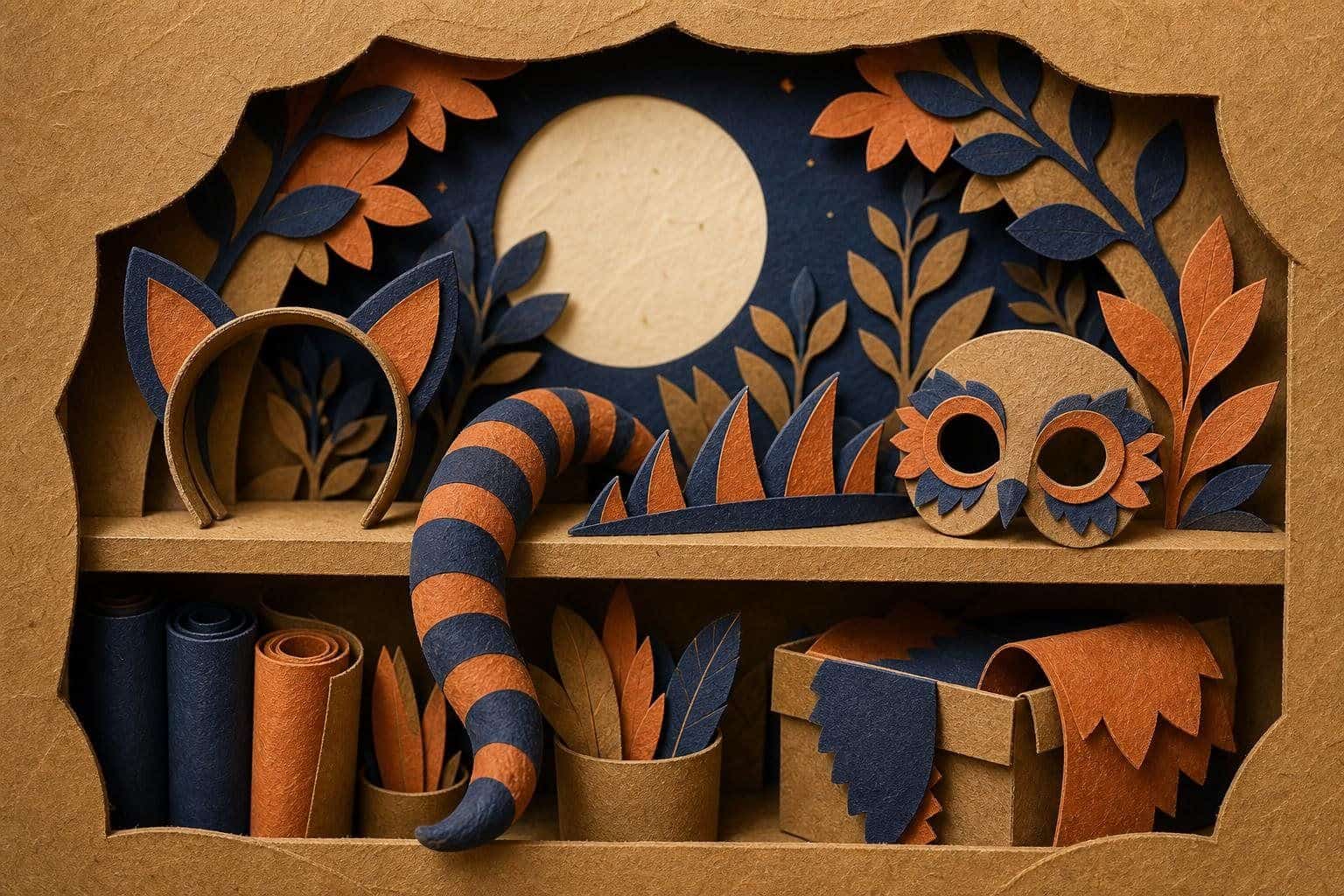
Animal costumes work for every age because the recipe is so forgiving: plain clothes in the right color, a pair of ears, a tail and a bit of face paint. This page lists eighteen animal costume ideas, from house pets to dinosaurs, along with ways to build ears, tails, wings and masks at home, and the comfort and safety points that matter when someone is wearing fur-look fabric for hours.
The three-part animal formula
Nearly every animal look comes from three parts.
- Color. Dress in one color that matches the animal: orange for a fox, gray for a mouse or a wolf, green for a dinosaur, black and white for a panda. This does more than any other element.
- Ears or headpiece. Felt ears on a headband, a hood with ears or a simple mask that leaves the face uncovered.
- Tail. A stuffed felt tube or a length of tights, pinned inside the waistband or fixed to a belt.
Whiskers, a nose and a few stripes or spots in face paint finish it.
Pets and farm animals

1. The cat. Black or gray clothing, pointed felt ears and a long tail. The whiskers painted with eyeliner or face paint make it. Easiest for almost any age.

2. The dog. Brown or spotted clothing, floppy felt ears and a short tail. The ears are the selling point: cut them long and let them hang from a headband.

3. The bunny. White or pastel clothes, tall ears reinforced with a strip of craft wire inside (with taped ends) and a pom-pom tail made from cotton balls or yarn.

4. The sheep. A white hooded sweatshirt with fiberfill or cotton balls glued on, black ears and a dark face. Good for toddlers and warm.

5. The pig. Pink clothes, floppy pink ears and a round snout made from a paper cup painted pink with two nostril dots. Attach the cup loosely or simply paint the nose.
Wild animals

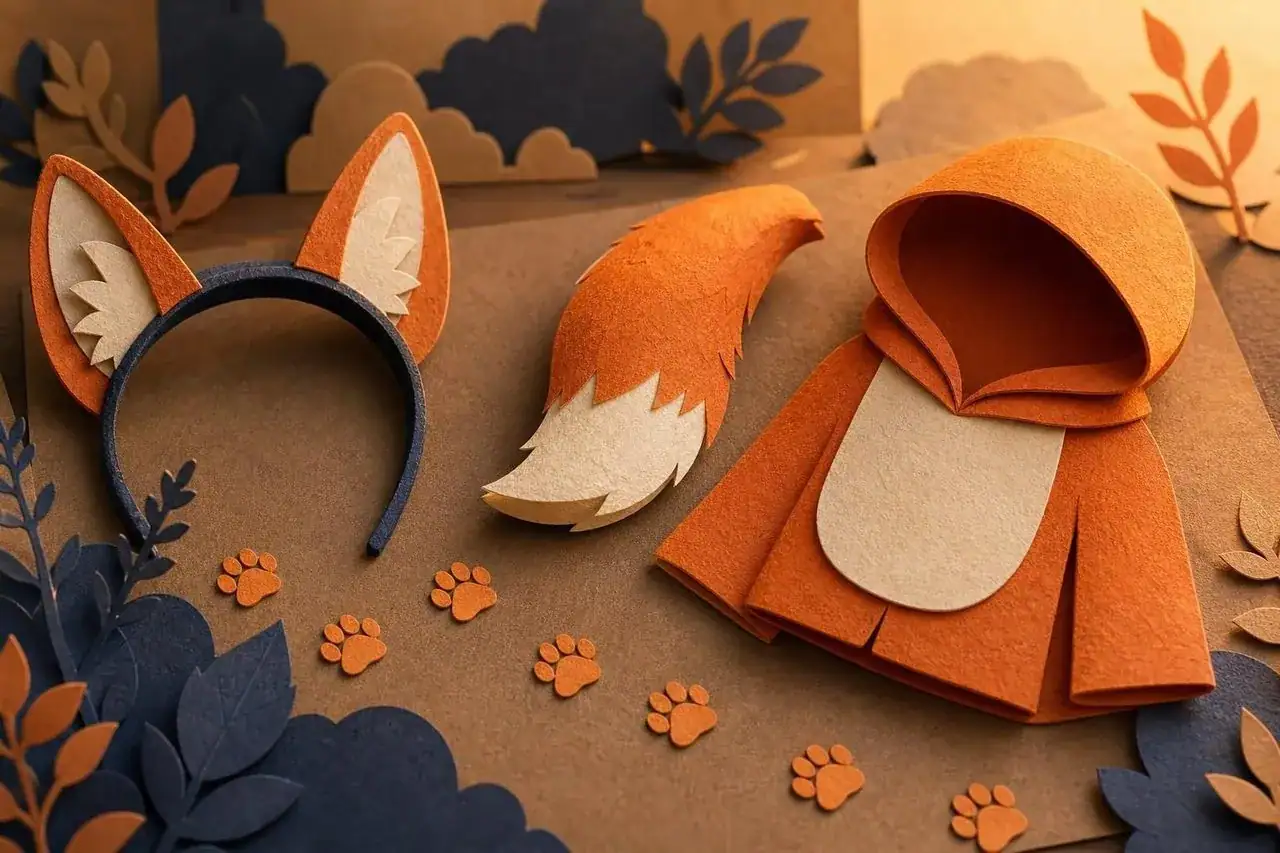
6. The fox. An orange sweater, white felt chest patch, pointed ears with dark tips and a fluffy tail with a white end. A fox is reliable and recognizable.

7. The lion. A yellow or tan top, a mane of yarn or strips of brown felt around a hood or headband, and a tail with a tuft. Wind yarn around a card rectangle, cut one edge and tie in the middle to make tufts quickly.

8. The tiger. Orange clothing with black felt stripes glued across, rounded ears and a stripe tail. Paint stripes on the cheeks for the finish.

9. The panda. A white sweatshirt, black arm and leg patches, round black ears and a face in black and white. Even a monochrome outfit reads as a panda.

10. The bear. Brown fleece, round ears and a short tail. For children’s costumes, a hooded jacket with ears is enough. If you are curious how large costume bears are made and worn, see the page on bear mascot costumes.

11. The elephant. Gray clothes, large floppy ears of felt and a trunk made from a stuffed gray sock or a tube of fabric attached to a hat. Keep the trunk off the face.
Birds, bugs and sea creatures

12. The owl. A brown top with rows of felt feathers, large round eyes on a headband or hood and a small felt beak. A cape with feathers gives wings that flap.

13. The penguin. A black top and white fabric belly, orange felt feet over shoes and a small beak on a hat. A popular option for wintry events.

14. The ladybug or bee. A red or yellow top with black felt dots or stripes, antennae on a headband and light wings made from sheer fabric on wire. Round and cheerful.

15. The butterfly. A fabric cape with wing shapes, decorated with felt or paint in bright patterns. Wings can be arm-width and light.

16. The octopus or jellyfish. A hat or umbrella-style top with streamers hanging down, or a skirt of felt strips. Keep streamers above the knee so they do not catch underfoot.
Dinosaurs and reptiles

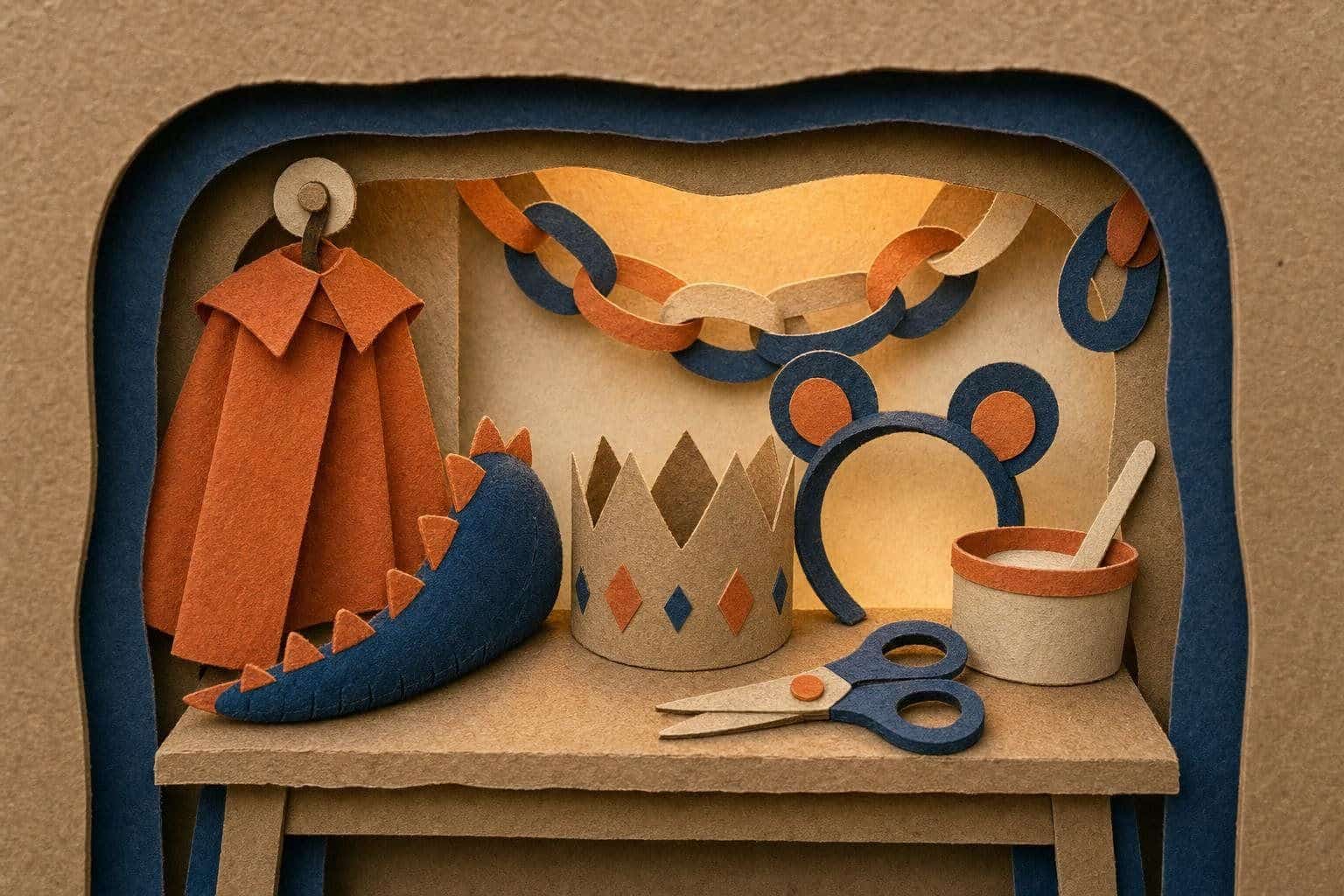
17. The dinosaur. A green hoodie with felt spikes in graded sizes down the hood and back, a long tail and felt claws on the sleeves. It works for every age, and the hood keeps the head warm.

18. The dragon or crocodile. The same hoodie approach with a different color, bigger spikes and a snout of card on a hat brim. Related imaginary creatures show up in the fantasy and elf costume ideas.
How to choose
Think about the person, the weather and how long the costume will be worn. Toddlers do best in a soft hoodie or one-piece in the right color, with ears sewn on so nothing can be pulled off. Older children like a bit more detail such as a tail that swings or a big mask. Adults usually prefer a subtle animal, built from normal clothes, with ears and make-up. If the costume will be worn in a school or party, make sure the wearer can sit, hug, use the restroom and eat comfortably.
For family or pet ideas, see pet costumes, and for more age-based builds see kids costumes. Animal face painting is covered in the costume makeup guide.
Comfort and safety notes
- Check heat. Fleece and fur-look fabrics are warm, so remove layers indoors and offer water.
- Do not cover the face with a mask that limits vision or breathing. Use ears, hoods and face paint.
- Keep tails short enough that they do not catch on chairs, doors or other children.
- Cover any wire inside ears and wings with tape or fabric, and use soft elastic, not tight straps.
- Use skin-safe face paint, patch test on the arm and keep it away from the eyes.
- Glue felt features on securely so a toddler cannot pull off small parts and put them in the mouth.
Full guidance on makeup, masks and fabrics is in the costume safety guide, and the costume ideas guide has more themes.
Questions people ask
What is the easiest animal costume to make?
How do I make animal ears that stay on?
How can I make a tail without sewing?
Can I make a dinosaur costume from a hoodie?
What animal costumes work for adults?
Are full-body animal suits safe for kids?
How do I paint an animal face safely?
How do I make a group animal costume?
What can I use for a bird costume?
How can I make an animal costume warm for cold weather?
Keep going