How to dress as a horror movie villain
Horror villain costumes for ten famous screen villains: the elements that make each recognizable and a safe, gore-free way to build it at home.
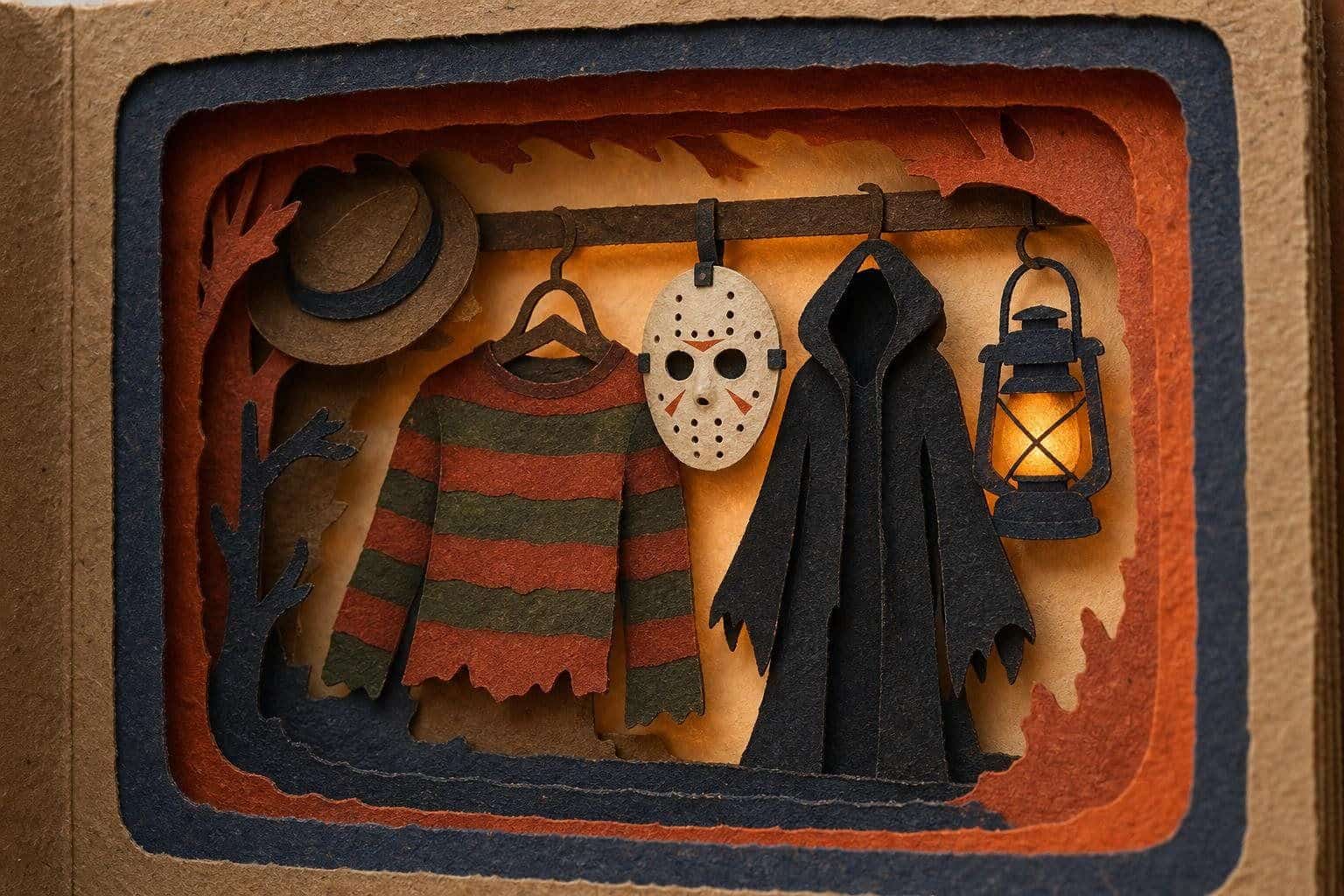
Horror villain costumes are some of the most recognizable in Halloween, and they are easier to build than they look, because the characters were designed to be read in a second. This guide covers ten well-known screen villains: what makes each one instantly identifiable, and a safe, gore-free way to make the look at home. It is about the costume. For where these characters came from and why they became so influential, read the horror villains scholarship page.
A note on the scope. These are fictional characters from films, described here as inspiration for a homemade look, not as licensed products. Many of the films carry adult ratings, so choose characters with the age of the wearer in mind.
What makes a villain costume recognizable
A film villain is usually identified by three things: a silhouette, a signature item and a color. Get those three and you can leave everything else out. That also means you can drop the gore completely, because it was never the part people recognize.
The villains, one by one
Freddy Krueger (A Nightmare on Elm Street, 1984)
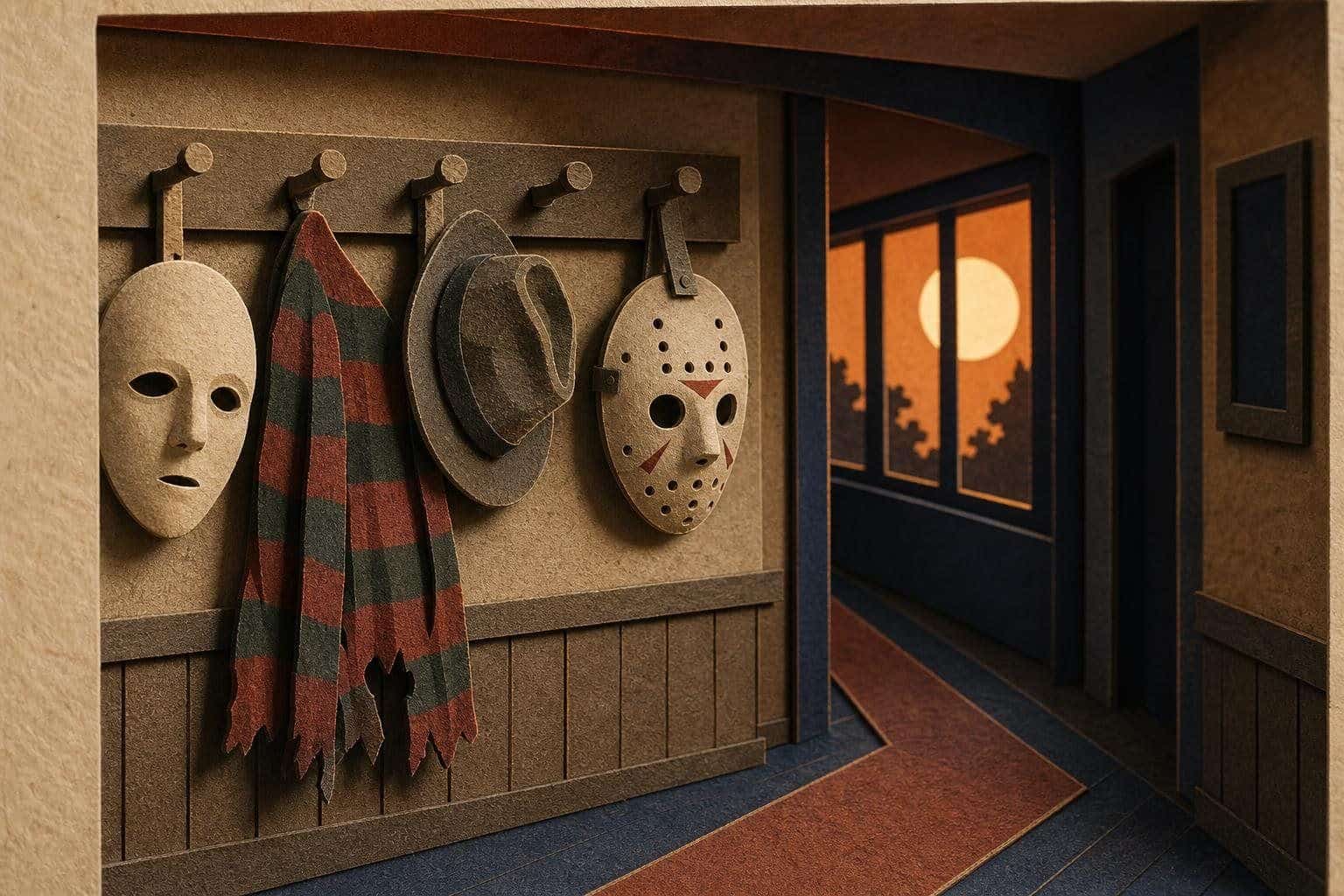
Recognizable: a red and green striped sweater, a brown fedora, a clawed glove. Safe build: a striped sweater, or a plain sweater with fabric tape stripes in two colors, a brown felt hat, and a glove with craft foam finger blades, rounded at the tips. Sketch lines on the face with skin-safe brown face paint if you want a weathered look, or skip it. The hat and sweater already say who you are.
Michael Myers (Halloween, 1978)
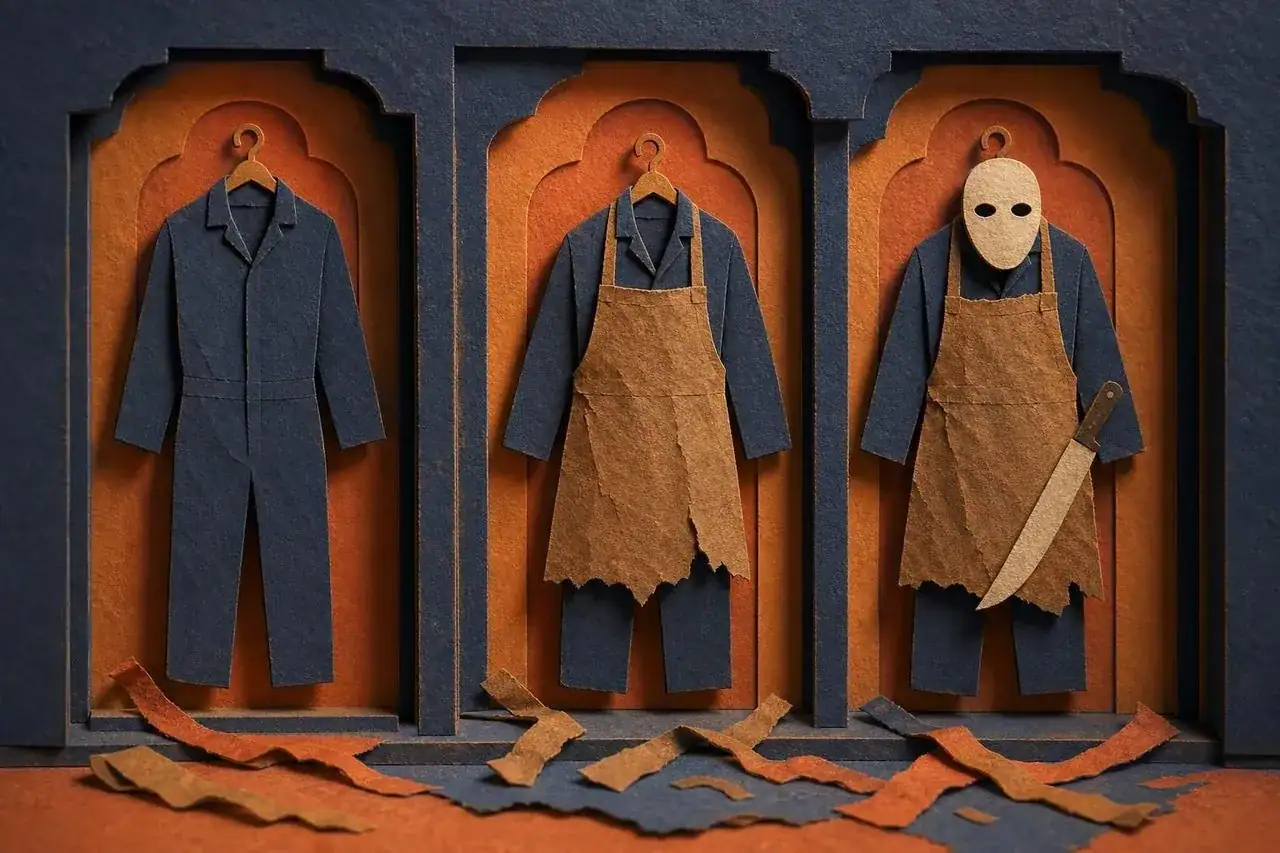
Recognizable: dark coveralls and a pale, expressionless mask. Safe build: a navy or charcoal boiler suit, a plain white mask with wide eye openings, and a foam or cardboard kitchen-knife prop that is obviously a toy. Better still, carry no prop at all. The calm stance does the rest.
Jason Voorhees (Friday the 13th, 1980)
Recognizable: the hockey-style mask, which became part of the character in Friday the 13th Part III in 1982, plus a worn work shirt. Safe build: a plain white mask or a paper plate cut to a mask shape, marked with three vent holes and a few muddy scuffs. Add a gray work shirt and dark trousers. Leave any weapon at home and the look still reads.
Ghostface (Scream, 1996)
Recognizable: a black hooded robe and a white elongated mask. Safe build: a black graduation-style robe or a long black hoodie, plus a pale mask with the eye and mouth openings widened so you can see. This is one of the fastest, cheapest looks on the list. A children’s version works better with face paint and a hood.
Pennywise (It, a 1990 miniseries and 2017 film)
Recognizable: a pale clown face, red hair tufts, a ruffled collar, a cream or gray suit. Safe build: a loose cream shirt, a paper ruff cut from coffee filters, red yarn pinned to a beanie and white skin-safe face paint with a small drawn smile. Keep the red balloon. A single red balloon is the most recognizable accessory in the story and is harmless. Many younger children find clowns frightening, so consider your audience.
Chucky (Child’s Play, 1988)
Recognizable: a doll with red hair, blue dungarees, a striped shirt. Safe build: a child’s striped T-shirt, blue overalls, a red wig or yarn cap, and light freckles. Stitching marks drawn lightly with brown eyeliner give the toy look. Skip scars and cuts.
Pinhead (Hellraiser, 1987)
Recognizable: a black leather-style coat, a pale bald head with a grid pattern. Safe build: a black long coat, a pale bald cap, and a grid drawn in black skin-safe liner. Do not use pins, needles or anything that pierces the head. This is the most adult film on the list, so it suits older teens and adults.
Leatherface (The Texas Chain Saw Massacre, 1974)
Recognizable: a butcher’s apron and a stitched mask. Safe build: a plain apron over a plaid shirt and a fabric mask made from a stitched cloth, with eye openings you can see through. Leave out the chainsaw entirely. Even a toy one raises concern at crowded events.
Jack Torrance (The Shining, 1980)
Recognizable: a 1970s maintenance-man look, a plaid or rust-colored shirt, a handwritten manuscript. Safe build: a tweed jacket or flannel shirt, a stack of paper with typed repeated lines on it, and a knit hat with snow on the shoulders. Many people recognize the stack of pages more readily than the axe, which can stay home.
Norman Bates (Psycho, 1960)
Recognizable: a plain cardigan and a neat haircut, with a stuffed bird or two in the room. Safe build: a cardigan, a shirt and tie, a combed side parting and a small prop of a stuffed bird on a branch. This is the most subtle costume here, and best for adults who know the film.
How to choose
| If you want | Pick |
|---|---|
| Clothes only, no mask | Freddy, Jack Torrance, Norman Bates |
| Mask and plain clothes | Michael Myers, Jason, Ghostface |
| Face paint | Pennywise, Pinhead |
| Something for older teens | Pinhead, Leatherface |
Building the look in stages
Whatever character you choose, build in the same order. It saves time and shows early whether the idea works.
- Clothes first. Assemble the garments from the closet and put them on. Many of the villains above are largely recognizable at this point.
- Silhouette second. Add the hat, hood, wig or coat shape. Stand in front of a mirror and ask whether someone could name the character from the outline alone.
- Color third. If the color is off, fix it with a scarf, a sash or fabric tape instead of repainting.
- Face last. Choose between a mask, face paint or nothing. The first two add risk and discomfort, so leave this stage until you know the rest works.
- Props only if needed. A prop is optional and should always be light and obviously fake.
Making a mask safely
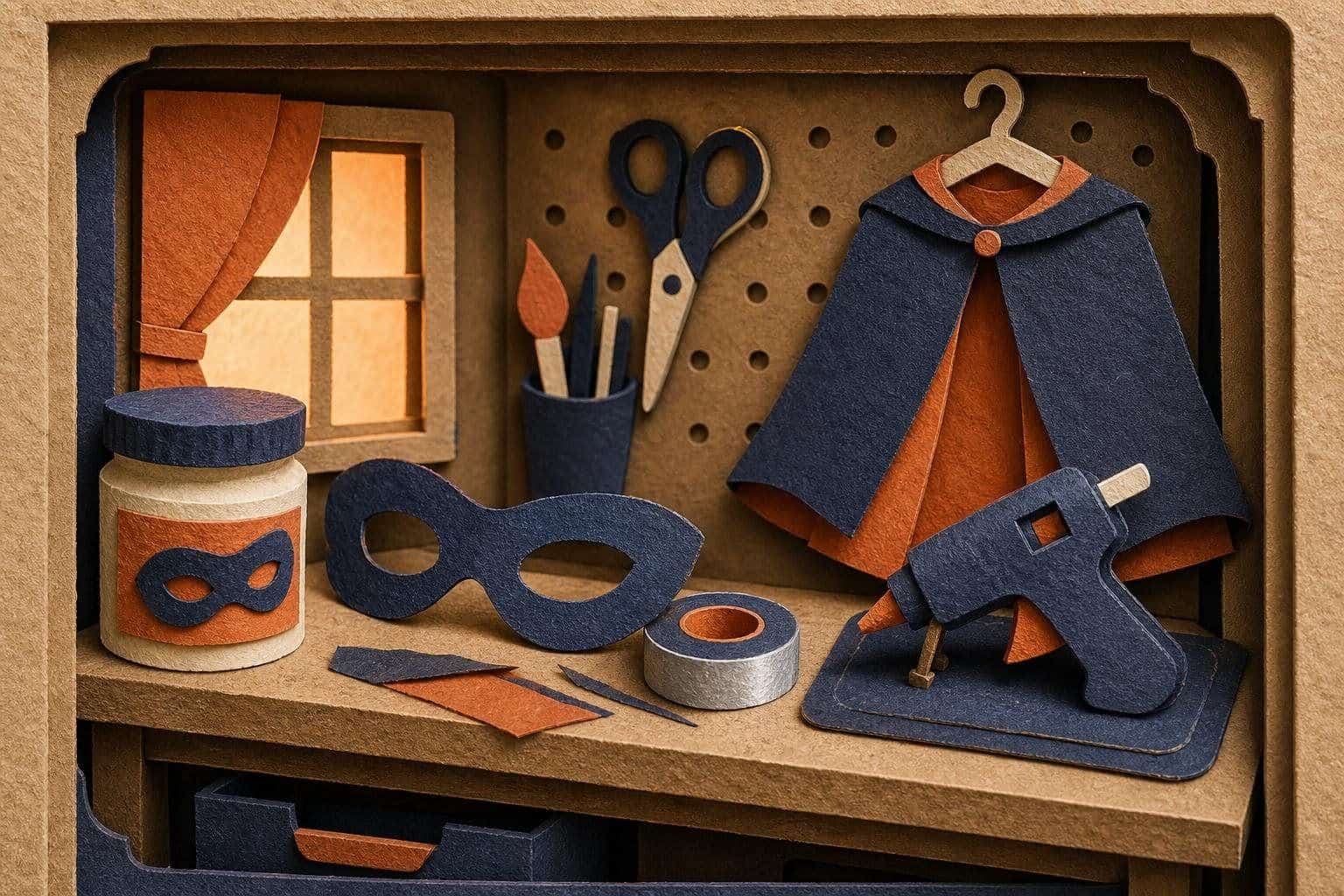
Several villains rely on a mask. A paper-plate or card mask is cheap, light and easy to make larger around the eyes.
- Base: a paper plate, a sheet of craft foam or a plain white mask form. Foam is more comfortable than card.
- Eye openings: cut about a third larger than the eye, and check you can see downwards, since steps and curbs are the real hazard.
- Breathing: cut a wide opening or several vents at the mouth. If the mask touches nose and mouth, it is too close.
- Straps: soft elastic or wide ribbon, not thin cord. Add a strip of felt behind the straps for comfort.
- Finish: matte paint with a little gray for wear. Washable paint is fine for a single evening.
- Test: wear it for ten minutes indoors, then walk to the door. If you feel hot or dizzy, take it off.
Dressing as a villain around others
A scary costume is part of a social situation. A few habits make it more fun for everyone.
- Read the room. A party of adults who know the films is a different crowd from a street with toddlers. Keep the full look for the first, a lighter version for the second.
- Take off the mask when asked. Most children, and many adults, relax once they see the person underneath.
- Stay in character, within reason. Slow movement, a tilt of the head or a silent pose gets laughs. Chasing, grabbing or jump scares do not.
- Keep props to yourself. Do not point a prop, even a toy, at another person.
- Avoid real tragedies. Keep to fictional characters. Costumes based on real crimes or victims are not appropriate.
Quick swaps for younger children
If a child loves the idea but the character is too frightening, there are gentler routes. Dress as the character’s clothing without the face, such as the striped sweater and hat alone. Choose a cartoon-style monster from the monsters scholarship page instead. Or invert the theme, with a child in the hat and sweater carrying a toy teddy as “the one who fell asleep”. Age ratings exist for a reason, so for a young child choose something whose film they have not been told about by classmates.
Safety notes that apply to every villain
- Vision first. Cut mask eye openings larger than the film version. Test peripheral vision before leaving the house.
- Breathing. A mask should never press against nose and mouth. Take it off if it fogs, and wear it pushed up while walking in the dark.
- Props stay obviously fake. Foam, card or felt only, and no rigid pointed items.
- Face paint. Use skin-safe products, patch test in advance, and keep color away from the eyes unless labeled for that. The costume makeup guide explains how.
- Know the setting. Schools, public events and parties often restrict masks and props. Check first, and pack the mask to carry rather than wear if you are unsure.
Related looks
For monsters in classic movie style, the zombie and vampire costumes page has gentler builds, and the horror villains and monsters guide traces the history behind these characters. If time is short, the last-minute Halloween costume list has quick starting points that adapt well to a villain’s clothing.
Questions people ask
How do I dress as a horror villain without gore?
Which horror villain costume is easiest to make?
Can kids dress as scary movie villains?
How can I make a hockey-style mask look worn without paint that looks like blood?
What is the safest way to make a clawed glove?
Do I need a full-face mask for a villain costume?
Where do these horror villains come from?
How do I keep a villain costume from frightening small children?
Can I wear a villain costume to school?
How long does it take to make a horror villain costume?
Keep going