Cinco de Mayo: the outfits and the traditions
Cinco de Mayo outfits and traditions explained: the real story of the Battle of Puebla, how the day is marked in Mexico and the US, and respectful dress.
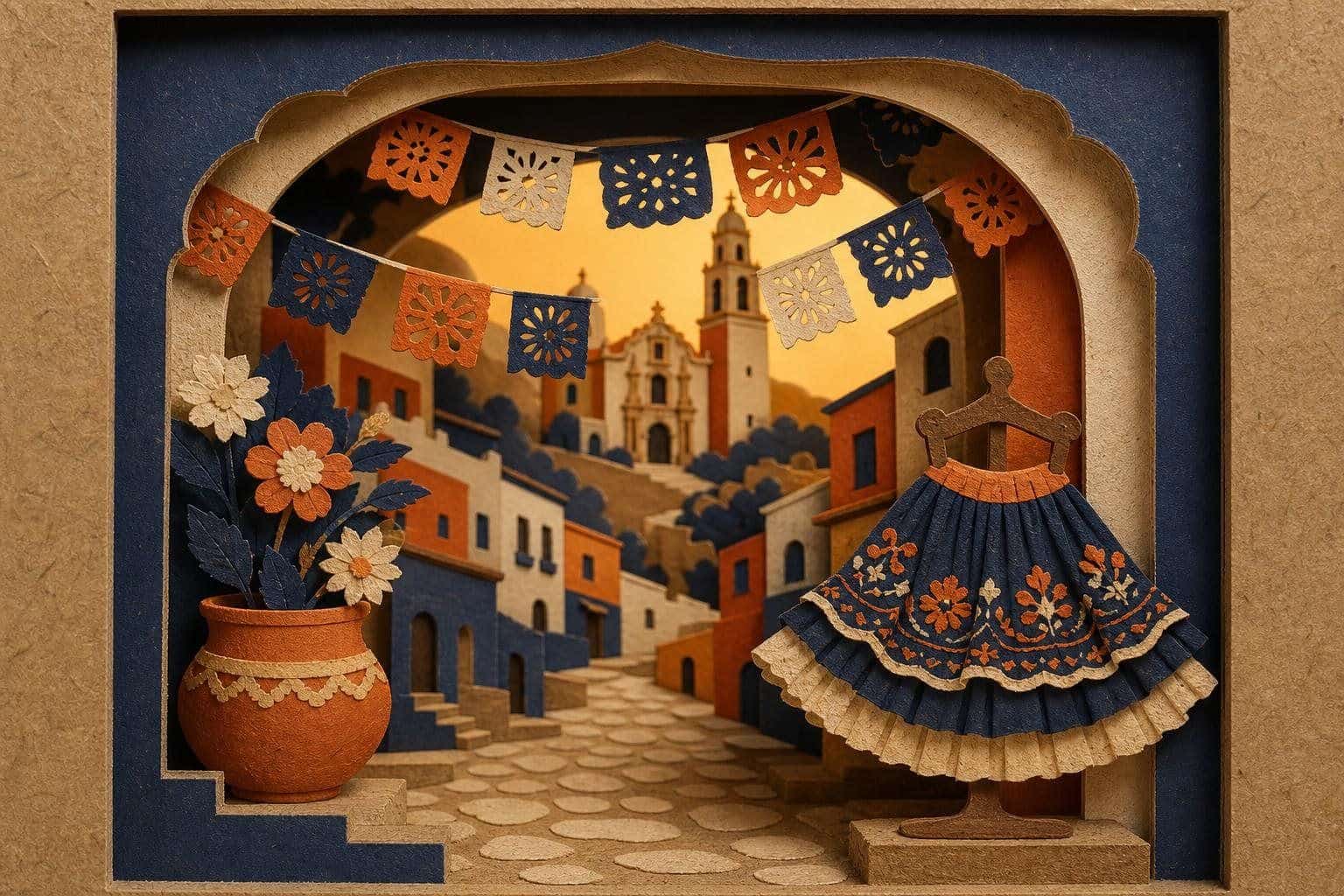
Few holidays are as widely celebrated and as widely misunderstood as Cinco de Mayo. People dress up, eat and play music, but the story behind the day often gets lost somewhere between the history and the party. This guide explains what actually happened, how the holiday is observed in Mexico and in the United States, what traditional dress from the state of Puebla really looks like, and how to choose Cinco de Mayo outfits that show respect rather than caricature.
What Cinco de Mayo actually commemorates
Cinco de Mayo means the fifth of May. It marks the Battle of Puebla, fought on May 5, 1862, between the army of the liberal Mexican government headed by President Benito Juarez and French forces sent by Napoleon III. The French had arrived intending to establish a satellite state in Mexico. The Mexican force, led by General Ignacio Zaragoza, repelled the attack, and the French retreated.
The victory was a real morale boost for the Mexican government. It did not end the war, however. The French returned, captured Puebla and then Mexico City in 1863, and stayed until Mexican forces overthrew the government they had installed, and the republic was restored, in 1867.
The common mix-up
Cinco de Mayo is not Mexican Independence Day. That is celebrated on September 16, which marks the Grito de Dolores in 1810, the call that began the war of independence from Spain. Mixing the two up is probably the most common mistake about the holiday, and correcting it is the simplest way to start a conversation about it respectfully.
How it is observed in Mexico
Cinco de Mayo is not a federal holiday in Mexico and is not marked everywhere. It is observed most strongly in the state of Puebla, where the battle took place, with ceremonies and parades that remember the day. In much of the rest of the country it passes quietly.
How it is observed in the United States
In the United States the day has a different life. Scholars, including David Hayes-Bautista of UCLA, trace its roots to California in the 1860s, where Mexican Americans celebrated the resistance to French intervention at the same time as they supported the Union in the US Civil War. In later decades, especially from the 1960s, the day grew into a broader celebration of Mexican American culture. Today many American cities hold festivals with music, dance, food and parades.
So the holiday has two real histories: a battle in Puebla, and a long tradition of celebration among Mexican Americans. Both are worth knowing.
Traditional dress from Puebla
The state of Puebla has several clothing traditions, and it is worth separating them.
The china poblana
The best-known dress linked to Puebla is the china poblana, sometimes called the vestido de Puebla. A typical version includes:
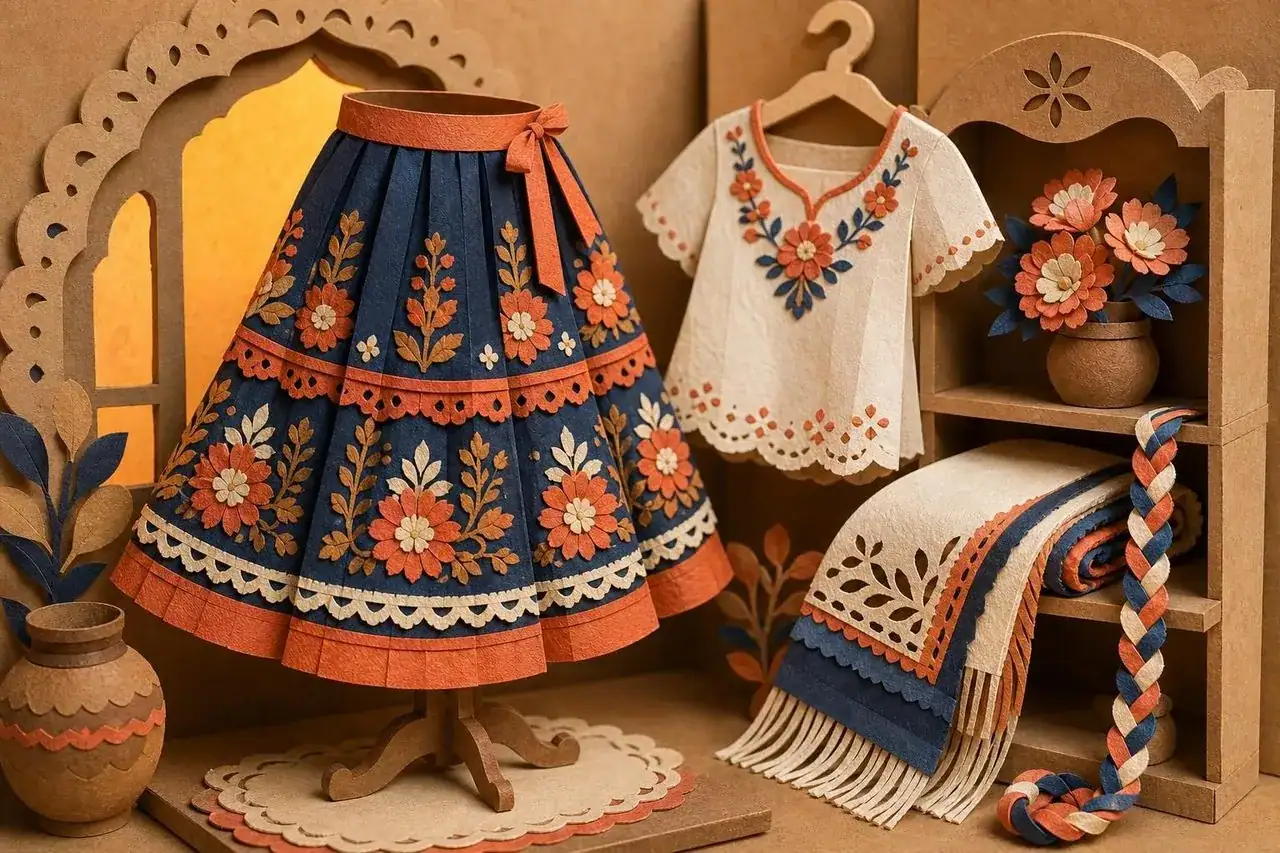
- A white blouse, often short-sleeved, embroidered with silk thread, beads and sequins in floral and geometric patterns
- A full skirt in two sections, the upper part often green and the lower part embroidered with flowers, birds or butterflies
- A shawl or rebozo
- Hair in braids with red, white and green ribbons
- Embroidered slippers
The dress is traditionally attributed to Catarina de San Juan, a woman who, according to the tradition, was born in India and arrived in New Spain as a servant in the seventeenth century. In that period the word china was used for people from Asia more broadly, which is part of the story behind the name. Historians continue to discuss how much of her biography is documented, and the china poblana as it is pictured today developed gradually, especially in the nineteenth century, drawing on many cultures that met in New Spain.
Indigenous dress of the Sierra Norte
The mountains of northern Puebla are home to Nahua and Totonac communities whose clothing is quite different. Women’s dress there may include richly embroidered blouses, wide woven belts and the quechquemitl, a shoulder garment made from two rectangular pieces of cloth sewn together. These garments are woven and embroidered by artisans, and many carry designs that have deep roots in local culture.
Other regional dress
Mexico has many regional traditions, and Puebla is only one. The Tehuana dress from Oaxaca is known for embroidered flowers on dark fabric. The charro suit from Jalisco, with its silver buttons and embroidery, is associated with charrería and mariachi. Each belongs to a particular place and community.
Dressing respectfully
Choosing Cinco de Mayo outfits is mostly about attention, not rules.
You do not have to avoid the day. You just need to be thoughtful about what you are wearing and what it says.
Start with colors, not costumes. Red, white and green are the colors of the Mexican flag, and a simple outfit in those colors, perhaps with flowers or an embroidered blouse, is welcome at most gatherings.
Learn the garment before you wear it. If you want to wear a piece of traditional dress, find out what it is called, where it comes from and what occasions it is worn for. Garments that are made by artisans, given as gifts or worn at the invitation of friends and family carry different meaning from a costume made to look like a joke.
Leave the caricature at home. A giant sombrero, a drawn-on mustache, a fake accent and exaggerated poses reduce a culture to a gag. Many Mexican and Mexican American people find them hurtful, and they do not teach anyone anything.
Ask. If you are invited to a celebration, ask the hosts what people wear. If you are organizing an event, ask people from the community to take part in planning it.
Think about context. What is fine at a family party may not suit a school. Check the school’s guidance on costumes and cultural dress.
Simple outfit ideas by age
These Cinco de Mayo outfits are festive without claiming to be anyone’s traditional costume.
| Who | A respectful, easy outfit | Time |
|---|---|---|
| Young children | White shirt, red, white and green ribbon trim, flowers on a headband | 20 minutes |
| School-age children | A white blouse or shirt with colorful machine or hand embroidery stitched along the neckline | One evening |
| Teens | A flowing skirt in a bright solid color, a shawl, braids with ribbon | 30 minutes |
| Adults | A tailored white top with embroidery, dark trousers or a long skirt, a flower accessory | Whatever you already own |
None of these claims to be a particular regional costume. They are festive outfits that borrow the spirit and colors of the day.
A simple trim project
You can decorate a plain white blouse or shirt without any special skills.
- Choose a washable cotton shirt and wash and iron it first.
- Cut three lengths of ribbon in red, white and green, each long enough to go around the neckline or hem.
- Pin them in rows and stitch them down with matching thread, or use a fabric glue made for clothing.
- Add a few flowers cut from felt, stitched on at the neckline.
- Let any glue dry fully before wearing, and avoid hot glue directly against skin.
This is an afternoon project, and it makes a nice shirt that you can wear again for any festive occasion.
Food, music and the wider celebration
In and around Puebla, food is a big part of the picture. The state is known for mole poblano, a rich sauce with a long history in the region, and for a cuisine that families are proud of. In the United States, celebrations often include live music, folkloric dance and parades, and community groups sometimes hold cultural talks or craft workshops. If you want to join in, look for events organized by Mexican American community groups, museums and cultural centers, and try to support the people who are running them.
Why a respectful approach is worth the effort
It can feel awkward to think about what to wear for a holiday that is supposed to be fun. But there is a simple reason to take a moment: for many people, Cinco de Mayo is a day when their culture is celebrated, and costumes that treat it as a joke undermine that. On the other hand, a thoughtful outfit, a few facts and a willingness to listen make the day better for everyone.
Respect does not require perfection. It requires curiosity. If you make a mistake, such as using a wrong word or wearing something that someone finds unwelcome, listen, apologize and adjust.
Questions to ask yourself before choosing an outfit
- Do I know where this garment comes from?
- Would a person from that community recognize this as respectful?
- Am I wearing it as clothing or as a joke?
- Is there an invitation or a reason for me to wear it?
- Could I achieve the festive feeling with colors and accessories instead?
If the answers are uncertain, choose the simpler outfit. A red, white and green scarf and a good story about the Battle of Puebla go a long way.
Ideas that celebrate without costume
If you are not sure about wearing traditional clothes, there are plenty of other ways to take part.
- Make papel picado. These cut-paper banners are made from tissue paper folded and cut with scissors. They look wonderful and need only paper, scissors and string.
- Learn the story. Draw a timeline of 1862 to 1867 and explain it to someone else.
- Listen to Mexican music. Look for recordings of regional folk music, mariachi and folkloric ensembles.
- Cook with the family. Choose a recipe from a Mexican cookbook or a friend, and learn the story behind it.
- Visit a museum or festival. Many cities hold community events, often with demonstrations of regional dances and crafts.
A short plan for schools and families
For a classroom or family event, a gentle structure works well.
- Ten minutes of history: the Battle of Puebla and the difference from Independence Day.
- A craft: papel picado or a paper flag bunting.
- A map: locate Puebla and a few other Mexican states.
- A listening session: two or three songs, with a short introduction to each.
- A reflection: what did you learn that you did not know before?
This keeps the focus on understanding, and it works for children and adults alike.
Where to go next
If you enjoy learning about the stories behind clothes, costume history and the historical costumes guide explore how dress reflects time and place. The costume calendar lists holidays and events through the year, and the kids’ costume ideas has ideas for younger family members.
Questions people ask
Is Cinco de Mayo Mexican Independence Day?
What happened at the Battle of Puebla?
Is Cinco de Mayo a big holiday in Mexico?
Where did Cinco de Mayo celebrations in the US begin?
What is the china poblana dress?
Who was Catarina de San Juan?
What should I wear to a Cinco de Mayo gathering?
Is it disrespectful to wear traditional Mexican dress?
What are better ideas than a sombrero and fake mustache?
Can children take part in Cinco de Mayo at school?
Keep going