Historical costume ideas
Historical costumes by era, from ancient Rome to the Wild West: the dress signatures that make each period recognizable, with easy home-made builds.
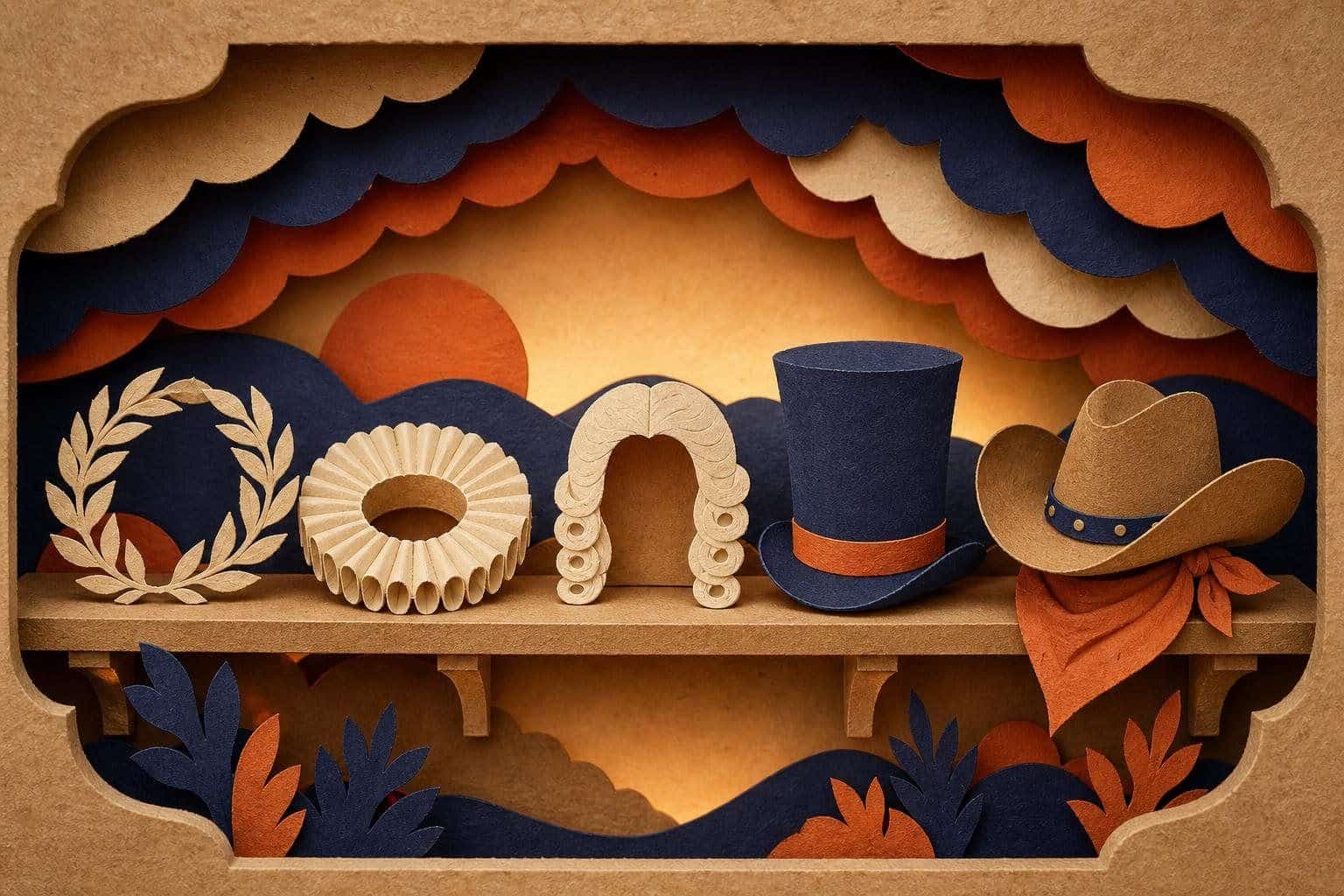
Historical costumes let you step into another era with a handful of fabric and some clever shortcuts. Each period has a few dress signatures that people recognize instantly, such as the toga, the ruff, the bustle and the wide-brimmed hat of the West, and you rarely need more than two or three of them. This guide covers historical costume ideas from ancient Greece and Rome to the Edwardian era, with what makes each look recognizable, an easy build and notes on comfort and safety.
Ancient Greece and Rome
Greek chiton or peplos. The ancient Greek look is a rectangle of lightweight fabric folded and pinned at the shoulders, belted at the waist so it drapes in soft folds. The sell is the draping and a thin cord belt. For a build, fold a bed sheet or a cotton rectangle, pin the top edge at each shoulder with large safety pins or brooches, and belt it. About 20 minutes.
Roman tunic and toga. A short tunic was everyday wear for Romans. The toga was a large draped wool garment worn over it as formal dress by citizens. For a costume, wear a plain tunic and drape a long sheet over one shoulder and around the body, pinning it in place. The sell is the wreath and the sandals. A sheet that is too heavy slips, so use a lighter fabric and several safety pins.
Laurel wreath. Cut leaf shapes from green craft foam or paper, glue them along a wire-reinforced or card headband, and fit it to the head. It works for both Greek and Roman looks.
Gladiator. A short tunic, a leather-look belt, wrist cuffs and a card shield. Keep any sword soft or cardboard. Gladiators are a popular idea, but a card helmet that blocks the face is not suitable for children.
Medieval
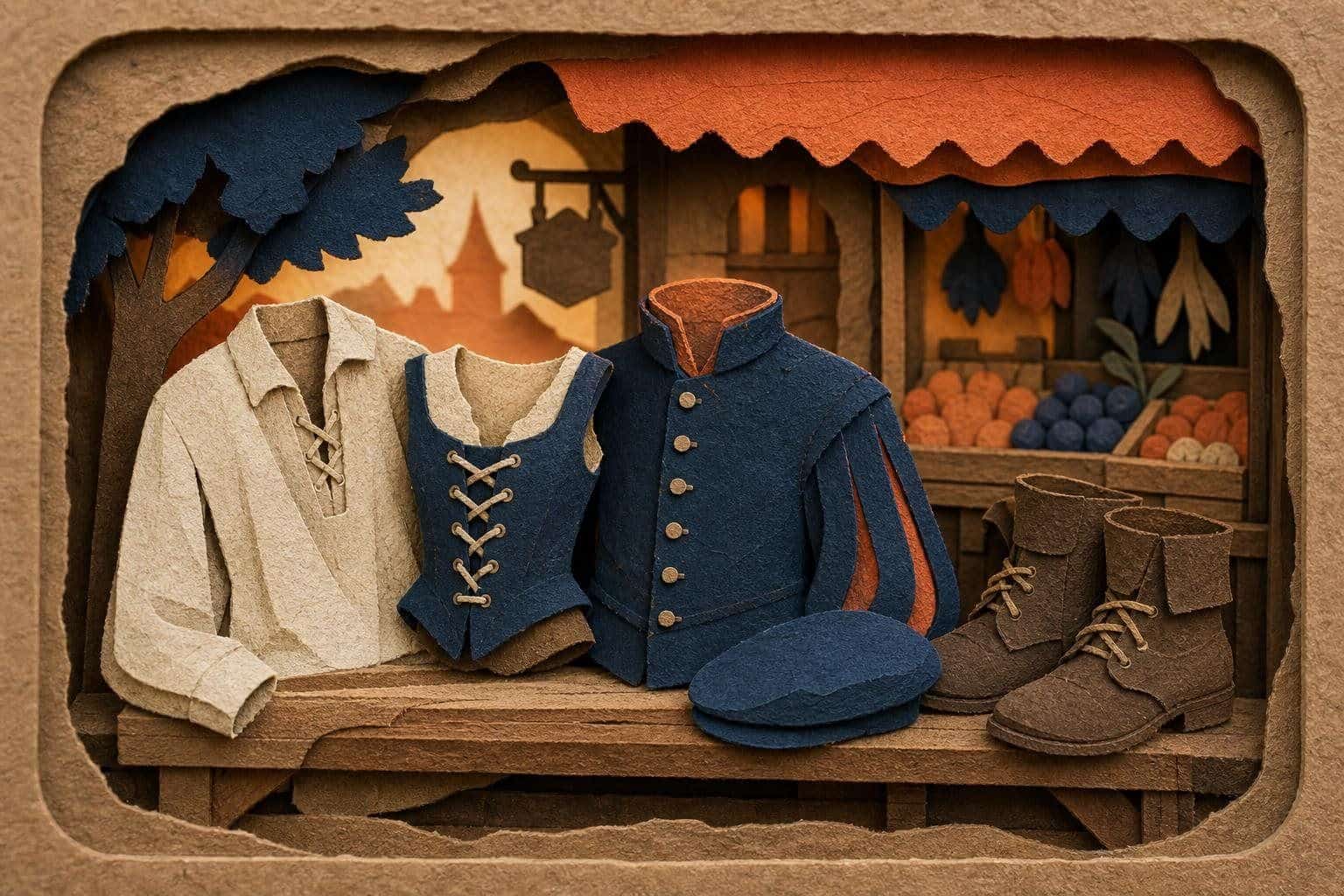
Peasant or villager. A simple tunic belted at the waist, linen-colored shirt, plain trousers or hose, a hood and soft shoes. The sell is the earthy, undyed color palette. It uses clothes from your closet.
Lady of the manor. A long gown with fitted bodice and long sleeves, a belt hung low, and a veil or headband with a flowing cloth. Keep the headwear to a simple veil or fillet band, which is easy and safe.
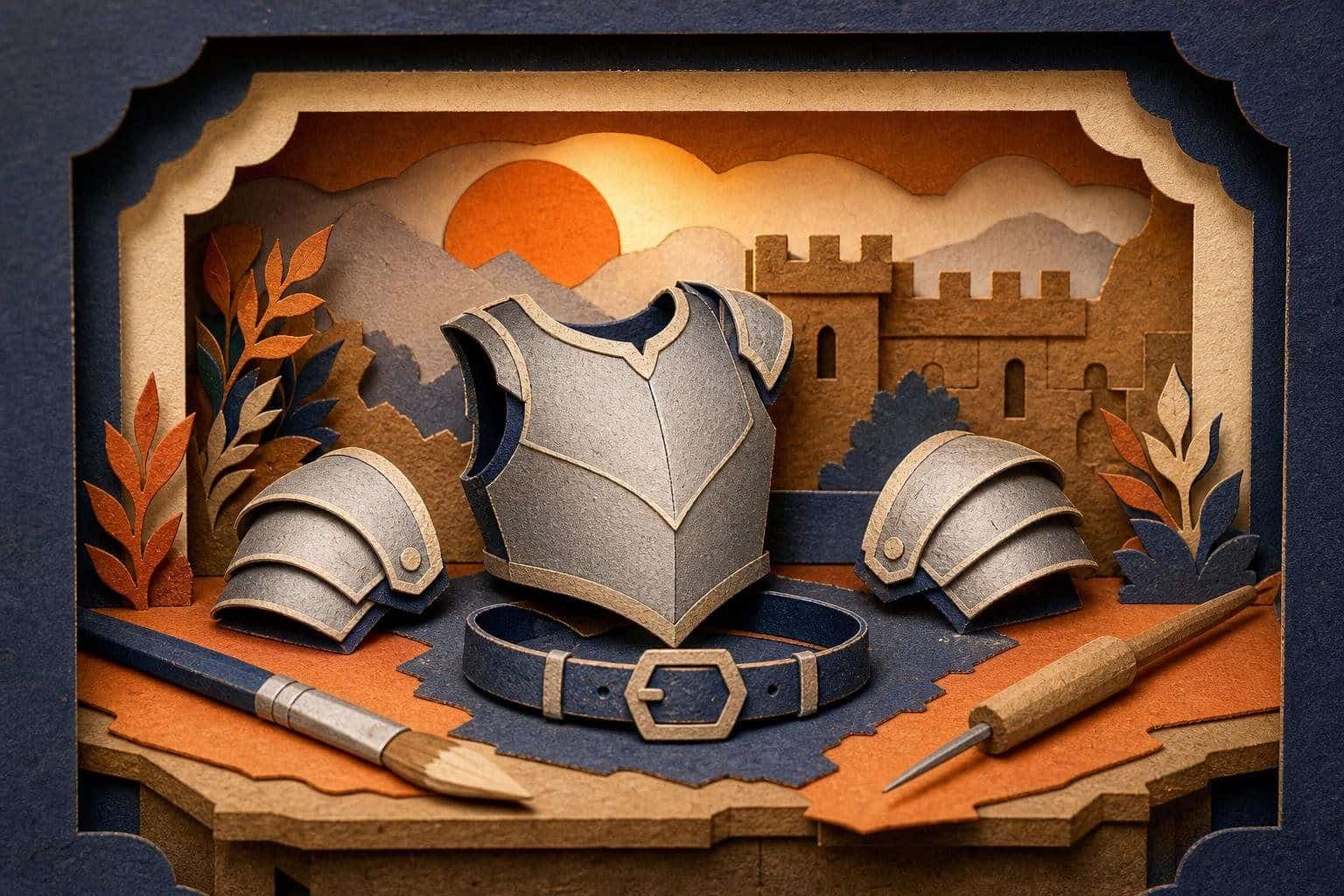
Knight. A tunic with a plain surcoat over it, a belt, a cardboard shield with a made-up crest and a card helmet or hood. See the cardboard knight costume guide for a full build.
Monk or friar. A long brown or gray hooded robe with a rope belt. Simple, warm and easy to make with a long shirt or a sheet.
Tudor and Renaissance
Tudor courtier. The Tudor period in England covers 1485 to 1603. Men wore a doublet, hose and a flat cap, and often a short cloak. Women wore a gown with a squared neckline, a structured bodice, wide sleeves and a headdress such as a French hood or a gable hood. The sell is the ruff, a pleated collar worn in the later Tudor era.
Making a ruff. Cut a long strip of lightweight fabric or paper, fold it into accordion pleats, gather it with a thread, and tie it around the neck with a ribbon. Keep it loose enough to breathe and move. For more on the broader period, see Renaissance costumes.
Georgian and Regency
Georgian gentleman. The Georgian era in Britain begins in 1714. Typical elements are a knee-length tailcoat, waistcoat, breeches, stockings, buckled shoes, a tricorn hat and a white powdered wig or hair tied back. The sell is the long coat and the white curled wig. Make the wig from cotton wool or a pale wig, and avoid real powder.
Georgian lady. A wide skirt supported by side hoops called panniers, a fitted bodice, an elaborate hairstyle and a fan. Build the shape with a padded ring on each hip, and keep doorways in mind.
Regency lady. A high-waisted dress, with the waistline just below the bust, in a light fabric, with gloves and a bonnet or a small headband. A ribbon tied under the bust turns almost any long dress into a good approximation.
Victorian and Edwardian
Victorian lady. The Victorian era follows Queen Victoria’s reign, from 1837 to 1901. A long skirt with fullness at the back, a bustle in later decades, a tightly fitted jacket or high-necked blouse, gloves, and a bonnet or small hat. Make the bustle shape with a stuffed cushion tied at the waist under the skirt.
Victorian gentleman. A dark frock coat, waistcoat, white shirt with a high collar, cravat or bow tie, and a top hat. A pocket watch and a cane complete it. Keep the cane lightweight and short for children.
Edwardian lady. The Edwardian era is roughly 1901 to 1910. Typical looks are a long, softly shaped dress with a high lace collar, an upswept hairstyle and a large hat decorated with ribbons and flowers. The sell is the huge hat. Make it from a wide-brimmed straw or card base.
Edwardian gentleman. A lounge suit or morning coat, a stiff collar, a waistcoat, a bowler or flat cap and a pocket watch.
Wild West
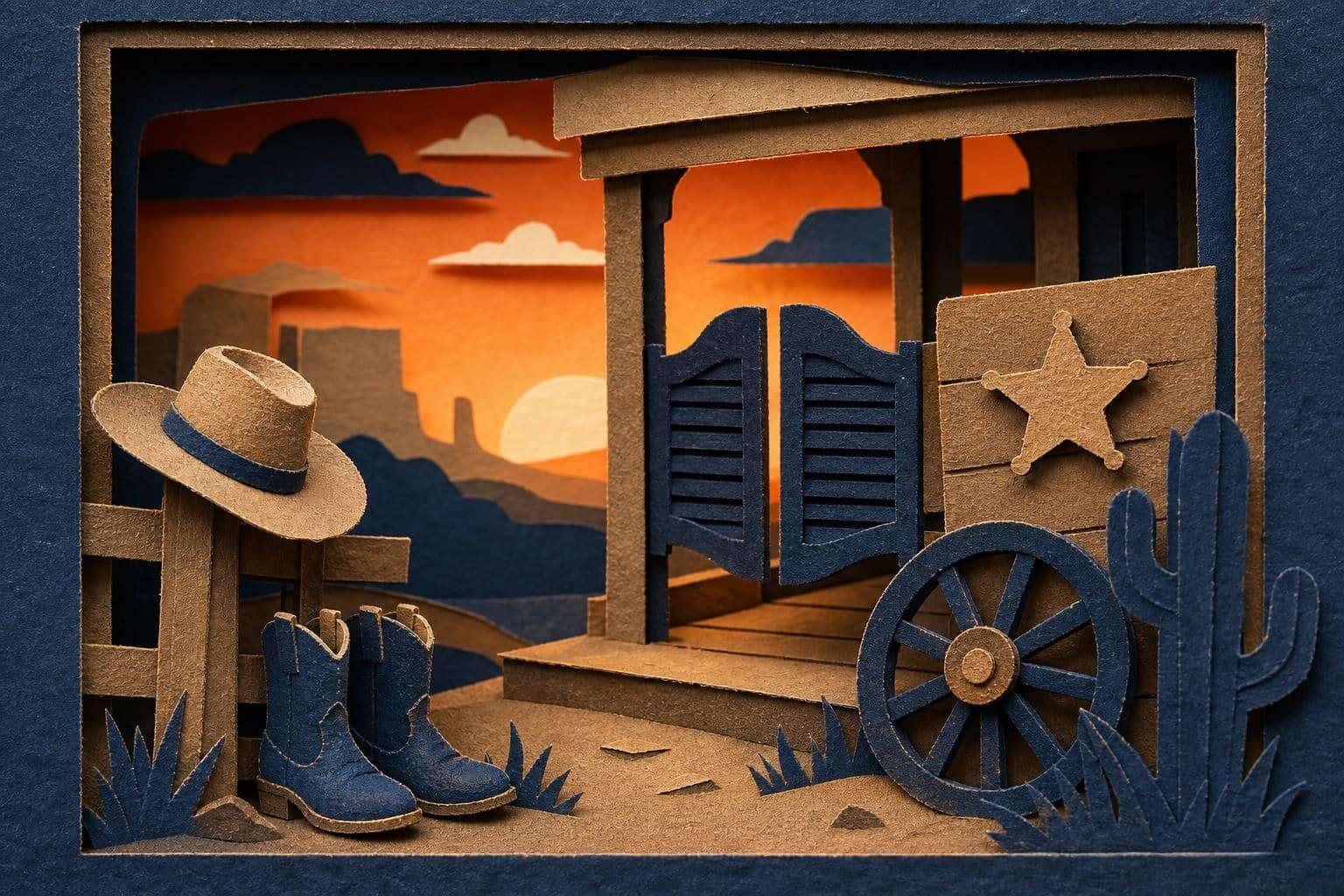
Frontier settler or cowhand. A wide-brimmed hat, bandana, plain shirt, vest, jeans and boots. The sell is the hat and the bandana. For more detail, see cowboy and western costumes.
Saloon lady or pioneer woman. A long skirt and blouse with a shawl, or a ruffled dress for a saloon look, with a flower in the hair. Keep it comfortable for dancing and walking.
How to choose an era
| Era | Signature items | Difficulty |
|---|---|---|
| Ancient Greece or Rome | Draped fabric, wreath, sandals | Very easy |
| Medieval | Tunic, belt, hood | Easy |
| Tudor | Ruff, doublet, headdress | Medium |
| Georgian and Regency | Long coat or high waist, wig | Medium |
| Victorian and Edwardian | Bustle, top hat, large hat | Medium |
| Wild West | Hat, bandana, vest | Easy |
Choose an era with a silhouette you can build from existing clothes. If you only have an hour, go Greek, Roman, medieval or Western. If you have a weekend, a Tudor ruff or a Victorian bustle gives a bigger result. For decades of the last century, see decade costumes.
Getting the details right
Accuracy is a spectrum. For a party, two or three signature items are plenty. For a museum event, school history day or reenactment, check the dress rules, and look at museum collections and well-known history sites for pictures of real garments from the period. Fabrics, colors and the way a garment is worn all carry the era. Natural fabrics such as wool, linen and cotton look right for most periods before the 20th century.
Hair, hats and small details
Headwear carries more of an era than almost anything else. A laurel wreath says Rome, a hood says medieval, a flat cap or French-style headdress says Tudor, a tricorn says Georgian, a bonnet says Regency, a top hat says Victorian and a very large trimmed hat says Edwardian. If the budget is tiny, make the hat well and keep the rest of the outfit plain.
Hair helps too. Long loose hair with a headband suits ancient and medieval looks, braids work for many periods, and an updo suits Victorian and Edwardian ladies. A pale wig or cotton wool curls give the Georgian effect without any powder, which makes a mess and can irritate eyes and skin.
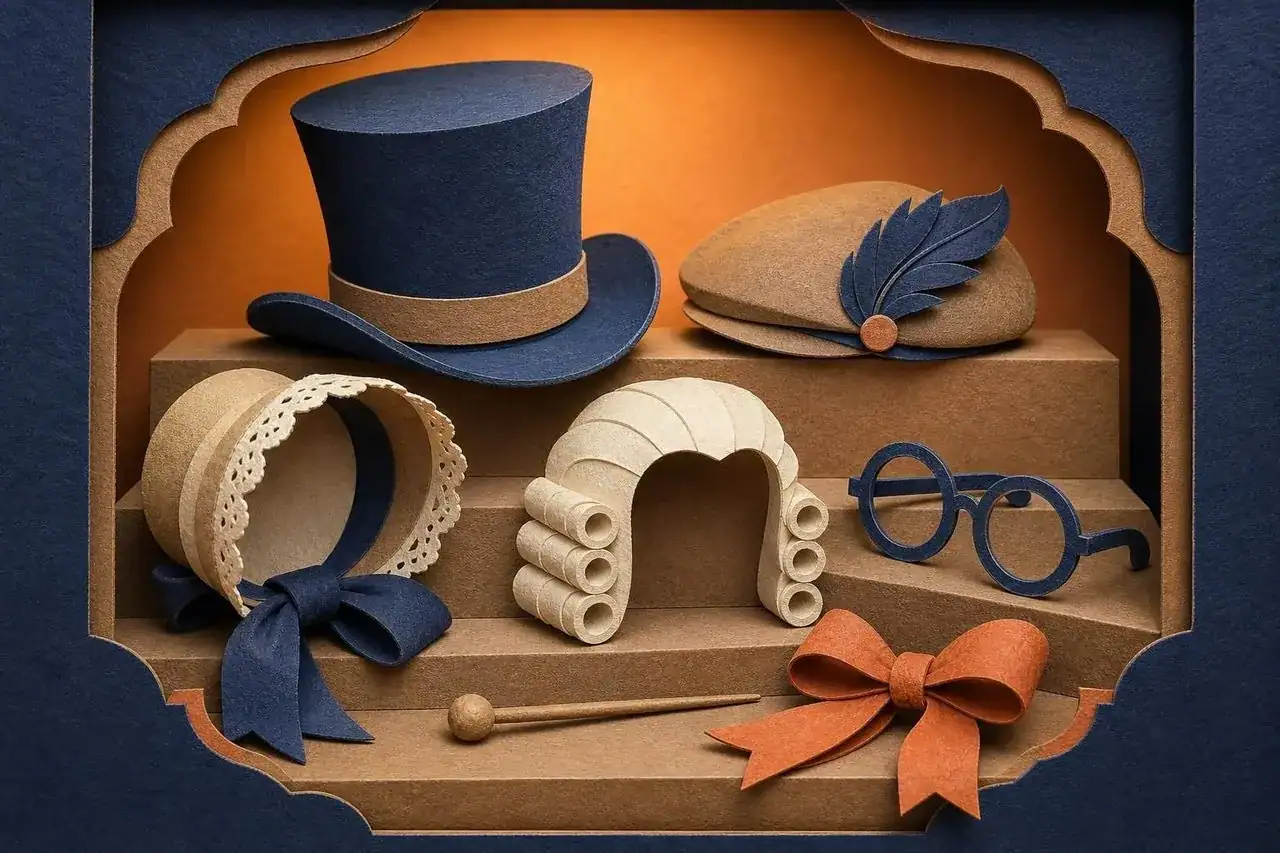
Small items make a big difference: a pouch hung from the belt, a scroll and quill, a hand fan, a pair of gloves, a pocket watch on a chain, or a card key ring. Choose items the wearer can carry comfortably all day.
Group and family ideas
Eras suit groups well. A family can be a Roman household with tunics in different colors, a Tudor court with a king and a courtier, a Victorian street with a shopkeeper and a chimney-sweep style cap, or a Wild West town with a sheriff-style hat, a settler and a saloon musician. Agree a color palette and a time period first, and everyone can build from their own clothes. Keep the roles friendly and avoid costumes that depict real people’s hardships in a mocking way.
Comfort and safety notes
Long skirts and trailing cloaks are trip hazards, so keep hems at ankle length or higher for children and for stairs. Corsets and tight stays should never be worn tightly, so use a soft, comfortable bodice instead. Wigs and tall hats should be light and secure. Use fabric glue, tape or safety pins carefully, and keep pins away from children. Swords, daggers and axes should be cardboard or soft foam with rounded edges. Masks and visors must leave clear sight. Wool is warm, so take breaks and drink water at long events. See the costume safety guide.
Where to go next
For the stories behind these styles, read costume history. For hats and belts that finish a period look, browse the DIY costume guides, and for more themes see all costume ideas.
Questions people ask
What is the easiest historical costume to make?
How do I make a historical costume without sewing?
Which era is the most recognizable for costumes?
How accurate does a costume need to be?
Did Romans really wear togas every day?
What did medieval people actually wear?
How do I make a Victorian costume?
What is the difference between Georgian, Regency and Victorian?
Can kids wear historical costumes safely?
What accessories help a historical costume most?
Keep going