Cowboy and western costume ideas
Cowboy costumes and western looks for kids and adults: 15 ideas from ranch hands to sheriffs and saloon characters, with authentic details and safe props.
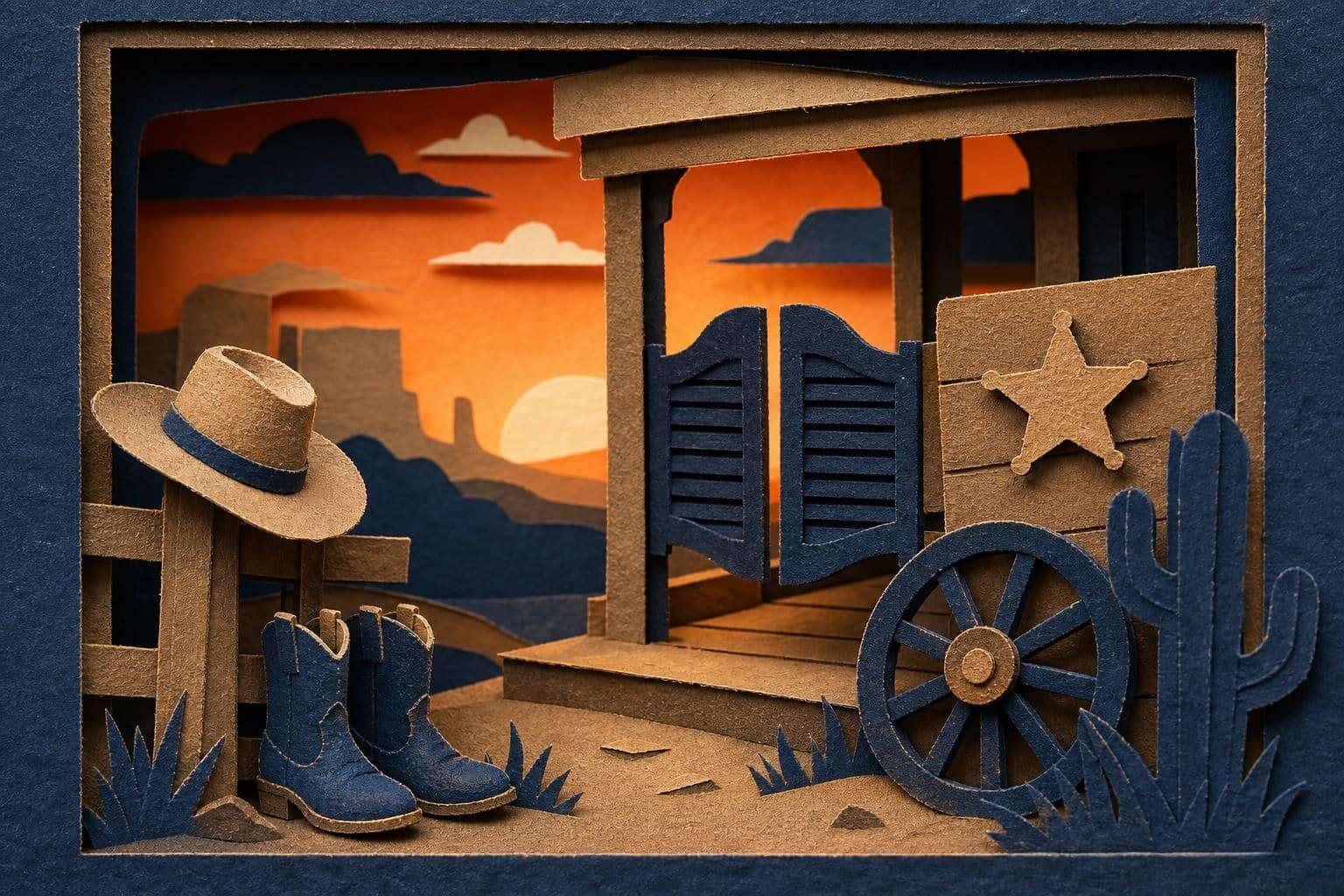
Cowboy costumes are one of the most forgiving looks: boots, a hat and a bandana already make the idea. This page offers fifteen western ideas, all drawn from ranch work wear, sheriffs, outlaws and saloon characters, with notes on authentic details, easy builds and safe props. The aim is a look that is respectful and accurate, and that can be built from everyday clothes.
What real western work wear looked like
The cowboy’s clothes were practical. A wide-brimmed hat gave shade and shed rain, a bandana kept dust out of the nose and mouth, and sturdy trousers and a button shirt took the wear of long days. Boots had a heel that helped to hold the foot in the stirrup. Leather chaps covered the legs for protection from brush, and a vest held a few small items. The picture of fringe and shine you see in many films is mostly showmanship, while the working outfit was plain and hard-wearing.
Building from those parts gives the best results, since each piece is recognizable, comfortable and easy to find in a regular wardrobe.
A note on respect
Western costumes should not include Native American dress. Headdresses, face paint and similar items belong to living cultures and carry real meaning, so they are not costumes. Everything on this page is built from ranch, town and frontier characters instead. If your group wants a historical angle, the historical costume ideas page has more eras to choose from.
Ranch and trail looks

1. The ranch hand. A work shirt, jeans, boots and a hat. The brim and the bandana are the signature. Roll the sleeves and add a worn belt.

2. The trail boss. A vest, a longer coat and a rope on the belt. The selling touch is a canteen made of a clean plastic bottle covered in felt on a strap.

3. The cowgirl. Denim, a button shirt, a belt with a decorated buckle and boots. A scarf at the neck and a hat finish the look.

4. The rodeo rider. A bright shirt, jeans and a cardboard belt buckle the size of a hand. Add a stick horse or a cardboard bull.

5. The farm family. Gingham dresses and checked shirts, with straw hats and a basket. Good for groups and easy to find in a wardrobe.
Lawmen and outlaws

6. The sheriff. A star-shaped badge in craft foam or cardboard, a vest and a hat. The badge sells the look, so make it large. Pin it to a vest, not to skin.

7. The deputy. A smaller badge, a plain shirt and a notebook. Great as a pairing for a sheriff.

8. The outlaw. A long duster coat, a dark hat and a bandana pulled down below the chin, not over the face of a child. A wanted poster prop adds humor.

9. The traveling salesman. A checked suit jacket, a bowler hat, a bow tie and a case of painted cardboard bottles. A favorite character of western towns, and a funny one.

10. The stagecoach driver. A hat, a heavy coat and gloves, with a cardboard whip handle with a short cloth tail.
Saloon and town characters

11. The saloon keeper. A white shirt with sleeve garters, a vest and an apron, with a towel over the shoulder. Serve lemonade, never real drinks. Sleeve garters are strips of elastic worn on the upper arm.

12. The saloon performer. A knee-length ruffled dress, a feather headband and gloves. A character role in a town group.

13. The storekeeper or banker. A suit vest, a pocket watch on a chain, spectacles and a ledger.

14. The schoolteacher. A long skirt, a high-necked blouse, a bell and a slate or chalkboard. A good choice for adults who want a gentle character.

15. The town photographer. A boxy camera made from a cardboard box and a dark cloth over the head, used for photos of the group.
Building the key pieces
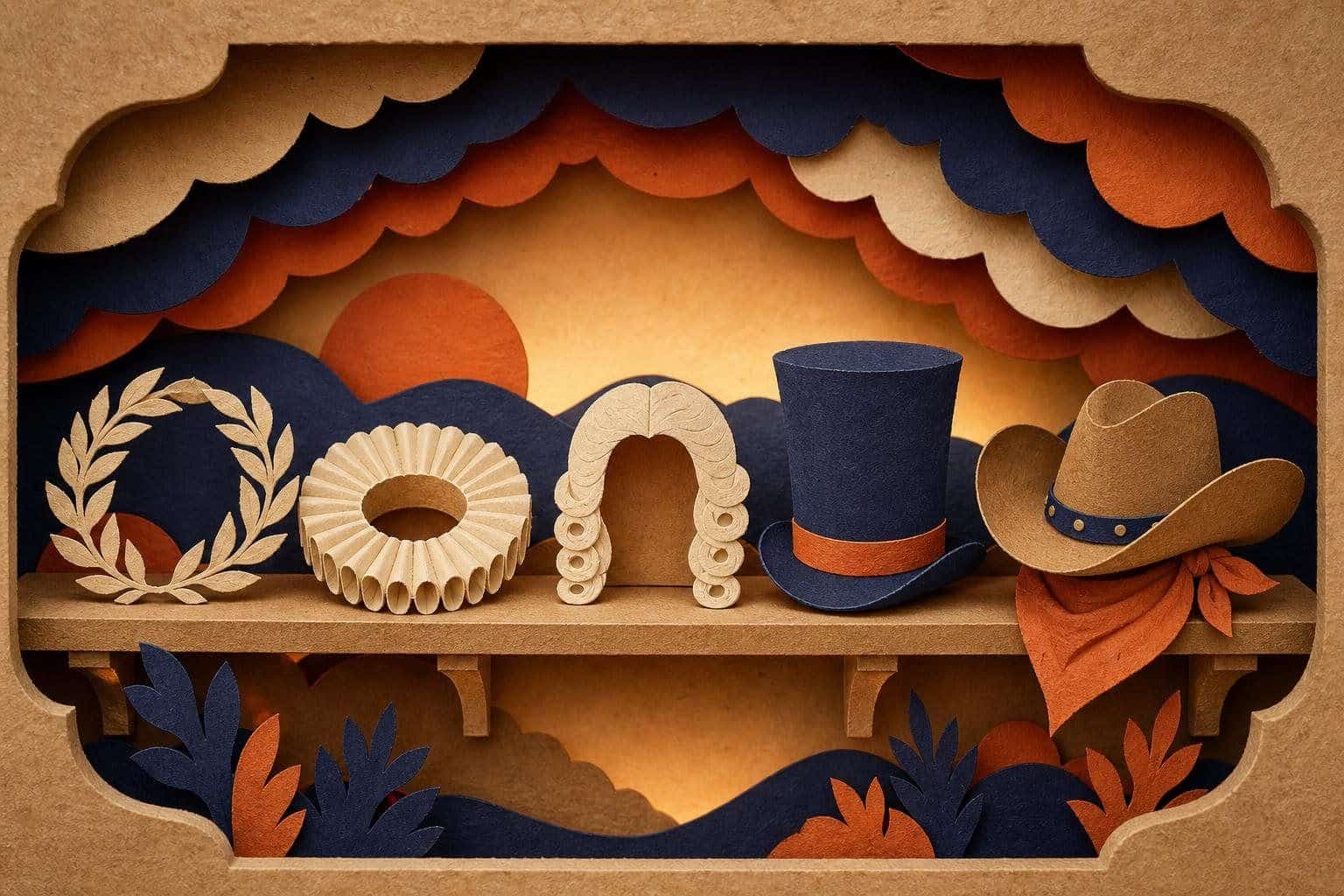
The hat. Cut a brim ring from craft foam or thick card, roll a strip into a cylinder for the crown, glue the two together with tabs and pinch the top. Curl the brim sides up over a rolling pin or a bottle. Felt wrapped over the card gives a softer, more realistic surface.
The bandana. A square of cotton, folded into a triangle and knotted at the back of the neck, hangs loose at the front. A red or blue paisley print is the usual pattern, and a plain square works just as well.
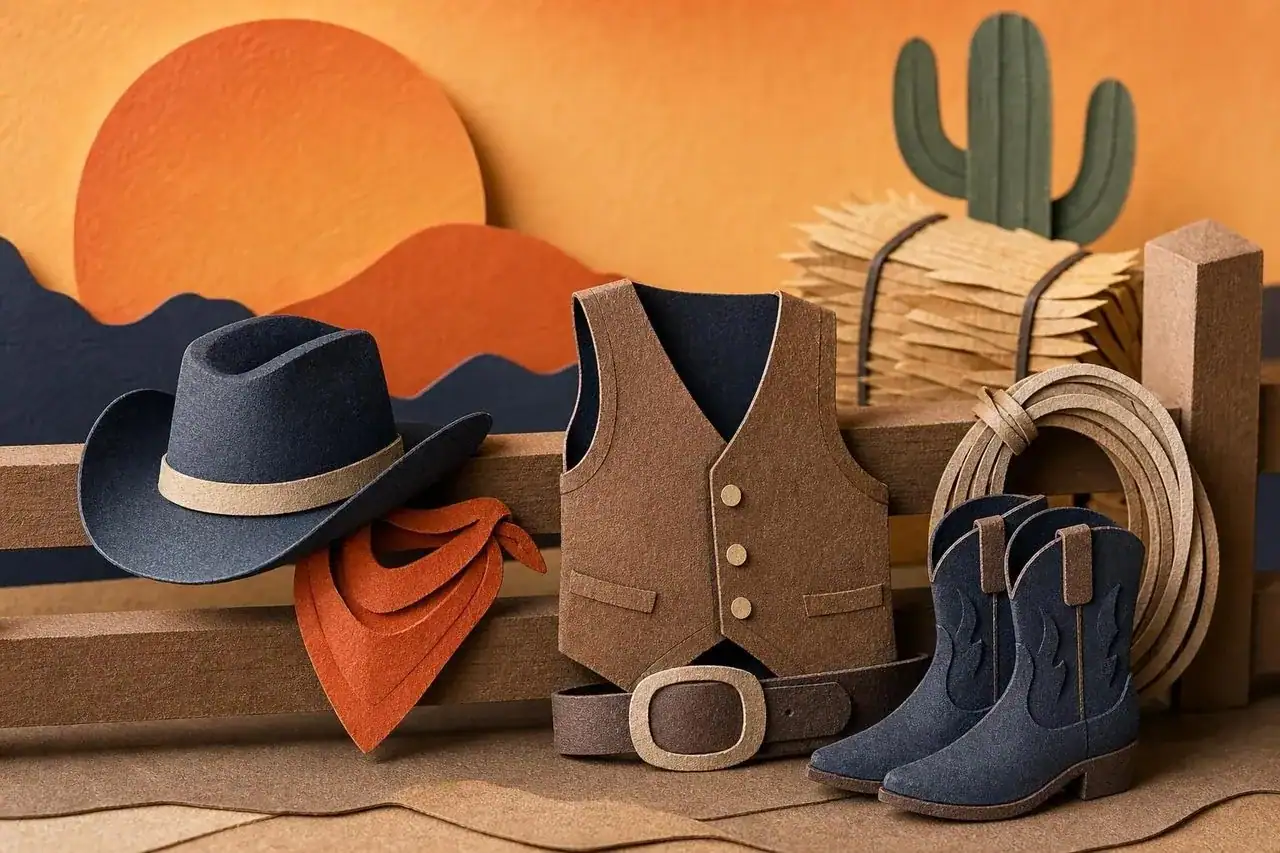
The badge. Draw a five-point star on cardboard, cut it out, cover it with kitchen foil smoothed flat and pin or tape it to a vest. Cut a smaller star from a contrasting foil for a layered effect.
The chaps. Two long rectangles of brown felt or cut-open paper grocery bags wrap around the legs and tie at the waist with the back open. Snip fringe along the outer edge. Keep them just above the shoe so they do not trip anyone.
The vest. An old waistcoat, or a brown paper bag cut up the front with arm holes cut in the sides. Glue on a felt pocket and a row of button circles.
How to choose
Choose by who is wearing it and what they will be doing. Small children need a hat that stays on, a vest and a toy badge. Older children and adults can add layers and details such as a duster coat. For group events, a town of different characters is more fun than five identical cowboys. If you need more headwear, belts and props, see costume accessories, and for people in other jobs, try profession costumes. Age-based builds are in the kids costumes pages.
Comfort and safety notes
- Hats should sit firmly and leave the eyes free. Use an elastic chin strap that releases easily.
- Boots with a heel are hard for small children. Use flat boots or sturdy shoes.
- A bandana worn over the nose and mouth is only for older children and adults, and should never block breathing.
- Props should look like toys, not real weapons. Avoid realistic guns, and never point even a toy at anyone’s face.
- Ropes are for holding or swinging gently, never around a neck.
- Fringe and long hems can catch on furniture and steps, so keep them short.
For general rules on masks, makeup and fabrics, see the costume safety guide, and browse the costume ideas guide for more themes.
Questions people ask
What do you need for a basic cowboy costume?
What did real cowboys wear?
How do I make a sheriff costume?
How can I make chaps from a paper bag or fabric?
Can I make a cowboy hat from cardboard or felt?
Are there costume ideas to avoid when dressing as a cowboy?
What is a good cowgirl costume?
How can I make a toy lasso safe?
What props are safe for a cowboy costume?
How do I make a western group costume?
Keep going