Fantasy and elf costume ideas
Fantasy costumes for fairs, tabletop games and conventions: elves, wizards, dwarves, fairies and orcs, with craft foam ears, makeup basics and easy builds.
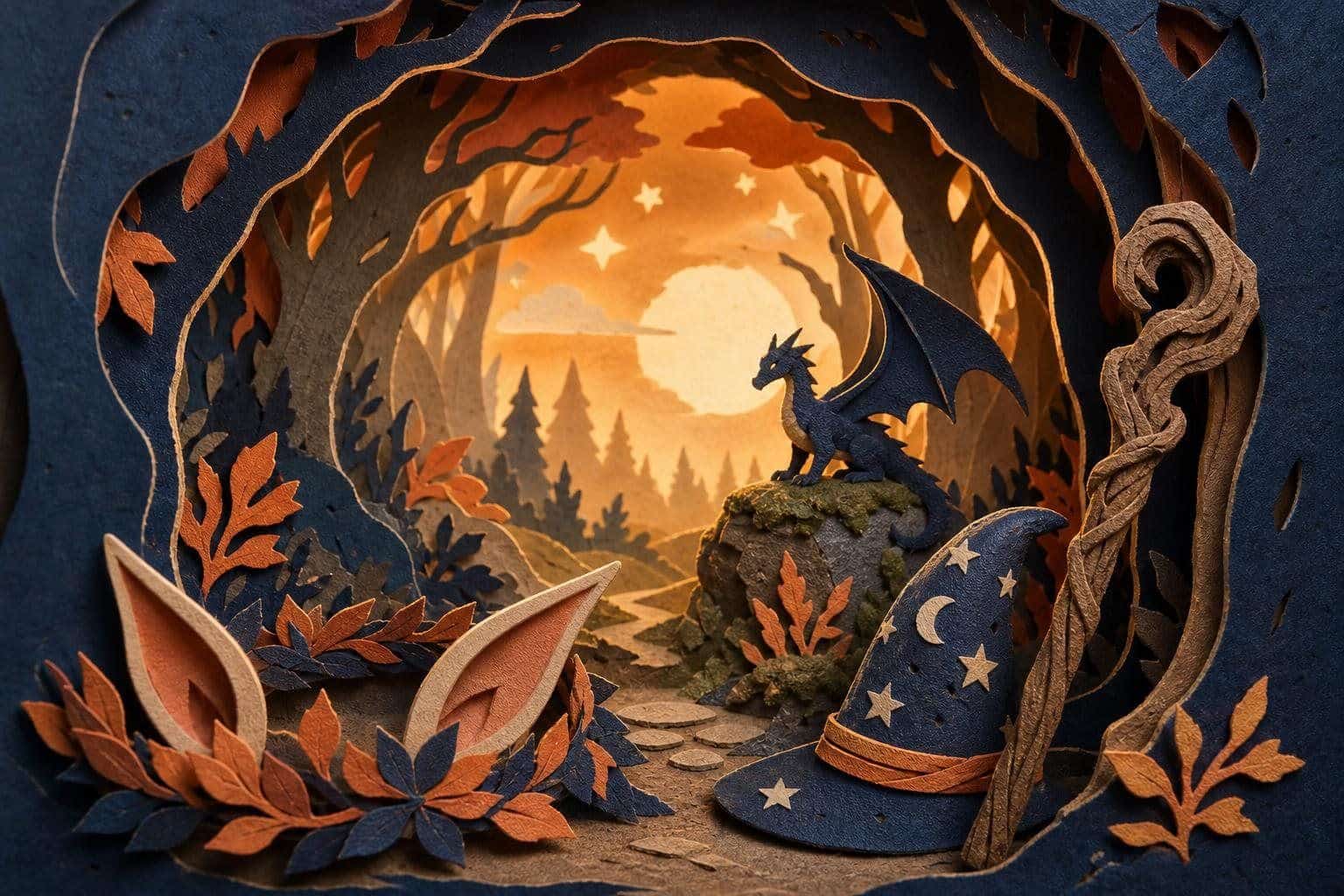
Fantasy costumes are the most forgiving kind. Nobody can tell you the elven cloak is wrong, and half the fun is in the invented details. For fairs, tabletop game nights and conventions, a fantasy costume needs a clear silhouette, a few earthy fabrics and one great prop. This page collects fantasy costume ideas, including elves, wizards, dwarves, fairies and orcs, with easy builds, ears from craft foam, makeup basics and comfort notes.
Elves
Woodland elf. The sell is the layered, earth-toned look with a cloak and pointed ears. Start with a long-sleeved green or brown tunic, leggings or trousers, a belt with a leather-look pouch and a hooded cloak. Add a leaf brooch and a quiver made from a cardboard tube covered in fabric. About two hours with a pair of foam ears.
Elven ranger. A darker palette of gray, brown and deep green with a hood, bracers made from card and fabric, a soft foam bow and arrows with rounded tips. The sell is the hood. Keep any bow strings loose and arrows blunt.
High elf noble. Long robes in silver, white or deep blue, a delicate circlet cut from foam and painted metallic, and long hair. The sell is the circlet and the flowing sleeves. It looks good for adults and teens and suits a game night.
Wizards and mages
Classic wizard. A long robe, a pointed hat, a long beard of cotton or yarn and a staff. The sell is the staff topped with a glass-look bead made from a clear ornament. For more, see witch and wizard costumes.
Hedge mage or herbalist. A patched cloak, a satchel of paper herbs and bottles, and a walking stick. The sell is a bandolier of small jars made from card tubes. Lighter and friendlier than a robe.
Star mage. A deep indigo robe with stars cut from felt and glued on, a crescent moon on the hat and a sparkling staff. Use fabric glue so the stars stay put through a long day.
Dwarves
Dwarf warrior. Stocky silhouette from layered tunics and a wide belt, a braided yarn beard, a metal-look helmet made from painted craft foam and a card axe. The sell is the braided beard.
Dwarf smith or miner. A leather-look apron, a toy hammer, a small lantern made from a card tube (battery light only) and a soot smudge made with a safe washable face paint. The sell is the apron and tools.
Fairies and woodland spirits
Garden fairy. A light dress or tutu, a flower crown, soft wings of wire and sheer fabric, and a little glitter. The sell is the wings. Use soft craft wire with covered ends, and keep wings small enough to sit in a chair.
Moss spirit. Green, brown and cream layers with felt moss and paper leaves, bare-looking branches on a headband and soft face paint. The sell is the textured layering. A good idea for a nature-themed fair. See princess and fairy tale costumes for related looks.
Orcs, goblins and creatures
Orc. Green or gray face paint with darker shading, a foam brow, small foam tusks and rough, patched leather-look clothing. The sell is the shading, which makes the face look heavier. Keep the look playful.
Goblin. Long pointed ears, a hooded jerkin in muddy colors, a pouch of “treasures” and a toy dagger made from card. The sell is the ears and a cheeky grin.
Dragon-keeper. A hooded cloak, a leather-look glove, a small stuffed or paper dragon on the shoulder and a satchel. The prop does the talking. This is a good low-effort idea that photographs well.
Elf ears from craft foam
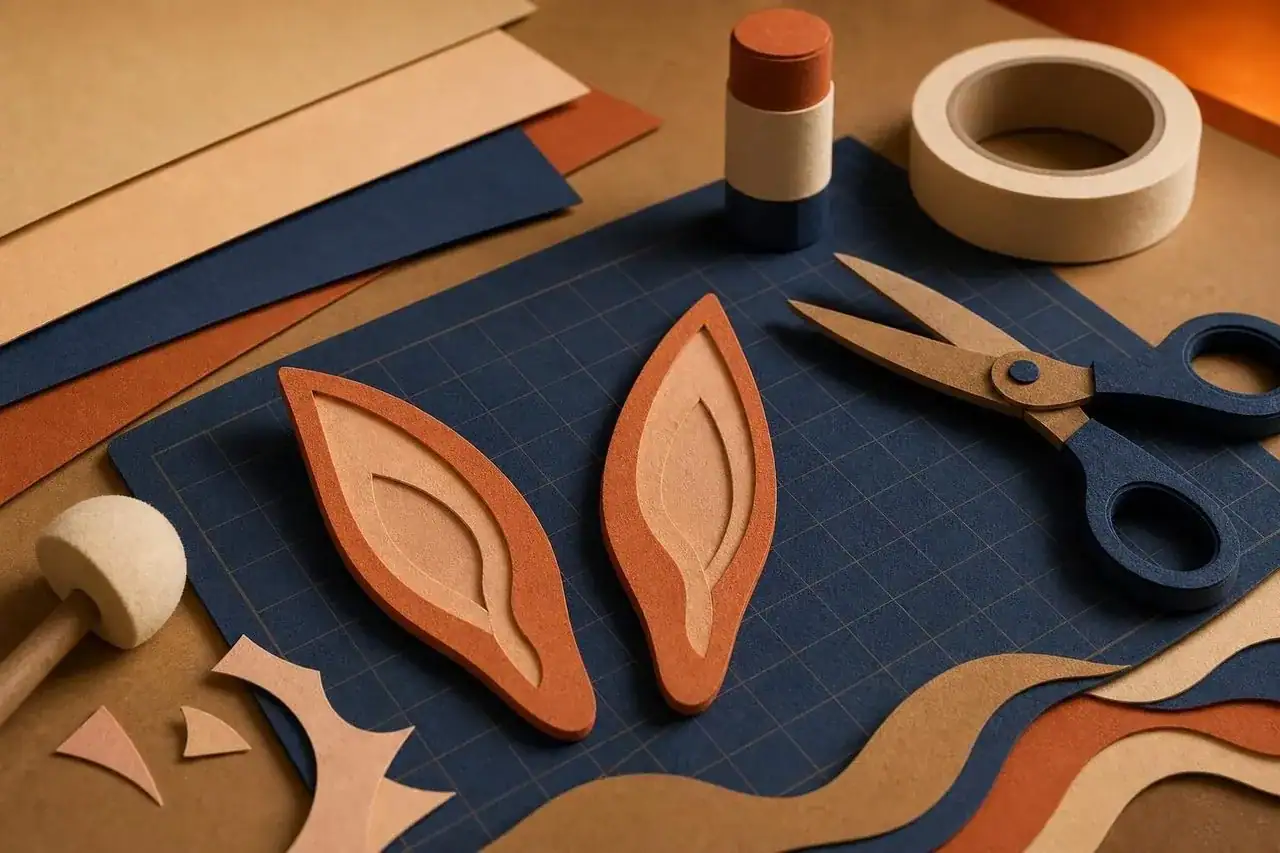
Pointed ears are the single most recognized fantasy detail, and they are easy to make.
- Draw the shape. Sketch a long, tapered ear about four inches long, with a curved inner edge, on paper, and test it against your own ear.
- Cut from thin foam. Use 2 mm craft foam in a skin-like tone. Cut two mirror-image ears, and trim until they are comfortable.
- Shape them. Warm the foam gently with a hair dryer on low for a few seconds, from a safe distance, and curve it around a bottle. Do not use a heat gun on foam near skin.
- Attach. For children, attach the ears to a thin headband and hide it with hair. For adults, use a skin-safe adhesive made for costume use. Patch test a day ahead.
- Blend. Cover the join with a little face paint or foundation to match the skin.
Remove adhesive slowly with its matching remover, and never pull ears off quickly.
Makeup and prosthetic basics
Use only skin-safe, cosmetic-grade face paint and makeup, and patch test on the inner arm the day before. Avoid craft paint, marker and household glue on skin. Keep products away from the eyes unless labeled for use around them. Start with moisturized skin, add shading under the cheekbones for an elf look, and a soft shimmer. For orcs, use green with dark shading around the brow. Remove at the end of the day with a gentle cleanser, and stop if there is itching, redness or stinging. For more, see the costume makeup guide.
A simple hooded cloak
A cloak is the most useful fantasy piece, since it changes elf, wizard, ranger and dwarf alike.
- Measure. Hold a tape from the base of the neck to where you want the hem, which should sit above the ankle. Double that length gives you the fabric width for a half-circle cloak, or use a rectangle if you prefer.
- Cut a half circle. Fold the fabric in half, then in half again, and cut a curve from the fold corner for the neck and another for the hem. Fleece and felt do not fray, so no hemming is needed.
- Add a hood. Cut a rectangle about the height of your head from forehead to shoulders, fold it in half, and sew or glue the back seam. Attach it to the neck edge with fabric glue or a few stitches.
- Fasten safely. Use a ribbon tie or a hook-and-loop strip at the neck, so the cloak releases if it catches on a chair or door.
- Weather it. Rub the edges with a little diluted tea or lightly crumple and sand the fabric for a lived-in look. Test on a scrap first.
Making things look worn and old
Fantasy characters look best when their clothes have lived a life. Layer a plain tunic under a vest, add patches, fray edges lightly, and knot cords instead of using neat bows. Use brown shoe polish or diluted tea on pale fabric for staining, testing on a scrap, and let everything dry fully before wearing. Paint card armor with metallic paint and rub a darker shade into the edges, then wipe back, so it reads as metal from a distance. A few dull brass-colored buttons and a leather-look strap do more than a lot of glitter.
Wings, crowns and other headpieces
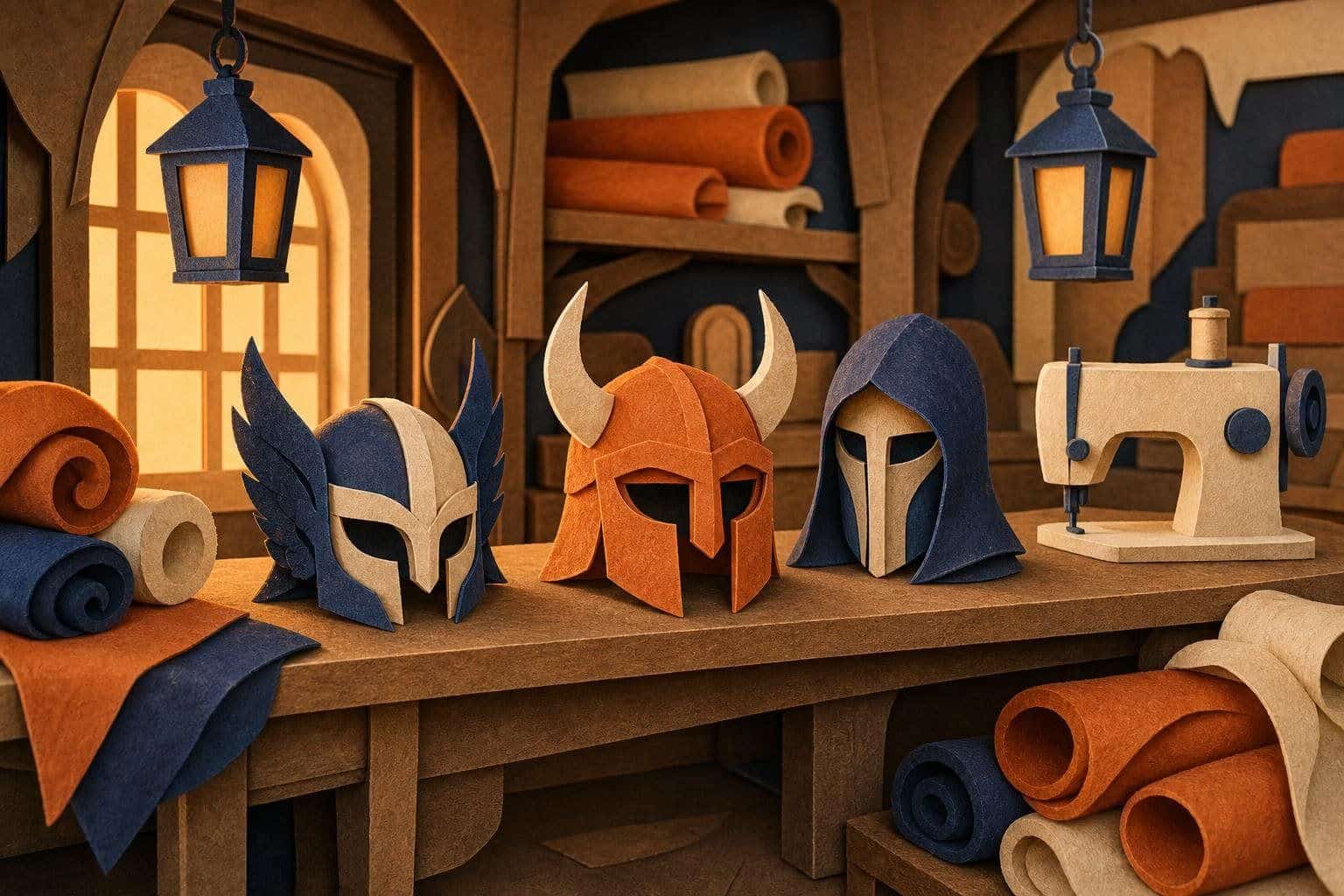
Headpieces make a quick character change. A leaf crown from green craft foam suits elves and woodland spirits. A thin silver circlet suits a noble. A horned or spiked helm made from foam suits a warrior. Wings need a stiff, lightweight frame such as soft craft wire with covered ends, with sheer fabric stretched across and held with fabric glue. Attach with soft straps over the shoulders, and check that the wearer can sit down and pass through a door.
Group and party ideas
Fantasy costumes shine in groups. A tabletop party can be a party of adventurers: an elf, a dwarf, a wizard, a ranger and a healer, each with a signature color. At a fair, a family can be a woodland court, with one tall figure, one small fairy and a creature companion. Agree on a color for each character so the group reads clearly in photographs.
How to choose a fantasy character
Pick the character by the event. For a tabletop game night, wear something comfortable that you can sit in for hours: a tunic, cloak and boots. For a fair or convention, add a clear prop and a headpiece that stands out in a crowd. For children, choose lightweight parts and avoid heavy armor. For adults, add layers, texture and aged fabrics. A tea-dyed or lightly sanded cloth looks weathered at no cost.
Comfort and safety notes
Cloaks need a tie that releases easily and a hem that clears the ground. Foam and card weapons should be rounded and soft, and many events require props to be clearly fake, so check the rules. Keep beards and wigs light and ventilated. Use skin-safe products only, and avoid prosthetics near the mouth for young children. Take breaks from heavy layers in warm rooms, and carry water. For more, see the costume safety guide.
Finding a community
If you want to meet others who enjoy fantasy dress, see costume communities to follow, and for the medieval and Renaissance side of the genre, take a look at Renaissance costumes.
Questions people ask
What is the easiest fantasy costume to make?
How do I make elf ears from craft foam?
Is it safe to put costume ears or prosthetics on skin?
How do I do easy fantasy makeup?
What is the difference between an elf and a fairy costume?
What should I wear to a fantasy fair or tabletop game night?
Can I carry a sword or staff at a convention?
How do I make a dwarf costume?
How can I make a cloak for a fantasy costume?
What do orc costumes look like?
Keep going