Princess and fairy tale costume ideas
Princess costumes and fairy tale looks for kids and adults: 16 storybook ideas, easy builds for gowns, crowns and wings, plus comfort and safety tips.
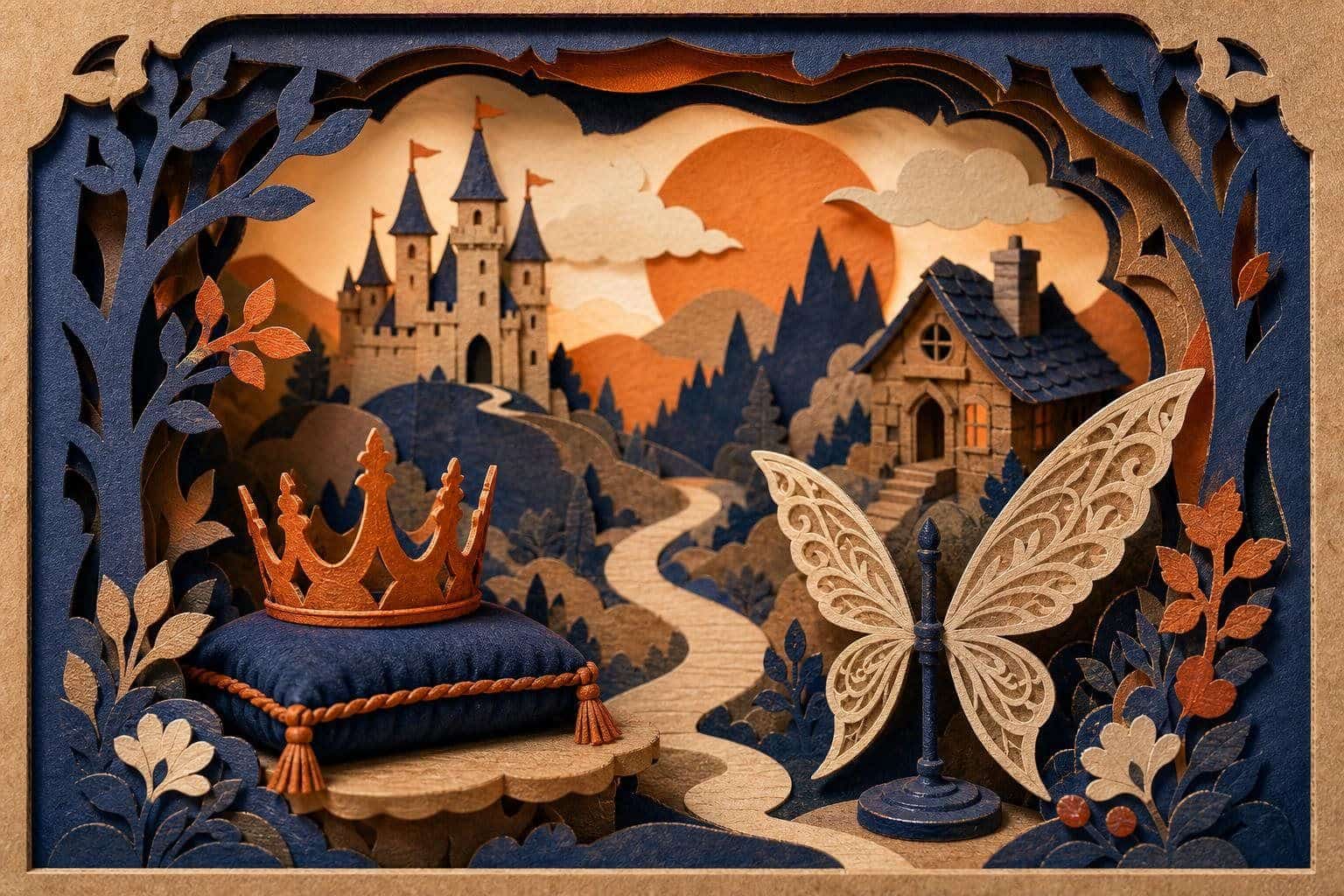
Princess costumes sit at the center of a large family of fairy tale looks, from gowns and crowns to woodland characters and winged fairies. This page collects sixteen storybook ideas that you can build at home, shows how to make the key pieces, and covers comfort and safety. All of the characters here come from traditional tales, so you can build your own design instead of following any single film.
The three pieces that make a princess
A princess look is usually built from the same three pieces, and getting them right matters more than adding extras.
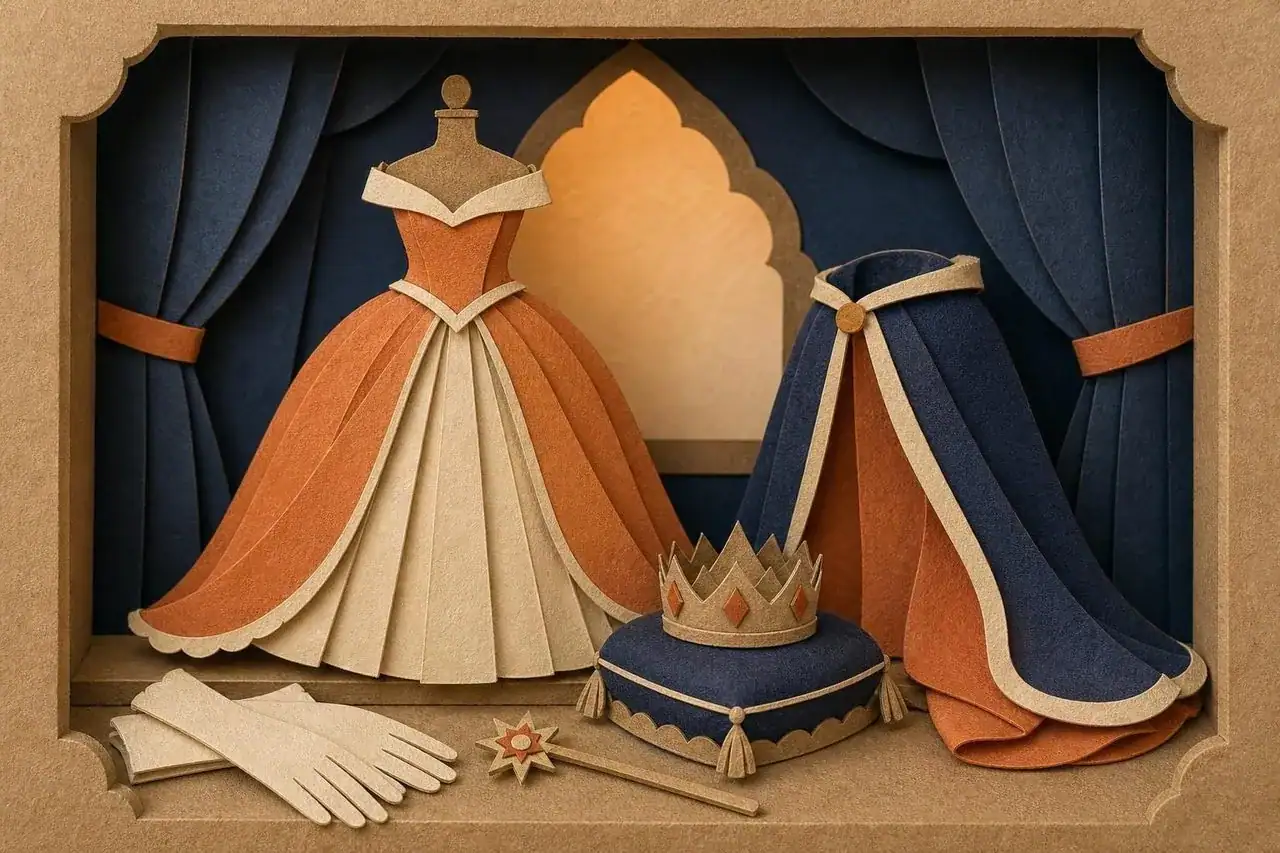
- A full skirt or gown. The shape reads from a distance. Tulle layers, satin or a simple gathered skirt all work. For a child, hem it above the ankle.
- A crown or tiara. It tells everyone who the character is. Craft foam, card covered in foil or felt, or a wire frame covered in ribbon can all work.
- One signature color. A single color with gold or silver trim looks more deliberate than many colors at once.
Add gloves, a sash or a cape if you want more drama. Everything else is a bonus.
Royal looks

1. The classic princess. A pastel gown, a crown and flat shoes. The selling element is the skirt: layer two or three tulle circles on an elastic waistband, with no sewing beyond a knot.

2. The warrior princess. A tunic over leggings, a belt, vambrace cuffs of craft foam and a braided hairstyle. Swap the tiara for a circlet. A good alternative for children who prefer action.

3. The queen. A long robe, a heavier crown and a scepter made from a painted dowel with a foam orb. Velvet or velvet-look fabric gives weight.

4. The prince. A tunic, a sash, a cape and a crown. A good match for a sibling set. A felt belt and a cardboard sword round it out.

5. The royal court. A herald with a paper trumpet, a jester with a belled hat, and a lady-in-waiting with a simple gown. Good for groups and classrooms.
Fairy tale heroes and villains

6. The girl in the red hood. A red hooded cape, a basket and a white apron. The cape is the whole look. Hooded capes should fasten loosely.

7. The woodcutter. A checked shirt, braces and a cardboard-and-foam axe with a rounded blade. It makes a great dad-and-child pair with the red hood.

8. The wolf. Gray clothes, a tail and a mask or ears. Use ears on a headband so the face stays uncovered, and add painted whiskers using face paint.

9. The beanstalk climber. Plain tunic, a satchel of paper beans and a long green ribbon vine trailing from the shoulders. A good one for a child who wants something silly.

10. The three bears and the visitor. Brown clothes with round ears, paired with a child in a golden wig. A natural family group.

11. The frog prince. Green clothes, a crown and a green felt hood with bulging eyes sewn on top. Funny and easy.
Magical characters

12. The fairy. A short skirt, a tunic and a pair of wings. The wings are the signature, and light wire loops covered in sheer fabric or tissue make the best shape. Strap them on like a small backpack and keep them light.

13. The fairy godmother. A long, soft gown, a wand tipped with a foam star, and a small crown. Silver and pale blue read as magical.

14. The mermaid or sea queen. A shimmering green or teal skirt in a tail shape, with shells in the hair. Do not tighten a tail so much that walking is hard. A long skirt with a fishtail flare is easier.

15. The enchanted forest sprite. Leaf-shaped felt pieces, twigs on a headband and moss-colored fabric. Related fantasy looks are covered in the fantasy and elf costume ideas.

16. The storyteller. A hat, a cape and a book large enough to read from. This one suits adults and teachers, who want a costume that also lets them get on with the day.
Dressing for the era
Many fairy tale gowns draw on medieval or Renaissance dress, such as long sleeves, laced bodices and flowing hems. If you want those details to look right, the Renaissance costume guide explains what people actually wore, and it makes a handy reference for lacing, hats and belts.
How to choose
Pick by comfort first. A small child who will run around is happier in a short tulle skirt and a headband than in a heavy gown. A school event needs something that lets the wearer sit on the floor and use their hands. Adults dressing as a royal can use heavy fabrics and structure. Look at the child’s favorite stories and choose a character from them, and do not assume the character must be a princess. If you need hats, gloves and crowns, the costume accessories page covers them, and the kids costumes page has more age-based builds.
Comfort and safety notes
- Hems should clear the ankles and the shoes should have a flat sole. A child who trips on a gown can fall down stairs.
- Cover wire ends on wings and crowns with tape, and avoid sharp metal tiaras on children.
- Tulle, satin and net burn quickly. Keep gowns away from candles, fireplaces and kitchen stoves.
- Glitter and costume jewelry can be a choking hazard for small children. Use fabric glue and keep decorations large.
- Wings should be light and secured with soft straps that do not pull at the neck or armpits.
- Test face makeup on a small patch first, and keep it away from the eyes.
For fabrics, makeup and fit, read the costume safety guide, and browse the costume ideas guide for more themes.
Questions people ask
How do I make a simple princess costume?
What are classic fairy tale costume ideas besides princesses?
How can I make fairy wings at home?
Can a boy wear a prince or fairy tale costume?
How do I make a crown that stays on?
What fabric is best for a princess dress?
How do I keep a long gown from tripping a child?
How long does it take to make a princess costume?
What accessories finish a fairy tale look?
Are princess costumes appropriate for a school book day?
Keep going