Iconic and classic horror movie villains and their costumes
Iconic horror movie villains and classic monsters: the greatest looks by era, why they stick, and how to recreate them as safe, easy costumes at home.
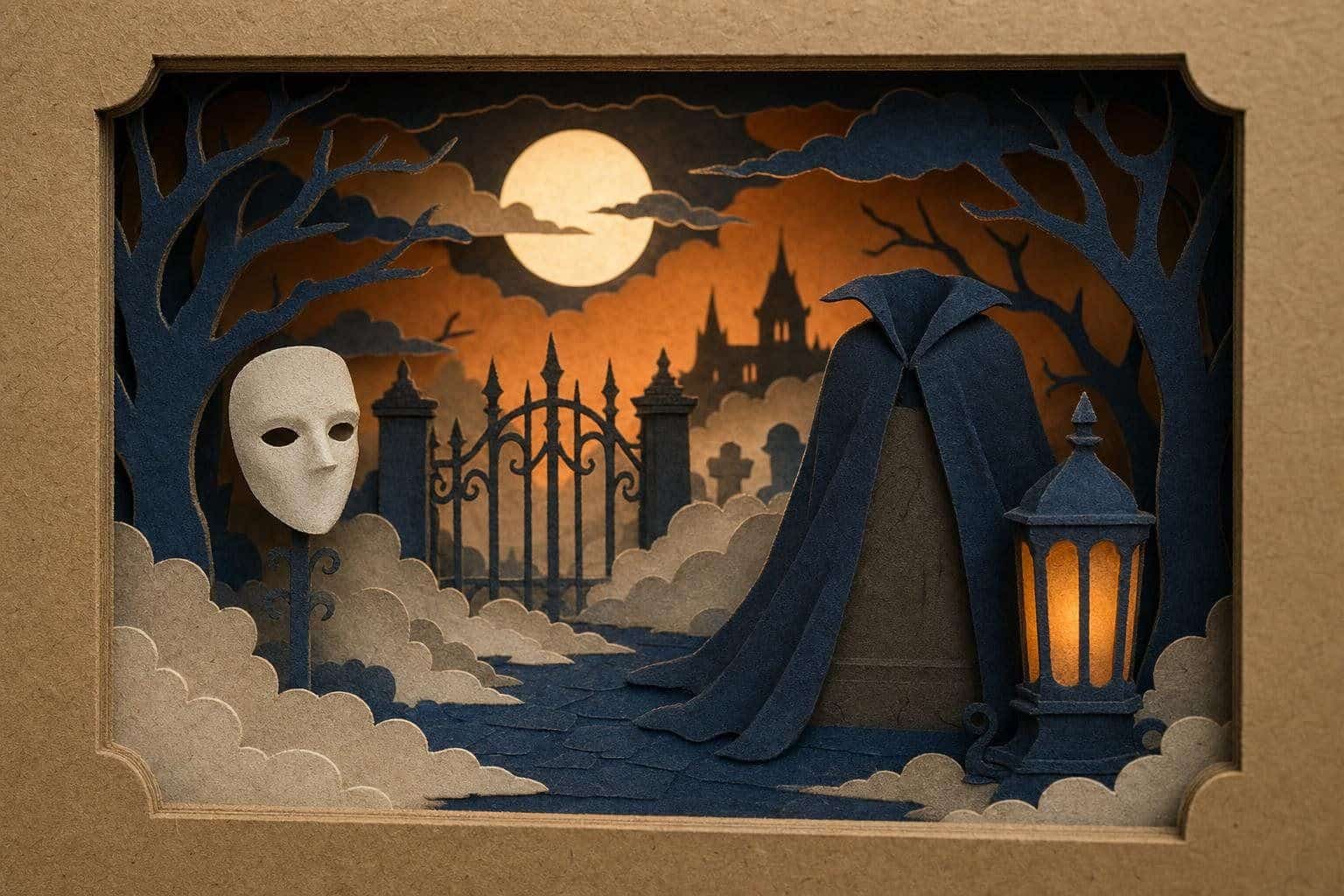
Horror movie villains are among the most copied figures in popular culture, and the greatest horror villains are simple enough to turn into a costume in an evening. This guide covers how the genre’s icons evolved, what makes a villain’s look unforgettable, how masks and makeup do the heavy lifting, and how to recreate recognizable characters at home without anything graphic, in a way that suits kids, teens and adults.
Everything here is family-appropriate. The text treats the figures as characters and as design, not about injury or gore, and the costume advice favors fun, comfort and safety over shock.
What makes horror movie villains iconic
Ask people to name a few horror characters and the same handful appear: a cape-wearing count, a bolt-necked creature, a blank white mask, a striped sweater and a hat. These looks survive because they are built like good logos. Three ingredients appear again and again.
Silhouette. A strong outline can be recognized from far away or in shadow. Dracula’s high-collared cape, the hunched shape of a creature, a tall figure in a long coat: each reads instantly. Silhouette is also the first thing to copy when making a costume, because it is easier to get right than detail.
Face or mask. A mask removes personality and replaces it with a blank surface the viewer fills in. That is why a plain white mask can feel more unsettling than a detailed one, and why it is easy to reproduce at home. Where there is no mask, makeup does the same job: pale skin, dark-rimmed eyes, a distinctive brow.
Signature object. One thing carried or worn gives the figure a hook: a hat, a glove, a hockey stick, a lantern, a cane. Costume designers call these identifiers, and they are what makes a stranger say “oh, you are that character.”
When you plan a villain costume, write down those three things for your chosen character. If you can name all three, you can build the look. If you cannot, pick a different character.
The greatest horror villains by era
The genre’s look changed with its technology, its audience and its worries. Here is a brief walk through the major periods and the greatest horror villains each one produced, with films and years confirmed.
The silent and early sound era (1920s to 1930s)
Early horror leaned on German Expressionism, with its sharp shadows and exaggerated sets. The Cabinet of Dr. Caligari (1920) set the tone, and Nosferatu (1922), directed by F. W. Murnau, gave audiences Max Schreck as the rat-like Count Orlok. In the United States, Lon Chaney became known as the “man of a thousand faces” for his transformations in The Hunchback of Notre Dame (1923) and The Phantom of the Opera (1925), largely achieved with his own makeup work.
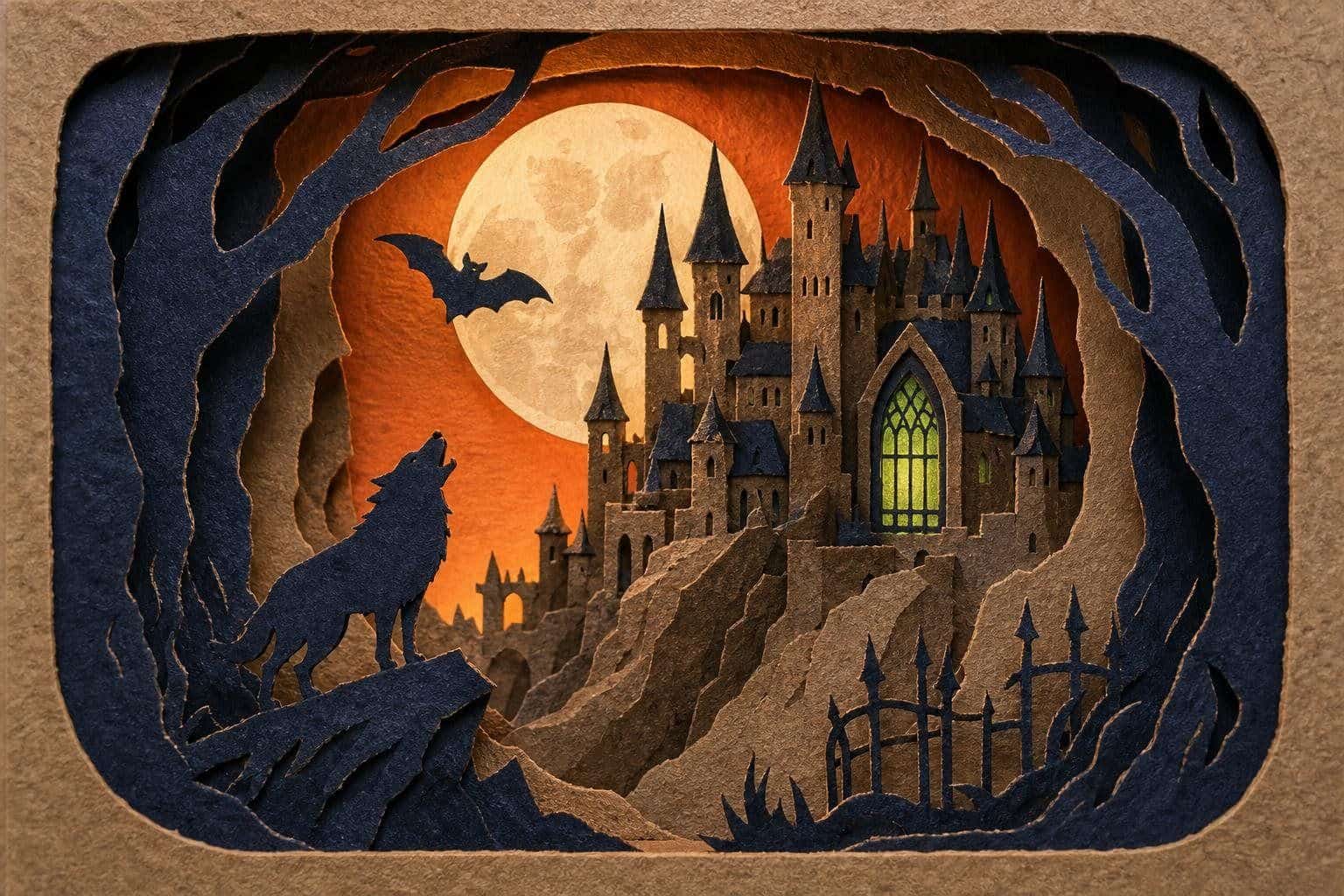
Universal Pictures then defined the classic monster cycle. Dracula (1931) starred Bela Lugosi; Frankenstein (1931), directed by James Whale, starred Boris Karloff with makeup by Jack Pierce; The Mummy (1932) brought Karloff back in bandages; The Invisible Man (1933) starred Claude Rains; and Bride of Frankenstein (1935) added Elsa Lanchester as the Bride. The Wolf Man (1941) starred Lon Chaney Jr. These creatures were often sympathetic: cursed, misunderstood or manipulated.
Creature features and Hammer horror (1950s)
The 1950s brought atomic-age worries and rubber-suit monsters. Creature from the Black Lagoon (1954) introduced the Gill-man, played on land by Ben Chapman and underwater by Ricou Browning. In Britain, Hammer Films revived the classics in color: The Curse of Frankenstein (1957) and Horror of Dracula (1958) starred Peter Cushing and Christopher Lee, and their saturated color still shapes how people imagine a vampire.
Psychological horror and the modern monster (1960s)
Psycho (1960), directed by Alfred Hitchcock, moved the villain from a monster to a seemingly ordinary person, and Norman Bates showed that a quiet manner could unsettle more than makeup. Night of the Living Dead (1968), directed by George A. Romero, established the modern shambling zombie as a screen figure, which is why zombies sit with vampires on the zombie and vampire costume ideas page rather than with the Universal group.
The slasher boom (1970s to 1980s)
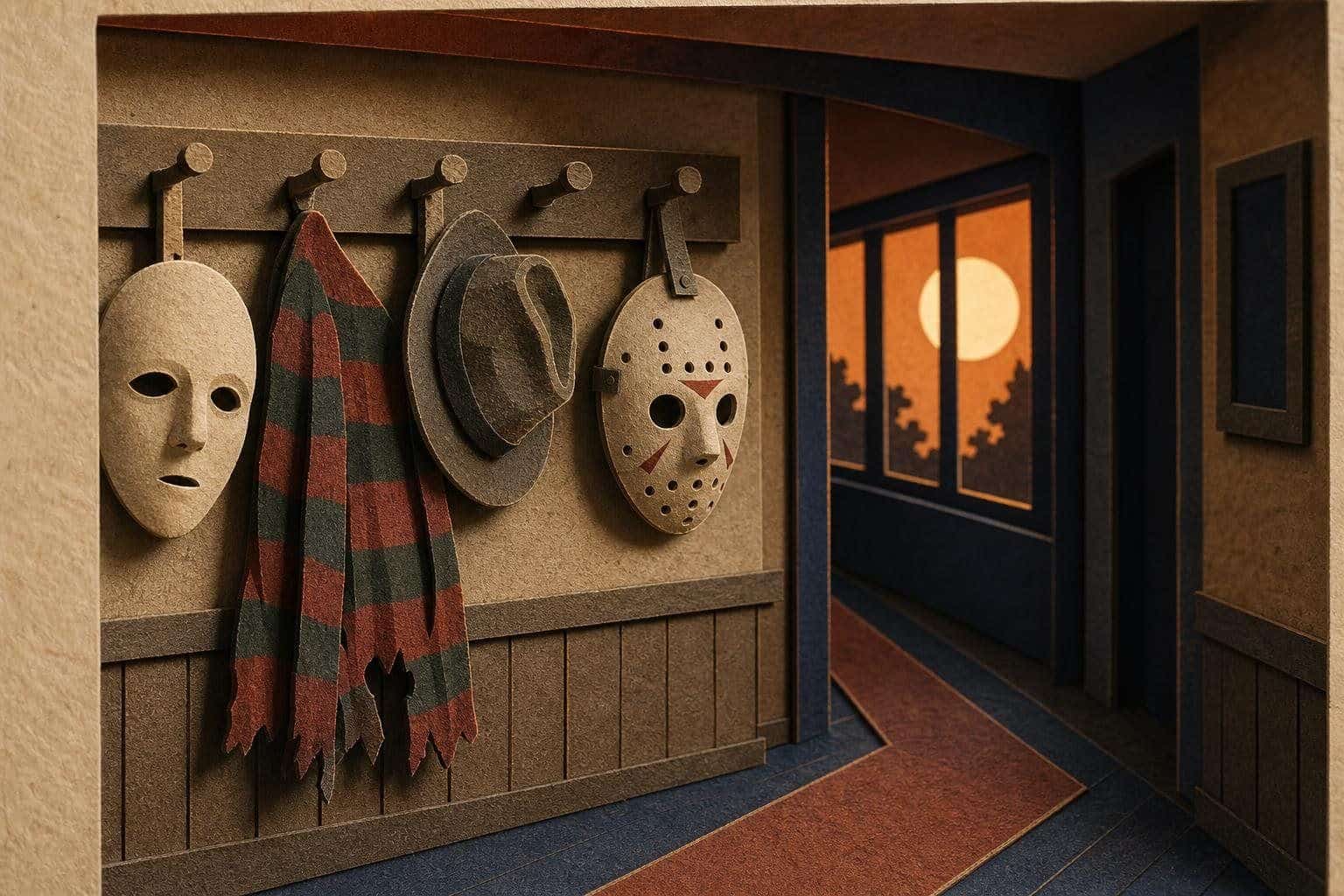
Slashers built a formula around a masked or distinctive stalker. The Texas Chain Saw Massacre (1974) was an early landmark. Halloween (1978), directed by John Carpenter, introduced Michael Myers in a plain white mask and dark coveralls. Friday the 13th (1980) launched a long series, and Jason Voorhees became the mask-wearing figure from the third film in 1982. A Nightmare on Elm Street (1984), created by Wes Craven, brought Freddy Krueger, remembered for a red-and-green striped sweater, a brown fedora and a bladed glove, and played by Robert Englund. Child’s Play (1988) gave the genre a doll villain.
Self-aware and international horror (1990s to 2000s)
Scream (1996), also from Wes Craven, played with the rules of slashers and gave the genre Ghostface, whose long, drooping mask is a staple of Halloween. Japanese horror such as Ringu (1998) popularized the long-haired ghost in a white dress, which Hollywood adapted as The Ring (2002).
Modern horror (2010s onward)
Recent decades mix prestige directing with classic icons. It (2017) brought Pennywise to a new generation, Get Out (2017) and A Quiet Place (2018) showed horror could be socially pointed or built on silence, and Robert Eggers’ Nosferatu (2024) returned to the 1922 story. Many modern villains lean more on atmosphere than on a single costume, which makes them harder, but not impossible, to copy.
Classic horror movie monsters, slashers and modern villains compared
Classic horror movie monsters are usually the easiest of the three groups to recreate, because their looks depend on makeup, hair and a few simple shapes instead of a hard-to-find mask.
The three families look different and ask different things of a costume maker. Classic horror movie monsters come first in the table because their makeup, capes and bandages are the oldest and the most widely copied.
| Family | Typical era | Defining look | Costume approach | Difficulty |
|---|---|---|---|---|
| Classic monsters | 1920s to 1950s | Makeup, capes, bandages, creature suits | Face paint, cape, layered clothes | Easy to medium |
| Slasher villains | 1970s to 1990s | Mask or hat, one tool, plain clothes | Thrifted clothes, mask, felt prop | Easy |
| Modern horror | 2000s onward | Atmosphere, realism, subtle makeup | Muted clothes, careful makeup | Medium to hard |
Classic monsters reward makeup and fabric skills. Slashers are the most forgiving: plain clothes plus a mask or hat plus a prop. Modern characters often depend on realistic prosthetics, so a simplified, stylized version is the sensible target.
For deeper dives, the guide to horror movie villains and slasher icons looks at the stalkers and their signature gear, while classic monsters and creatures covers the Universal group and beyond.
How masks are used in horror, and in costumes
Masks matter because they erase the human face. In film, a mask lets a stunt performer or actor become a constant, unchanging presence from one scene to the next. In costume, a mask serves as the fastest route to a recognizable character, which is why so many horror movie costumes start with one.
Two practical facts help when copying a mask:
- Many famous masks started as ordinary objects. Michael Myers’ mask, for example, was a modified commercial mask repainted white with the eye holes widened, and Jason’s is a sports-style hockey mask. That means you can often make a good version from a plain mask or cardboard.
- Blank faces are forgiving. A smooth surface with two eye openings looks right even when your craft skills are modest.
Safety matters more with masks than with any other part of a horror outfit. A good mask has large eye openings, a clear path for airflow, an elastic that holds without pinching, and edges that do not rub the skin. Young children should avoid tight full-face masks, and everyone should be able to remove the mask without help. If a mask limits your side vision, keep it pushed up while walking outdoors. The costume safety guide covers visibility, ventilation and trip hazards in detail.
Makeup and face paint for monster looks
Makeup does the work a mask would do, with the added bonus of comfort. For a classic monster you only need a handful of simple techniques.
- Pale base. A skin-safe white or gray face paint, applied thinly and set with a little powder, gives the classic vampire or ghostly look. Blend at the jawline and neck so there is no hard edge.
- Shadowed eyes. Dark gray or purple around the eye sockets, kept outside the lash line, creates depth. Avoid putting products near the eyes unless the label says so.
- Lines and brows. A fine brush can draw heavy brows, stitch lines or fangs shapes without any three-dimensional prosthetic.
- Hair. Gel, a little water or a hat can change the silhouette as much as makeup. A slicked-back style suits a count, a messy one suits a scarecrow or a haunted figure.
Safety rules are firm: use only products made for skin, patch-test on the inner arm a day before, never use craft paint or markers on the face, keep products out of the eyes and off damaged skin, and remove everything with the maker’s cleanser before bed. The costume makeup guide goes through products, step-by-step looks and removal.
Iconic horror movie villains and their signature looks
Below are family-safe starting points for horror movie costumes based on some of the genre’s best-known looks. Each iconic character is reduced to the silhouette, face and object described earlier. All are inspiration for a home-made outfit, not licensed copies.
The count
A black cape with a stand-up collar, a white shirt, a dark vest and slicked hair. Make the cape from a cut-down black sheet or lining fabric; stiffen the collar with a strip of cardboard sewn or glued inside. Add pale makeup and, if you like, soft rounded plastic fangs. For children, skip the fangs altogether and use a red-lined cape and a bat-shaped pendant.
The creature from the lab
A flat-topped head, heavy brow and dark clothing: build a flat head from a foam block or a felt headpiece worn over a swim cap, add green-gray face paint and a mismatched jacket. A pair of cardboard bolts on a headband captures the neck-bolt image without anything on the skin.
The mummy
Strips of cloth or gauze wrapped loosely over old clothes, with a gap for the face and hands. Tea-stain the strips to give an aged tone and tuck loose ends under so they hold. Keep the wrap loose around the neck and never wrap the head fully.
The blank-faced stalker
Dark coveralls, a plain white mask or white face paint and a kitchen-safe prop such as a felt “knife” cut from foam. If you wear a mask, make sure the eye openings are wide, or simply paint a blank white face and leave it at that. Never carry anything that resembles a real blade.
The striped-sweater dreamer
A red-and-green striped sweater, a brown hat and a glove with cardboard fingers glued to a work glove. The glove is the sign of the character, and a clearly toy glove keeps the look safe and funny.
The masked hockey fan
A white hockey-style mask with red marks, dark work clothes and a cardboard hockey stick. If you do not have a mask, make a face from papier-mâché or a thin plastic mask, painting on the details. Make sure it is well ventilated.
The ghostly figure
A long white dress or a bedsheet with wide eye holes, long dark hair and a pale face. The ghost look is one of the simplest and most comfortable, and it suits all ages. Keep the hem above the ankles.
For ready-to-use build ideas, browse the wider DIY costume guides, including cape and armor builds that translate well to monster looks.
Zombies, vampires and the overlap
Zombies and vampires sit at opposite ends of the horror wardrobe. The vampire is elegant: high collars, capes, pale skin. The zombie is ragged: torn clothes, muted colors, a slow walk. They share a costume language of pale makeup and shadowed eyes, which is why many people build one look and adapt it to the other. The zombie and vampire costume ideas page compares both and suggests ways to tune them for kids and for adults.
What to look for in a horror costume that works for kids
Children enjoy being a little scary, as long as they are in control of it. A few principles help:
- Funny beats frightening. A vampire in a bright cape holding a pretend bat on a string reads as a joke and delights younger children.
- Never block vision. A child who cannot see well is at risk on stairs and curbs.
- Keep it comfortable. Itchy makeup or a stuffy mask ends the night early.
- Check the audience. Bring a plain face along for younger siblings or friends who find the full outfit too much.
For other age-appropriate starting points, the kids’ costume ideas lists themes sorted by age and comfort.
Sequels, remakes and which version to copy
Horror characters return, and their looks change with them. Jason’s look differs between films, and the Halloween series has revisited Michael Myers’ mask more than once. When you plan a costume, decide which version you want to copy, and gather photos of that design. The guide to horror sequels and remakes explains how characters have evolved and why costume details differ between versions.
B-movies, sci-fi and the weirder corners
Some of the best costume inspiration comes from low-budget films. Giant insects, blobs, robots and alien invaders from 1950s science fiction used simple, graphic shapes that translate directly to cardboard and paint. The B-movies and sci-fi guide goes through the best-known cult creatures and how to recreate them.
Famous scenes as costume ideas
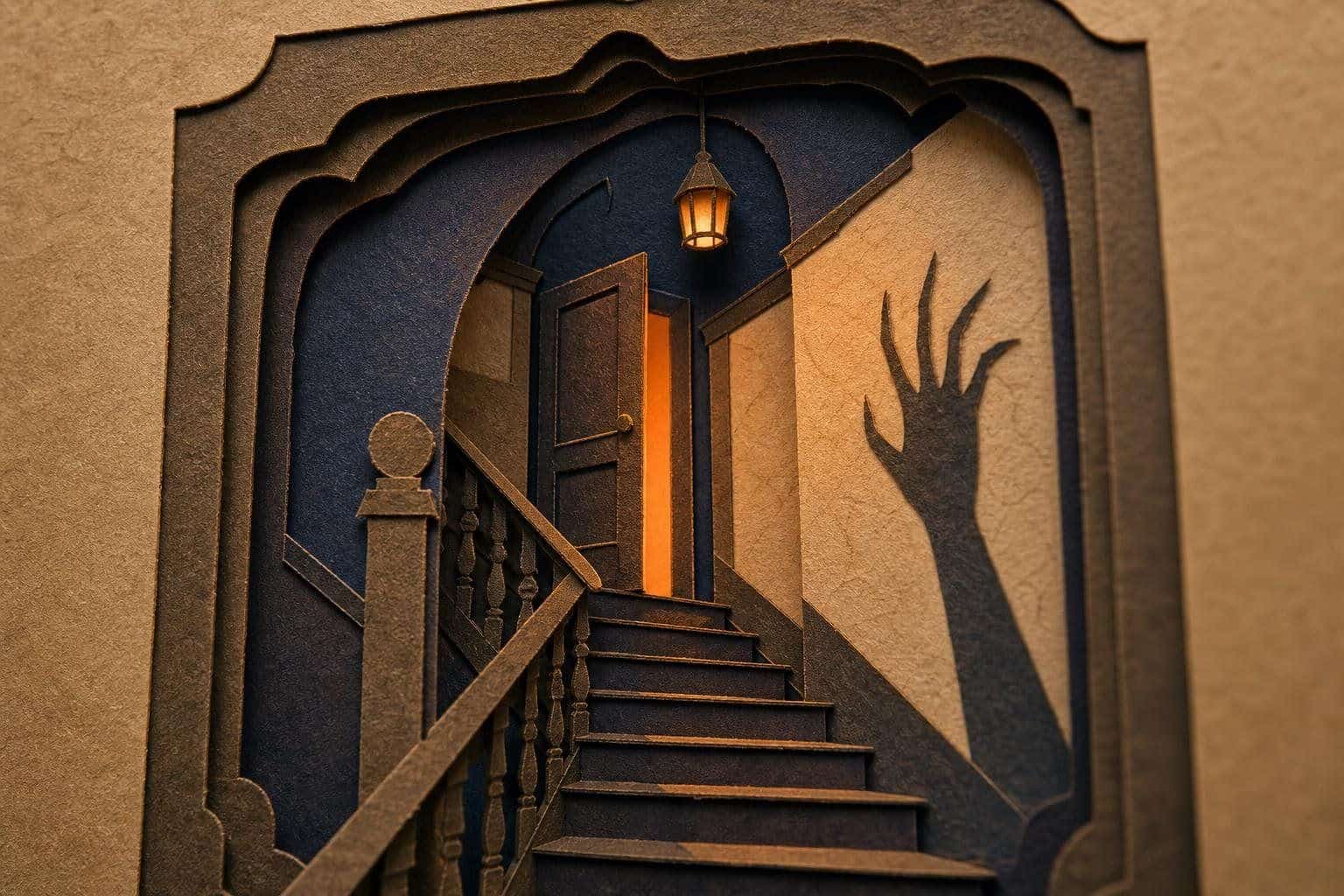
A single scene can define a character: a figure at the top of a staircase, a silhouette in a window, a long walk through fog. Group costumes can recreate a moment, with one person as the villain and others as the potential victims. The guide to the scariest scenes in horror history describes the moments that shaped how people picture the genre, in terms suitable for all ages.
Putting together a horror costume in an evening
Here is a practical plan that works for almost any character in this guide.
- Pick the character and the version. Decide whether you want the classic, the remake or your own spin.
- Write the three identifiers. Silhouette, face and prop.
- Raid the wardrobe. Dark coat, white shirt, striped sweater, gloves, a sheet.
- Make one prop from felt, cardboard or craft foam. Spend your time here.
- Test the mask or makeup in daylight. Check vision, breathing and comfort.
- Do a walk test. Stairs, doorways, sitting down and passing through a crowd.
- Plan the exit. Know how to remove the mask or hat quickly.
For group events, assign one icon to each person and arrange them as a lineup. A “monster mash” of a count, a mummy, a creature and a ghost needs no coordination beyond choosing colors, and it photographs well.
Choosing a villain by age, time and skill
Not every icon suits every wearer. This table matches common looks to realistic effort, using wardrobe basics and a few craft supplies.
| Look | Best for | Build time | Skill | Main materials |
|---|---|---|---|---|
| Bedsheet ghost | All ages | 20 to 30 minutes | Easy | Sheet, scissors, safety pins |
| Cape-and-collar count | Kids to adults | 1 hour | Easy | Black fabric, cardboard, face paint |
| Mummy wraps | Kids to adults | 45 minutes | Easy | Gauze or cloth strips, tea |
| Striped sweater and hat | Teens and adults | 30 minutes plus a felt glove | Easy | Sweater, hat, work glove, cardboard |
| Blank-masked stalker | Teens and adults | 1 hour | Easy | Coveralls, plain mask, foam prop |
| Lab creature with makeup | Teens and adults | 1.5 hours | Medium | Face paint, jacket, headband |
| Creature suit from foam | Adults | A weekend | Hard | Foam, fleece, glue, paint |
The times are rough and assume you already own the clothes. A first-time maker should start at the top of the list and move down as confidence grows.
Reading a villain’s design like a costume designer
Costume designers working on horror films tend to follow a few habits that are useful to copy.
Limit the palette. Most famous villains wear two or three colors: a red-and-green sweater, a black cape with a red lining, a white mask against dark overalls. Restricting colors makes a look cohesive, and it makes a thrifted outfit look deliberate.
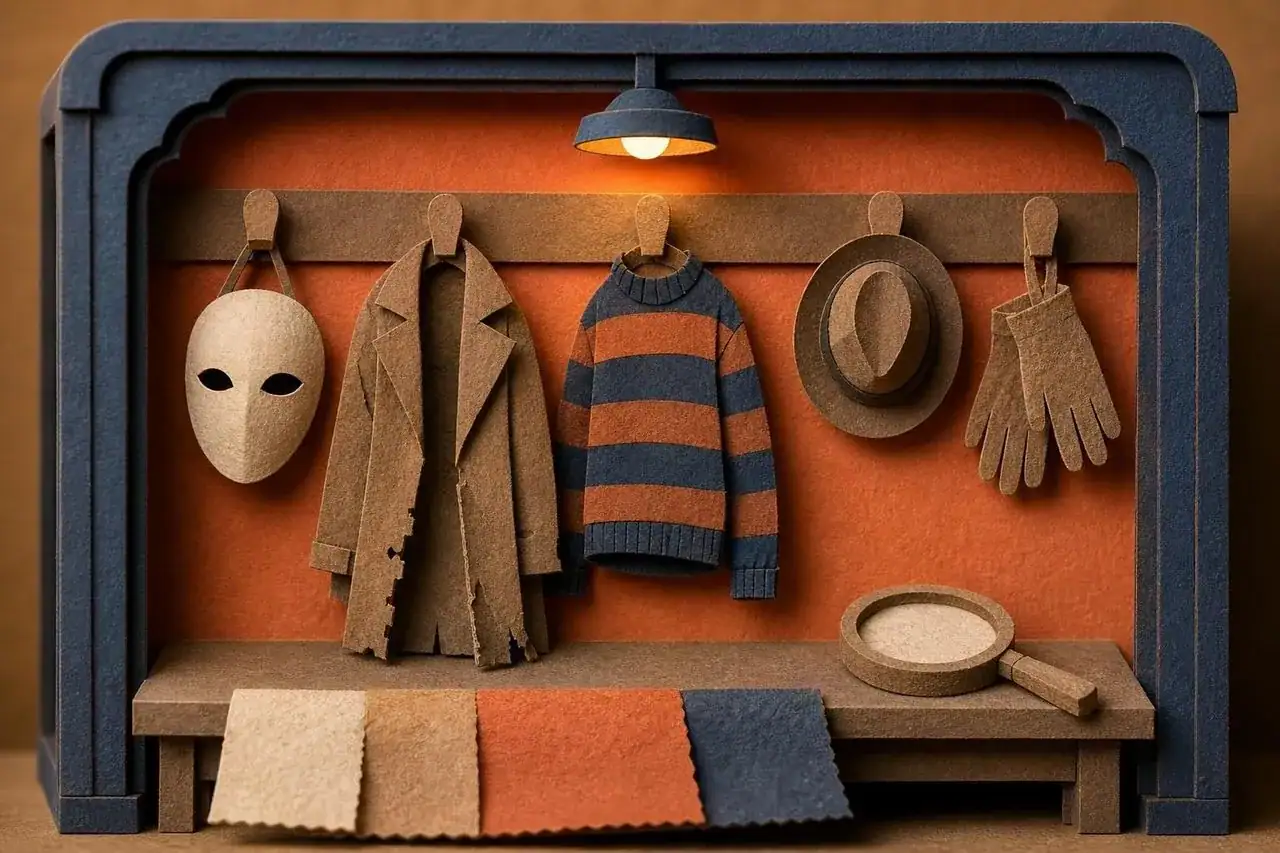
Add texture where the light catches. Worn, faded or frayed fabric looks more convincing than clean fabric. Rub a sweater lightly with sandpaper, brush diluted tea over a white shirt, or fray a hem. All of it is safe, cheap and quick.
Exaggerate one feature. A long collar, a wide hat brim, oversized hands. A single exaggerated part makes the figure memorable and covers a modest budget everywhere else.
Keep movement in mind. Capes swirl, sheets flutter, long sleeves hang. A costume that moves well photographs better than one that is accurate but stiff.
Group ideas and group safety
Horror characters work well as groups. A set of Universal-style monsters is easy to coordinate: a count, a creature, a mummy, a werewolf in a furry vest and a ghost. For a school or club event, give each person one icon and one prop, and settle the colors in advance so nothing clashes.
Group safety is mostly about space and sight. Sheets and capes catch on other people’s feet, so keep a little distance when walking together. Agree on a meeting point and make sure everyone can remove masks without help. In dark or crowded places, add a small reflective patch or a glow-stick bracelet so costumed walkers stay visible to drivers.
Etiquette and context
A horror costume should suit the room. Schools, workplaces and family events often limit masks or props, and some prohibit anything that could look like a weapon. Check the rules before you go. At trick-or-treating, keep the scariest part out of sight for small children, and remove your mask when someone looks frightened.
Respect matters too. Avoid costumes that make light of real injuries, illnesses or tragedies, and keep to fictional monsters and characters. If you are unsure, pick the funny version.
Where to go next
Pick the angle that interests you most. If it is the stalkers and their gear, start with the villains guide linked above; if it is creature design, the monsters guide; if it is the craft itself, the makeup and safety pages. Then choose one character, write down its three identifiers, and build the simplest version first. A good costume done in an evening beats an ambitious one abandoned on Sunday night.
In this guide
Questions people ask
Who is the most famous horror movie villain of all time?
What makes a horror villain look iconic?
What is the difference between a classic movie monster and a slasher villain?
Who played the original Frankenstein monster in 1931?
What was the mask in the original Halloween movie?
When did Jason Voorhees first wear the hockey mask?
How do I make a horror villain costume that is not too scary for kids?
Can I wear a full mask for a horror costume?
Are vampires, zombies and mummies classic monsters?
What is the oldest well-known horror movie monster?
Why do horror sequels and remakes keep getting made?
What is a B-movie, and does it count as a horror classic?
How do I do pale monster makeup safely?
How can I build a horror costume with things I already own?
What is the safest prop for a villain costume?
Where should I start if I want to learn more about horror history?
Keep going